
Catalogue Search | MBRL


Are you sure you want to remove the book from the shelf?

{{itemTitle}}
4
result(s) for
"Gibson, Marion, 1970- author"
Sort by:

Shakespeare's demonology : a dictionary
This volume is a detailed, critical reference work examining all aspects of magic, good and evil, across Shakespeare's works.
BOOK

Imagining the Pagan Past
Imagining the Pagan Past explores stories of Britain's pagan history. These tales have been characterised by gods and fairies, folklore and magic. They have had an uncomfortable relationship with the scholarly world; often being seen as historically dubious, self-indulgent romance and, worse, encouraging tribal and nationalistic feelings or challenging church and state.
This book shows how important these stories are to the history of British culture, taking the reader on a lively tour from prehistory to the present. From the Middle Ages to the twenty-first century, Marion Gibson explores the ways in which British pagan gods and goddesses have been represented in poetry, novels, plays, chronicles, scientific and scholarly writing. From Geoffrey of Monmouth to Edmund Spenser, William Shakespeare to Seamus Heaney and H.G. Wells to Naomi Mitchison it explores Romano-British, Celtic and Anglo-Saxon deities and fictions. The result is a comprehensive picture of the ways in which writers have peopled the British pagan pantheons throughout history.
Imagining the Pagan Past will be essential reading for all those interested in the history of paganism.
eBook

Mysticism, Myth and Celtic Identity
Mysticism, Myth and Celtic Identity explores how the mythical and mystical past informs national imaginations. Building on notions of invented tradition and myths of the nation, it looks at the power of narrative and fiction to shape identity, with particular reference to the British and Celtic contexts. The authors consider how aspects of the past are reinterpreted or reimagined in a variety of ways to give coherence to desired national groupings, or groups aspiring to nationhood and its 'defence'.
The coverage is unusually broad in its historical sweep, dealing with work from prehistory to the contemporary, with a particular emphasis on the period from the eighteenth century to the present. The subject matter includes notions of ancient deities, Druids, Celticity, the archaeological remains of pagan religions, traditional folk tales, racial and religious myths and ethnic politics, and the different types of returns and hauntings that can recycle these ideas in culture.
Innovative and interdisciplinary, the scholarship in Mysticism, Myth and Celtic Identity is mainly literary but also geographical and historical and draws on religious studies, politics and the social sciences. Thus the collection offers a stimulatingly broad number of new viewpoints on a matter of great topical relevance: national identity and the politicization of its myths.
eBook
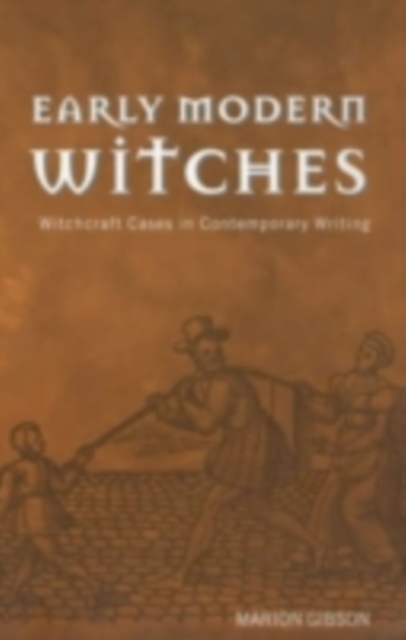
Early Modern Witches
This collection of pamphlets describes fifteen English witchcraft cases in detail, vividly recreating events to give the reader the illusion of actually being present at witchcraft accusations, trials and hangings. But how much are we victims of literary manipulation by these texts? The pamphlets are presented in annotated format, to allow the reader to decide. Some of the texts appear in print for the first time in three centuries, whilst others are newly edited to give a clearer picture of sources.
'Gibson is to be congratulated on bringing together these materials together, and on the skill, scholarship and insights she has brought to bear on them.' - James Sharpe, Continuity and Change, vol. 17 2, 2002
eBook