
Catalogue Search | MBRL


Are you sure you want to remove the book from the shelf?

{{itemTitle}}
4
result(s) for
"Gift Ntiwunka"
Sort by:
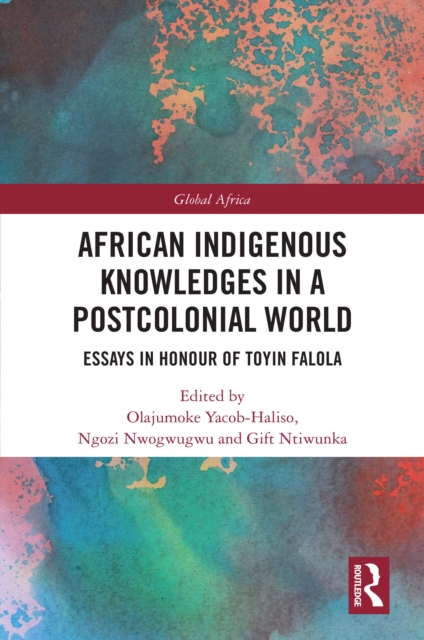
African Indigenous Knowledges in a Postcolonial World
This book argues that ancient and modern African indigenous knowledges remain key to Africa’s role in global capital, technological and knowledge development and to addressing her marginality and postcoloniality.
The contributors engage the unresolved problematics of the historical and contemporary linkages between African knowledges and the African academy, and between African and global knowledges. The book relies on historical and comparative political analysis to explore the global context for the application of indigenous knowledges for tackling postcolonial challenges of knowledge production, conflict and migration, and women’s rights on the continent in transcontinental African contexts.
Asserting the enduring potency of African indigenous knowledges for the transformation of policy, the African academy and the study of Africa in the global academy, this book will be of interest to scholars of African Studies, postcolonial studies and decolonisation and global affairs.
eBook

Introduction
This book engages the central issue of how Africans define their own realities, their methodologies for doing this and the historical and contemporary linkages between these African knowledges and the African academy, and between African and global knowledges. The book relies on historical and comparative political analysis to foreground the past and present global context to the development, recognition and centering of African indigenous knowledges for tackling the postcolonial challenges of knowledge production, conflict and migration, political communication and women’s rights on the continent in transcontinental African contexts from Ghana to Libya and from Sokoto to Sudan. Summatively, the two-fold argument of this text is essentially that African indigenous knowledges can transform policy and practice to address the identified African problems, and that the advancement of such indigenous knowledges can transform the African academy as well as the study of Africa in the global academy.
Book Chapter