
Catalogue Search | MBRL


Are you sure you want to remove the book from the shelf?

{{itemTitle}}
236
result(s) for
"Gilroy, Paul"
Sort by:

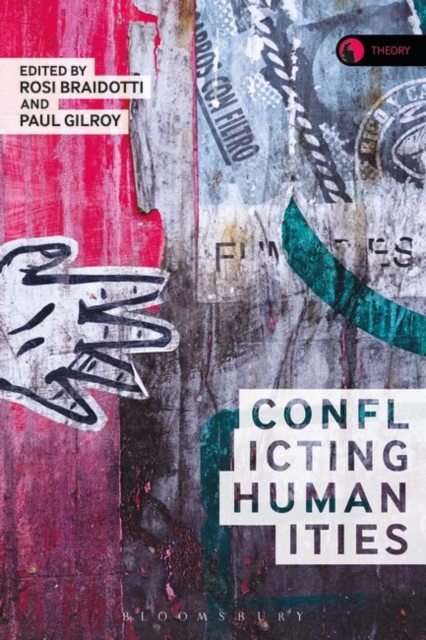
Conflicting Humanities
How might we reinvent the humanities? This is the question at the heart of this provocative volume. It is a difficult mission and definitely one which needs to be addressed with increasing urgency. There is no better cast to confront and problematize this question than the contributors to Conflicting Humanities. They are world-renowned thinkers who can tackle the problem as researchers and teachers but also as prominent public intellectuals. Taking the intellectual and political legacies of Edward Said as a point of departure and frame of reference, the contributors – working in a range of disciplinary settings – consider the current condition of humanism and the humanities. Said's definition of the core task of the Humanities as the pursuit of democratic criticism remains more urgent than ever, though it needs to be supplemented by gender, environmental, and anti-racist perspectives as well as by detailed analysis of the necro-political governmentality of our time. An innovative piece of scholarship, this volume is committed to the refusal of a world riven by new kinds of warcraft, injustice and exploitation.
eBook

There Ain't No Black in the Union Jack
This classic book is a powerful indictment of contemporary attitudes to race. By accusing British intellectuals and politicians on both sides of the political divide of refusing to take race seriously, Paul Gilroy caused immediate uproar when this book was first published in 1987. A brilliant and explosive exploration of racial discourses, There Ain’t No Black in the Union Jack provided a powerful new direction for race relations in Britain. Still dynamite today and as relevant as ever, this Routledge Classics edition includes a new introduction by the author.
'Provocative and stimulating ... not a book which can or should be ignored.' - Times Higher Educational Supplement
eBook

Antiracism, Blue Humanism and the Black Mediterranean
[...]despite our consenting to all the indisputable technologies; despite seeing the political leap that must be managed, the horror of hunger and ignorance, torture and massacre to be conquered, the full load of knowledge to be tamed, the weight of every piece of machinery that we shall finally control, and the exhausting flashes as we pass from one era to another-from forest to city, from story to computer-at the bow there is still something we now share: this murmur, cloud or rain or peaceful smoke. Sea levels do and will change, but the re-alignments involved in the rigor of thinking at sea level immediately differentiate our conjunctural commitments from the placeless concerns of high theory which habitually looks down upon the world, sometimes from a forbidding altitude. 2. The ethical and juridical dimensions of human rights and duties of care are mystified and corrupted by expediency and the populist energy derived from the deployment of racist rhetoric. Significant movements of population have been generated, both directly and indirectly, by unprecedented global counterinsurgency warfare as well as by the climate catastrophe which has diminished the prospect that organized human life will continue on earth.
Journal Article

There Ain't No Black in the Union Jack
This classic book is a powerful indictment of contemporary attitudes to race. By accusing British intellectuals and politicians on both sides of the political divide of refusing to take race seriously, Paul Gilroy caused immediate uproar when this book was first published in 1987. A brilliant and explosive exploration of racial discourses, There Ain't No Black in the Union Jack provided a powerful new direction for race relations in Britain. Still dynamite today and as relevant as ever, this Routledge Classics edition includes a new introduction by the author.
eBook


Postcolonial transitions in Europe
Is the notion of postcolonial Europe an oxymoron? How do colonial pasts inform the emergence of new subjectivities and political frontiers in contemporary Europe? Postcolonial Transitions in Europe explores these questions from different theoretical, geopolitical and media perspectives. Drawing from the interdisciplinary tools of postcolonial critique, this book contests the idea that Europe developed within clear-cut geographical boundaries. It examines how experiences of colonialism and imperialism continue to be constitutive of the European space and of the very idea of Europe. By approaching Europe as a complex political space, the chapters investigate topical concerns around its politics of inclusion and exclusion towards migrants, asylum seekers and refugees, as well as its take on internal conflicts, transitions and cosmopolitan imaginaries.
eBook
