
Catalogue Search | MBRL


Are you sure you want to remove the book from the shelf?

{{itemTitle}}
10
result(s) for
"Gioia, Ted, author"
Sort by:

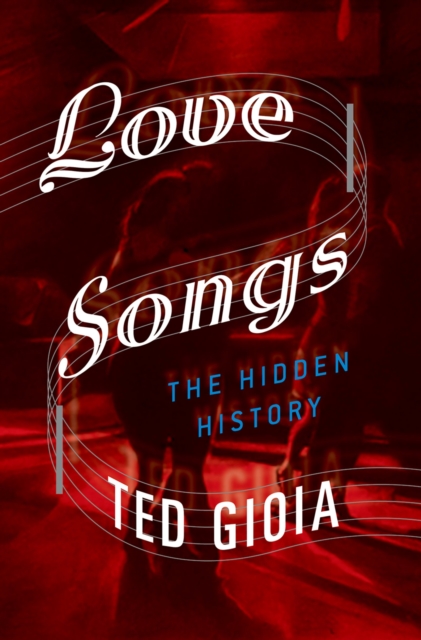
Love Songs
For thousands of years, love songs have pervaded our musical lives. But no one has told their full story until now. Ted Gioia surveys the conflicts and controversies, and traces the surprising path by which the love song has triumphed over all obstacles, emerging as a dominant commercial and cultural force.
eBook

Love songs : the hidden history
Discusses the history of the love song from the fertility rites of ancient cultures to the sexualized YouTube videos of the present day, exploring such topics as censorship, the legacy of love songs, and why it's a dominant form of modern musical expression.
Book
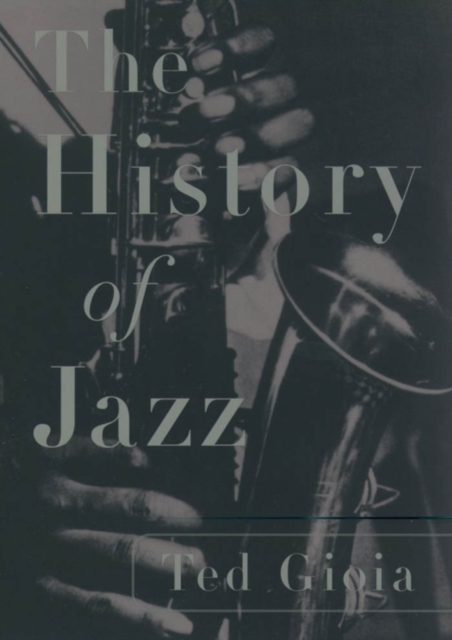
The history of jazz
Jazz is the most colorful and varied art form in the world and it was born in one of the most colorful and varied cities, New Orleans. From the seed first planted by slave dances held in Congo Square and nurtured by early ensembles led by Buddy Belden and Joe \"King\" Oliver, jazz began its long winding odyssey across America and around the world, giving flower to a thousand different forms--swing, bebop, cool jazz, jazz-rock fusion--and a thousand great musicians. Now, in The History of Jazz, Ted Gioia tells the story of this music as it has never been told before, in a book that brilliantly portrays the legendary jazz players, the breakthrough styles, and the world in which it evolved. Here are the giants of jazz and the great moments of jazz history--Jelly Roll Morton (\"the world's greatest hot tune writer\"), Louis Armstrong (whose O-keh recordings of the mid-1920s still stand as the most significant body of work that jazz has produced), Duke Ellington at the Cotton Club, cool jazz greats such as Gerry Mulligan, Stan Getz, and Lester Young, Charlie Parker's surgical precision of attack, Miles Davis's 1955 performance at the Newport Jazz Festival, Ornette Coleman's experiments with atonality, Pat Metheny's visionary extension of jazz-rock fusion, the contemporary sounds of Wynton Marsalis, and the post-modernists of the Knitting Factory. Gioia provides the reader with lively portraits of these and many other great musicians, intertwined with vibrant commentary on the music they created. Gioia also evokes the many worlds of jazz, taking the reader to the swamp lands of the Mississippi Delta, the bawdy houses of New Orleans, the rent parties of Harlem, the speakeasies of Chicago during the Jazz Age, the after hours spots of corrupt Kansas city, the Cotton Club, the Savoy, and the other locales where the history of jazz was made. And as he traces
the spread of this protean form, Gioia provides much insight into the social context in which the music was born. He shows for instance how the development of technology helped promote the growth of jazz--how ragtime blossomed hand-in-hand with the spread of parlor and player pianos, and how jazz rode the growing popularity of the record industry in the 1920s. We also discover how bebop grew out of the racial unrest of the 1940s and '50s, when black players, no longer content with being \"entertainers,\" wanted to be recognized as practitioners of a serious musical form. Jazz is a chameleon art, delighting us with the ease and rapidity with which it changes colors. Now, in Ted Gioia's The History of Jazz, we have at last a book that captures all these colors on one glorious palate. Knowledgeable, vibrant, and comprehensive, it is among the small group of books that can truly be called classics of jazz literature.
eBook

How to listen to jazz
Jazz is the great American art form; its very essence is predicated on freedom and creativity. Its sound unequivocally calls forth narratives of past struggles and future dreams. Yet jazz can be as inscrutable as it is mesmerizing, especially to outsiders who don't know what to make of improvisation or unexpected shifts in melody or tempo. How does a casual listener learn to understand and appreciate the nuances between the unapologetic and innovative sounds of Louis Armstrong, the complexity of Coleman Hawkin's saxophone, and the exotic and alluring compositions of Duke Ellington? How does Thelonius Monk fit in alongside Benny Goodman and John Coltrane? In How to Listen to Jazz, award-winning music scholar Ted Gioia presents a lively, accessible introduction to the art of listening to jazz. Covering everything from the music's structure and history to the basic building blocks of improvisation, Gioia shows exactly what to listen for in a jazz performance. He shares listening strategies that will help readers understand and appreciate jazz for the rest of their lives, and provides a history of the major movements in jazz right up to the present day. He concludes with a guide to 150 elite musicians who are setting the tone for 21st century jazz. Both an appreciation and an introduction to jazz by a foremost expert, How to Listen to Jazz is a must-read for anyone who's ever wanted to understand America's greatest contribution to the world of music.
Book
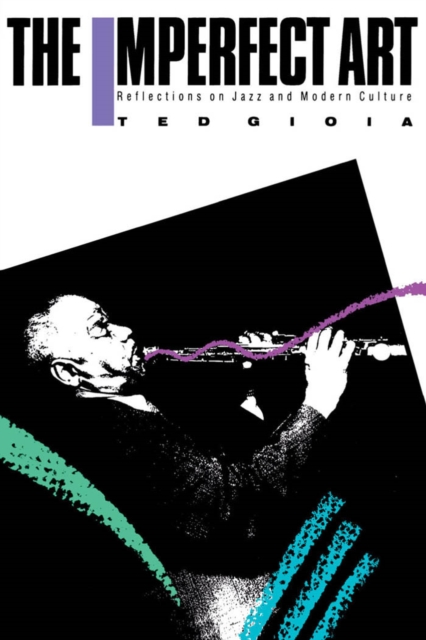
The Imperfect Art
This stimulating and perceptive study of jazz relates the work of jazz artists such as Louis Armstrong, Bix Beiderbecke, Lester Young, Duke Ellington, Charlie Parker, John Coltrane, and Ornette Coleman to such subjects as primitivism in the arts, neoclassicism, good and bad taste, improvisation and recordings and the imperfection of art, and aesthetics in general.
eBook

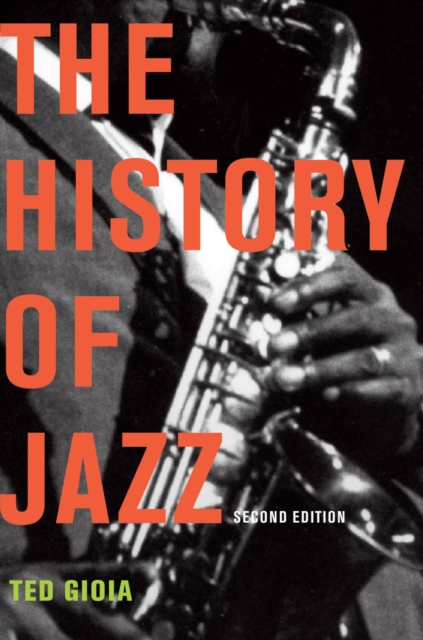
The history of jazz
On its initial release, The History of Jazz was heralded as a classic: it was honored as one of the twenty best books of the year in The Washington Post and was chosen as a notable book of the year in The New York Times. Now Gioia brings the story up-to-date, drawing on his latest research and covering the full spectrum of the music's past, present, and future in a survey that is a must-read for all jazz musicians, educators, and fans.
eBook

Conversations in jazz : the Ralph J. Gleason interviews
During his nearly forty years as a music journalist, Ralph J. Gleason recorded many in-depth interviews with some of the greatest jazz musicians of all time. These informal sessions, conducted mostly in Gleason's Berkeley, California, home, have never been transcribed and published in full until now. This remarkable volume, a must-read for any jazz fan, serious musician, or musicologist, reveals fascinating, little-known details about these gifted artists, their lives, their personas, and, of course, their music. Bill Evans discusses his battle with severe depression, while John Coltrane talks about McCoy Tyner's integral role in shaping the sound of the Coltrane quartet, praising the pianist enthusiastically. Included also are interviews with Dizzy Gillespie, Sonny Rollins, Quincy Jones, Jon Hendricks, and the immortal Duke Ellington, plus seven more of the most notable names in twentieth-century jazz.
Book
Jelly Roll, Bix, and Hoagy
\"A lively and anecdotal history\" of the tiny family-run studio where jazz greats from Jelly Roll Morton to Louis Armstrong made their first recordings ( Jazz Times).
From 1917 to 1932, in a primitive studio next to the railroad tracks, the Gennett family of Richmond, Indiana, recorded some of the earliest performances of jazz, blues, and country greats—including Jelly Roll Morton, Big Bill Broonzy, King Oliver, Louis Armstrong, Gene Autry, Bix Beiderbecke, and native Hoosier Hoagy Carmichael (whose \"Stardust\" debuted on Gennett as a dance stomp).
Jelly Roll, Bix, and Hoagy is the first thoroughly researched account of the people and events behind this unique company and its outsized impact on American music. Alive with personal details and anecdotes from musicians, employees, and family members, it traces the colorful history of a pioneer recording company.
eBook