
Catalogue Search | MBRL


Are you sure you want to remove the book from the shelf?

{{itemTitle}}
22
result(s) for
"Goff, Barbara E"
Sort by:


Citizen Bacchae
What activities did the women of ancient Greece perform in the sphere of ritual, and what were the meanings of such activities for them and their culture? By offering answers to these questions, this study aims to recover and reconstruct an important dimension of the lived experience of ancient Greek women. A comprehensive and sophisticated investigation of the ritual roles of women in ancient Greece, it draws on a wide range of evidence from across the Greek world, including literary and historical texts, inscriptions, and vase-paintings, to assemble a portrait of women as religious and cultural agents, despite the ideals of seclusion within the home and exclusion from public arenas that we know restricted their lives. As she builds a picture of the extent and diversity of women's ritual activity, Barbara Goff shows that they were entrusted with some of the most important processes by which the community guaranteed its welfare. She examines the ways in which women's ritual activity addressed issues of sexuality and civic participation, showing that ritual could offer women genuinely alternative roles and identities even while it worked to produce wives and mothers who functioned well in this male-dominated society. Moving to more speculative analysis, she discusses the possibility of a women's subculture focused on ritual and investigates the significance of ritual in women's poetry and vase-paintings that depict women. She also includes a substantial exploration of the representation of women as ritual agents in fifth-century Athenian drama.
eBook

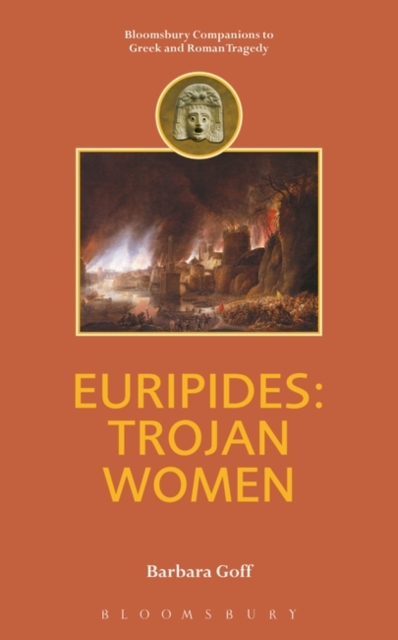
Euripides
Set at the end of the Trojan war, \"Euripides' Trojan Women\" depicts the women of Troy as they wait to be taken into slavery. While choral songs recall the death-throes of the great city, the scenes between the old queen, Hekabe, and the women of her family explore the consequences of the defeat, from the rape of Cassandra, through the triumphant self-exculpation of Helen, to the pitiful death of the child Astyanax, who is thrown from the walls of his ravaged city. Barbara Goff sets the play in its historical, dramatic and literary contexts, and provides a scene-by-scene analysis which brings out the pace and intellectual vigour of the play. The main themes are fully discussed, and the book also introduces readers to the issues that have divided critics, such as the extent to which the play responds to the historical events of the Peloponnesian War. The final chapter, which deals with the reception of the play, offers new insights into several modern works.
eBook


The Sign of the Fall: The Scars of Orestes and Odysseus
The scar of Orestes in Euripides's \"Elektra\" is discussed as a mark of identification and as evoking the more complex Odysseyan narrative. It is argued that, in the case of Orestes's scar, the token both compares Orestes to a heroic exemplar and simultaneously denies him the possibility of living up to the claims thus implied for him.
Journal Article


Gender and the City in Euripides' Political Plays
Goff reviews Gender and the City in Euripides' Political Plays by Daniel Mendelsohn.
Book Review