
Catalogue Search | MBRL


Are you sure you want to remove the book from the shelf?

{{itemTitle}}
4
result(s) for
"Goldie, Peter, editor"
Sort by:

Scotland and the First World War
What did war look like in the cultural imagination of 1914? Why did men in Scotland sign up to fight in unprecedented numbers? What were the martial myths shaping Scottish identity from the aftermath of Bannockburn to the close of the nineteenth century, and what did the Scottish soldiers of the First World War think they were fighting for? Scotland and the First World War: Myth, Memory and the Legacy of Bannockburn is a collection of new interdisciplinary essays interrogating the trans-historical myths of nation, belonging and martial identity that shaped Scotland’s encounter with the First World War. In a series of thematically linked essays, experts from the fields of literature, history and cultural studies examine how Scotland remembers war, and how remembering war has shaped Scotland.
eBook

The aesthetic mind : philosophy and psychology
The Aesthetic Mind breaks new ground in bringing together empirical sciences and philosophy to enhance our understanding of aesthetics and the experience of art. An eminent international team of experts presents new research in philosophy, psychology, neuroscience, and social anthropology: they explore the roles of emotion, imagination, empathy, and beauty in this realm of human experience, ranging over visual and literary art, music, and dance. Among the questions discussed are: Why do we engage with things aesthetically and why do we create art? Does art or aesthetic experience have a function or functions? Which characteristics distinguish aesthetic mental states? Which skills or abilities do we put to use when we engage aesthetically with an object and how does that compare with non-aesthetic experiences? What does our ability to create art and engage aesthetically with things tell us about what it is to be a human being? This ambitious and far-reaching volume is essential reading for anyone investigating the aesthetic and the artistic.
Book
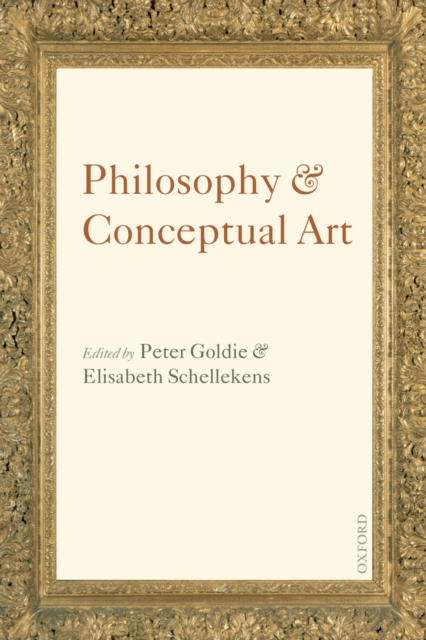
Philosophy and conceptual art
The fourteen prominent analytic philosophers writing here engage with the cluster of philosophical questions raised by conceptual art. They address four broad questions: What kind of art is conceptual art? What follows from the fact that conceptual art does not aim to have aesthetic value? What knowledge or understanding can we gain from conceptual art? How ought we to appreciate conceptual art? Conceptual art, broadly understood by the contributors as beginning with Marcel Duchamp’s ready-mades and as continuing beyond the 1970s to include some of today’s contemporary art, is grounded in the notion that the artist’s ‘idea’ is central to art, and, contrary to tradition, that the material work is by no means essential to the art as such. To use the words of the conceptual artist Sol LeWitt, ‘In conceptual art the idea of the concept is the most important aspect of the work … and the execution is a perfunctory affair’. Given this so-called ‘dematerialization’ of the art object, the emphasis on cognitive value, and the frequent appeal to philosophy by many conceptual artists, there are many questions that are raised by conceptual art that should be of interest to analytic philosophers. Why, then, has so little work been done in this area? This volume is most probably the first collection of papers by analytic Anglo-American philosophers tackling these concerns head-on. Contributors Margaret Boden, Diarmuid Costello, Gregory Currie, David Davies, Peter Goldie, Robert Hopkins, Matthew Kieran, Peter Lamarque, Dominic McIver Lopes, Derek Matravers, Elisabeth Schellekens, Kathleen Stock, Carolyn Wilde, and the ‘Art & Language’ group.
eBook