
Catalogue Search | MBRL


Are you sure you want to remove the book from the shelf?

{{itemTitle}}
443
result(s) for
"Goossaert, Vincent"
Sort by:


Making the Gods Speak
For two millennia, Chinese society has been producing divine revelations on an unparalleled scale, in multifarious genres and formats. This book is the first comprehensive attempt at accounting for the processes of such production. It builds a typology of the various ritual techniques used to make gods present and allow them to speak or write, and it follows the historical development of these types and the revealed teachings they made possible. Within the large array of visionary, mediumistic, and mystical techniques, Vincent Goossaert devotes the bulk of his analysis to spirit-writing, a family of rites that appeared around the eleventh century and gradually came to account for the largest numbers of books and tracts ascribed to the gods. In doing so, he shows that the practice of spirit-writing must be placed within the framework of techniques used by ritual specialists to control human communications with gods and spirits for healing, divining, and self-divinization, among other purposes. Making the Gods Speak thus offers a ritual-centered framework to study revelation in Chinese cultural history and comparatively with the revelatory practices of other religious traditions.
eBook
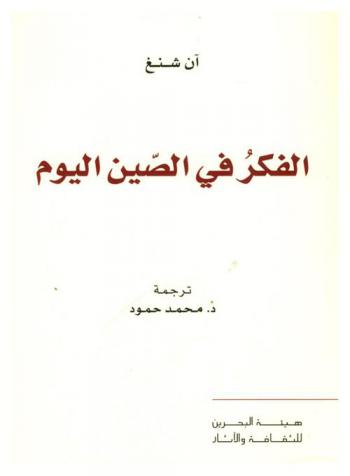
الفكر في الصين اليوم
تناول الكتاب الفكر حول الصين اليوم حيث أنه خلال القرون الثلاثة الأخيرة التي شهدت تكون الحداثة الغربية وسيطرتها، تكونت عن الصين وترسخت صورة صين صاحبة كتابة رمزية، خاضعة لموروث استبدادي، معزولة عن سائر بقاع العالم، طوال قرون، وهو ما يفسر جمودها الفلسفي والسياسي والعلمي الذي جاء الغرب في الوقت المناسب لإيقاظها منه. فحين ننظر إلى كل هذه الترهات، سوف نجدها، بالتأكيد، بصيغ مختلفة وعلى مستويات متفاوتة التنميق، في عدد لا بأس به من المؤلفات الرائجة. وعلينا أن نضيف أن هذه المؤلفات لم تعدم، في المقابل، أن تمارس تأثيرا كبيرا في طريقة النخب الصينية تنظر بها إلى ثقافتها الخاصة، سواء في انتقاد الذات أو، خلافا لذلك كما هو الحال منذ فترة وجيزة، في مدح هذه الذات مدحا معززا بشعور قومي متزايد النخوة.
Book

Prohibited Mountains and Forests in Late Imperial China
This essay explores the various types of spaces, primarily montane forested areas, where human access was restricted, either conditionally or entirely, during late imperial times. The range of restrictions always included felling trees, but often also encompassed other forms of extraction from local ecosystems. Based on the motivations for setting up and regulating such zones, it proposes a typology that includes imperial parks and graves, sacred sites, military exclusion zones, and certain forested commons. Based on some commonalities between these types, it concludes by reflecting on the place of notions of sacrality in local policies that directly impacted forested areas.
Journal Article
The Social Networks of Gods in Late Imperial Spirit-Writing Altars
The late imperial-educated Chinese interacted with a very large array of gods through various means, especially spirit-writing, for which we have abundant detailed records. While a few prominent gods have been studied in this context, there are currently no comprehensive studies of the connections between humans and gods. Using the records of thirteen different spirit-writing altars in various parts of the Chinese world between the sixteenth and nineteenth centuries, this paper maps the 478 gods involved using standard social network analysis visualizations, and identifies the types of gods that played central roles (connecting many different gods and humans) and those that had fewer, more exclusive sociabilities.
Journal Article

Periodic Fasting and Religious Calendars in China, 1700–1950
A major form of meat abstinence in modern China was the observance of periodic fasting, as distinct from permanent vegetarianism. This article explores the various forms of such observances and their evolution from late imperial times to the Republican period. It describes the religious calendars that circulated widely from the late Qing onward and identifies the most common fasting regimens (and the associated gods) that people selected from a large choice of fasting days. It then draws on narrative material to tease out how and why people adopted such regimens and to discuss debates and polemics about them. Finally, it shows that periodic fasting continued to be popular during the twentieth century, exhibiting more continuities than current studies of modern changes in the discourses about vegetarianism would suggest.
Journal Article

Review of Lineages Embedded in Temple Networks: Daoism and Local Society in Ming China
Lineages Embedded in Temple Networks: Daoism and Local Society in Ming China. By Richard G. Wang . Cambridge, MA: Harvard University Asia Center, 2022. Pp. xii + 383. $60.
Journal Article

Ritual Techniques for Creating a Divine Persona in Late Imperial China: The Case of Daoist Law Enforcer Lord Wang
Lord Wang (Wang lingguan 王靈官, Wang tianjun 王天君) is a ubiquitous god in late imperial and modern Chinese society, worshipped in different contexts, including temple processions, exorcistic rituals, monastic ordinations, and elite spirit-writing cults. This article argues that his divine persona remains coherent in these different contexts, and that a reason for this coherence is that he is made present to his many audiences through ritual techniques (controlled spirit-possession, ritual theater, spirit-writing) that are closely related to each other.
Journal Article

