
Catalogue Search | MBRL


Are you sure you want to remove the book from the shelf?

{{itemTitle}}
4,130
result(s) for
"Gordon, Jennifer"
Sort by:

Sylvie
When Sylvie the pink flamingo learns her color comes from the little pink shrimp she eats, she decides to expand her choices, trying everything under the sun and, unfortunately, overdoing it.
Book

The psychological impact of fertility treatment suspensions during the COVID-19 pandemic
To examine the psychological impact of fertility treatment suspensions resulting from the COVID-19 pandemic and to clarify psychosocial predictors of better or worse mental health.
92 women from Canada and the United States (ages 20-45 years) whose fertility treatments had been cancelled were recruited via social media. Participants completed a battery of questionnaires assessing depressive symptoms, perceived mental health impact, and change in quality of life related to treatment suspensions. Potential predictors of psychological outcomes were also examined, including several personality traits, aspects of social support, illness cognitions, and coping strategies.
52% of respondents endorsed clinical levels of depressive symptoms. On a 7-point scale, participants endorsed a significant decline in overall quality of life (M(SD) = -1.3(1.3), p < .0001) as well as a significant decline in mental health related to treatment suspensions on a scale from -5 to +5 (M(SD) = -2.1(2.1), p < .001). Several psychosocial variables were found to positively influence these outcomes: lower levels of defensive pessimism (r = -.25, p < .05), greater infertility acceptance (r = .51, p < .0001), better quality social support (r = .31, p < .01), more social support seeking (r = .35, p < .001) and less avoidance of infertility reminders (r = -.23, p = .029).
Fertility treatment suspensions have had a considerable negative impact on women's mental health and quality of life. However, these findings point to several protective psychosocial factors that can be fostered in the future to help women cope.
Journal Article

Bully
When a selfish bullfrog takes over a lily pond, the other residents decide to unite and take action.
Book
What women want to hear: the helpful and unhelpful comments reported by women struggling with infertility amidst the COVID-19 pandemic
Many women struggling with infertility report that they frequently experience unhelpful social interactions with well-meaning loved ones and healthcare providers, contributing to a reluctance to confide in others about their infertility and emotional distress. However, it remains unclear what interaction content women experience as 'helpful' versus 'unhelpful,' making it difficult to provide concrete recommendations to the public about how best to support individuals struggling with infertility.
Eighty women from Canada and the United States (ages 20-45 years) whose fertility treatments had been cancelled due to the COVID-19 pandemic were recruited via social media to complete an online survey, which included two open-ended questions about the most helpful and unhelpful social interactions they had had about their infertility. Two independent researchers conducted content analysis to identify categories of helpful and unhelpful social interactions.
The following six categories were identified by women as helpful: 1) Listening, 2) Fostering hope, 3) Talking to individuals with lived experience, 4) Distraction, 5) Validating emotions, and 6) Tangible support. Responses about unsupportive interactions fell into four categories: 1) Toxic positivity, 2) Advice-giving, 3) Invalidation, and 4) Intruding. Sample quotes from each category are provided.
These findings provide valuable insights that can be used to develop future educational materials for the general public on how to interact with individuals experiencing infertility.
Journal Article

Frankie the blankie
When a fellow jungle mate suggests \"blankies\" are for babies, Doris the Gorilla tries to give her beloved blanket Frankie up, and then tries disguising it.
Book

Promoting good mental health over the menopause transition
The potential risk for mental health conditions over the menopause transition shapes women's expectations and informs putative physiological mechanisms regulating women's mental health. We review evidence from prospective studies reporting on associations between mental health conditions and the menopause transition. Major depressive disorder and the more prevalent subthreshold depressive symptoms are the most common conditions studied. We reviewed 12 prospective studies reporting depressive symptoms, major depressive disorder, or both over the menopause transition and found no compelling evidence for a universal increased risk for either condition. However, specific subgroups of participants, primarily defined by menopause-related risk factors (ie, vasomotor symptoms that are severe or disturb sleep, a long duration of the transition, or reproductive hormone dynamics) and psychosocial risk factors (eg, stressful life events), were vulnerable to depressive symptoms. The increased risk of major depressive disorder over the menopause transition appears predominantly in individuals with previous major depressive disorder. Greater focus on recognising risk factors in primary care is warranted. On the basis of scarce data, we found no compelling evidence that risk of anxiety, bipolar disorder, or psychosis is universally elevated over the menopause transition. Potential misattribution of psychological distress and psychiatric disorders to menopause could harm women by delaying accurate diagnosis and the initiation of effective psychotropic treatments, and by creating negative expectations for people approaching menopause. A paradigm shift is needed. We conclude with recommendations for the detection and treatment of depressive symptoms or major depressive disorder and strategies to promote good mental health over the menopause transition, while responsibly preparing and supporting those at risk.
Journal Article

Dollop and Mrs. Fabulous
When Dollop joins her sister, Lily, for a tea party, rules get in the way of fun but soon Lily's concern for manners and Dollop's ninja skills come together.
Book

Effects of Parenthood and Gender on Well-Being and Work Productivity Among Canadian Academic Research Faculty Amidst the COVID-19 Pandemic
The coronavirus disease (COVID-19) pandemic has brought about enormous changes to all aspects of academic life. In spring 2020, we recruited faculty from Canadian universities who were asked to complete a survey about the perceived impact of the pandemic on aspects of their well-being and work productivity. Eight hundred ninety-nine academics from across Canada responded, reporting that the pandemic had had a significant negative impact on their mental health, work satisfaction, first-author publications, grants, and data collection. Overall weekly work hours dropped by 22% compared to prepandemic levels, from 45 hr/week to 35 hr. Though parents of children under the age of 13 managed to maintain an average of 30 hr/week despite juggling childcare and work duties, they nonetheless fared worse compared to nonparents and parents of older children on nearly all indicators of work productivity and well-being. Furthermore, mothers of young children reported having fewer uninterrupted work hours and spending more time as primary caregiver compared to fathers. Thus, the COVID-19 pandemic has had a considerable negative impact on the self-reported well-being and work productivity of Canadian academics, and even more so among parents of young children. Mothers of young children may be particularly in need of additional support. These findings highlight the importance of adopting policies at the federal and institutional levels aimed at \"leveling the playing field\" for these groups as well as instituting creative childcare solutions that maintain health and safety while not further disadvantaging young parents.
La pandémie de la maladie causée par le coronavirus (COVID-19) a suscité d'énormes changements dans tous les volets de la vie universitaire. Au printemps 2020, nous avons effectué un sondage parmi les membres du personnel d'universités canadiennes afin de connaître les répercussions perçues de la pandémie sur divers aspects de leur bien-être et sur leur productivité. Ont répondu au questionnaire 899 personnes de partout au pays, lesquelles ont signalé que la pandémie avait eu d'importantes répercussions négatives sur leur santé mentale, leur niveau de satisfaction au travail, le nombre de publications comme premier auteur, l'obtention de subventions et la collecte de données. Dans l'ensemble, le nombre d'heures travaillées par semaine a chuté de 22 %, comparativement à celui d'avant la pandémie, passant de 45 à 35 heures. Bien que les parents d'enfants de moins de 13 ans aient réussi à maintenir un horaire moyen de 30 heures semaine, jonglant les services de garde et le travail, ils ont des résultats très inférieurs aux personnes sans enfants ou aux parents d'enfants plus âgés pour presque tous les indicateurs de productivité et de bien-être. De plus, les mères de jeunes enfants ont rapporté avoir un nombre inférieur d'heures de travail ininterrompues et avoir consacré plus de temps comme principaux fournisseurs de soins en comparaison des pères. Ainsi, la pandémie de COVID-19 a eu d'importantes répercussions sur les niveaux autorapportés de bien-être et de productivité des chercheurs universitaires canadiens, en particulier parmi les parents de jeunes enfants. Les mères de jeunes enfants ont peut-être particulièrement besoin de soutien supplémentaire. Ces résultats mettent en relief l'importance d'adopter des politiques fédérales et institutionnelles visant à égaliser les chances pour ces groupes, de même que d'établir des solutions novatrices pour la garde d'enfants qui assurent la santé et la sécurité, sans désavantager les jeunes parents.
Public Significance Statement
The current findings suggest that the COVID-19 pandemic has had a considerable negative impact on the self-reported well-being and work productivity of Canadian academics, and even more so among parents of young children. Mothers of young children may be particularly in need of additional support.
Journal Article

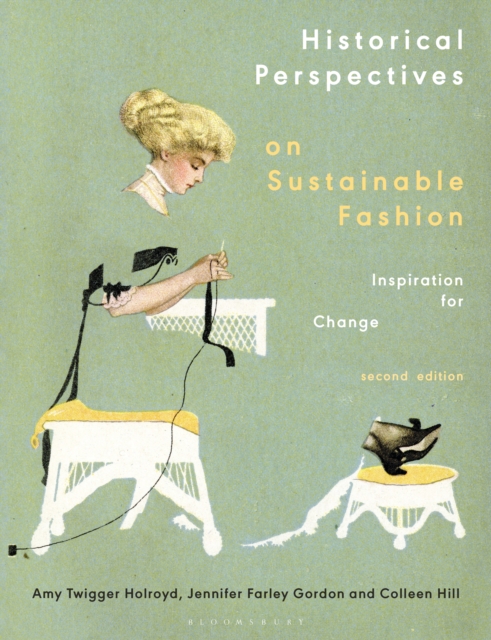
Historical perspectives on sustainable fashion : inspiration for change
For centuries, the fashion industry has struggled to reconcile style with sustainability.In Historical Perspectives on Sustainable Fashion , you will be transported back in time to discover the historical dimensions of today's sustainable fashion movement.
eBook