
Catalogue Search | MBRL


Are you sure you want to remove the book from the shelf?

{{itemTitle}}
42
result(s) for
"Gottschall, Jonathan"
Sort by:

The storytelling animal : how stories make us human
\"Undiscovered and unmapped country. It's easy to say that humans are \"wired\" for story, but why? In this book, the author offers a unified theory of storytelling. He argues that stories help us navigate life's complex social problems, just as flight simulators prepare pilots for difficult situations. Storytelling has evolved, like other behaviors, to ensure our survival. Drawing on the latest research in neuroscience, psychology, and evolutionary biology, he tells us what it means to be a storytelling animal. Did you know that the more absorbed you are in a story, the more it changes your behavior? That all children act out the same kinds of stories, whether they grow up in a slum or a suburb? That people who read more fiction are more empathetic? Of course, our story instinct has a darker side. It makes us vulnerable to conspiracy theories, advertisements, and narratives about ourselves that are more \"truthy\" than true. National myths can also be terribly dangerous: Hitler's ambitions were partly fueled by a story. But as is shown in this book, stories can also change the world for the better. Most successful stories are moral; they teach us how to live, whether explicitly or implicitly, and bind us together around common values. We know we are master shapers of story. This book finally reveals how stories shape us.\"--Book Jacket
Book

Explaining wartime rape
In the years since the first reports of mass rapes in the Yugoslavian wars of secession and the genocidal massacres in Rwanda, feminist activists and scholars, human rights organizations, journalists, and social scientists have dedicated unprecedented efforts to document, explain, and seek solutions for the phenomenon of wartime rape. While contributors to this literature agree on much, there is no consensus on causal factors. This paper provides a brief overview of the literature on wartime rape in historical and ethnographical societies and a critical analysis of the four leading explanations for its root causes: the feminist theory, the cultural pathology theory, the strategic rape theory, and the biosocial theory. The paper concludes that the biosocial theory is the only one capable of bringing all the phenomena associated with wartime rape into a single explanatory context.
Journal Article

The story paradox : how our love of storytelling builds societies and tears them down
\"In 2012, Jonathan Gottschall received a strange letter from DARPA, the research and development arm of the United States Department of Defense. What could a military research program possibly want with a literary critic? The letter was an invitation to a conference for a new program called STORYNET, a plan to map how stories affect our brains and use that knowledge to craft narratives that could more effectively drive compliance with military initiatives. DARPA was trying to turn stories into weapons. Reading this invitation (which Gottschall declined), he remembered a famous proverb: The one who tells the story rules the world. Stories are fundamental to how we think, and how we change our minds. Our brains value them so highly that we often see them even when they aren't there: when scientists showed subjects a video of simple shapes moving randomly around a screen, they interpreted the scene as a love story between two triangles. Countless books celebrate the ability of storytelling to help us think and communicate more effectively, including Gottschall's own bestselling The Storytelling Animal. But in The Story Paradox, he argues that there is a dark side to storytelling, and we ignore it at our peril. At base, stories are tools. They help us create a shared reality. But stories are also inherently manipulative and divisive: they split the world into heroes who represent something good, and villains who do not. For most of human history, this was a manageable problem. But we now find ourselves in what Gottschall calls a 'story explosion,' an era in which new storytelling technologies allow people to tell stories of unprecedented scale and sophistication. Virtual reality, personalized newsfeeds, stories that viewers can tailor in real time, deepfakes: these make it harder for us to deal with the ways that stories can confuse and divide us. If we're not careful, they could cause the shared reality we all depend on to collapse. The Story Paradox is a provocative and personal reckoning with the ways that storytelling lies at the heart of some of humanity's greatest threats. Gottschall explains why authoritarians like Trump rise and fall and how the media helps them, why radical ideologies are so effective at stamping out other belief systems, and how good stories compel us to accept conspiracy theories about which we should know better. When Plato envisioned the perfect state in The Republic, he saw a world in which storytellers were banned. They were simply too dangerous. The Story Paradox is a crucial counterpoint to books like Made to Stick or The Story Factor, arguing that the most urgent question we can ask ourselves now, is not: 'how we can change the world through stories?' Rather, it's 'how can we save the world from stories?'\"-- Provided by publisher.
BOOK

Are per-incident rape-pregnancy rates higher than per-incident consensual pregnancy rates?
Is a given instance of rape more likely to result in pregnancy than a given instance of consensual sex? This paper undertakes a review and critique of the literature on rape-pregnancy. Next, it presents our own estimation, from U.S. government data, of pregnancy rates for reproductive age victims of penile-vaginal rape. Using data on birth control usage from the Statistical Abstract of the United States, we then form an estimate of rapepregnancy rates adjusted for the substantial number of women in our sample who would likely have been protected by oral contraception or an IUD. Our analysis suggests that per-incident rape-pregnancy rates exceed per-incident consensual pregnancy rates by a sizable margin, even before adjusting for the use of relevant forms of birth control. Possible explanations for this phenomenon are discussed, as are its implications to ongoing debates over the ultimate causes of rape.
Journal Article
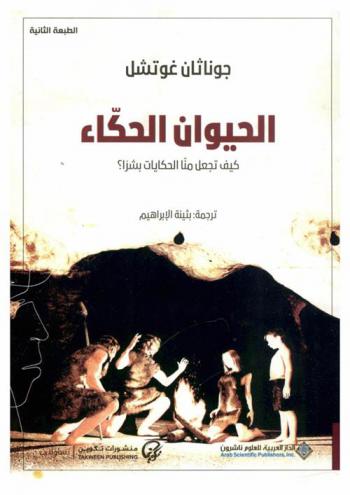
الحيوان الحكاء : كيف تجعل منا الحكايات بشرا
يدور كتاب \"الحيوان الحكاء كيف تجعل منا الحكايات بشرا ؟\" حول الطريقة التي يستخدم بها المستكشفون في حقول العلوم والإنسانيات أدوات جديدة وطرائق جديدة للتفكير لفتح مجاهل \"نڤرلاند\" الواسعة في إشارة من المؤلف إلى الجزيرة التي قضى فيها \"بيتر بان\" (الشخصية الرئيسية في رواية \"بيتر بان\" لجميس ماثيو باري) طفولته في المغامرات متزعما عصابة الأطفال التائهين وهو بطل القصة القرد العظيم ذو العقل الحكاء كما يدور الكتاب حول الطرق التي تتخم بها القصص حياتنا بدءا من الإعلانات التجارية إلى أحلام اليقظة والعرض الهزلي للمصارعة المحترفة كما أنه يتحدث عن الأنماط العميقة لتشويه خيال الأطفال وما تكشفه من أسرار عن أصول الحكاية ما قبل التاريخية.
BOOK

Critical Exchanges
[...] as the application of scientific style analysis to folktale and fairy-tale analysis is being developed, it is important that the methodology be developed with the input of folktale and fairy-tale experts. [...] it should be remembered that the seductive idea of the folk narrative as même has reductionism at its core. [...] the methodology and results should be very well understood, and the interactive nature of the folk narrative system should be respected.
Journal Article


What Are Literary Scholars For? What is Art For?
[...] it may be that we have simply missed the point. Even if there are real costs to biological fitness associated with sitting around and listening to (or reading) stories, that propensity might not be selected against if it were inextricably knotted up with the bigger benefits of craving strategic social information-if, in other words, selection couldn't act against our susceptibility to stories without also acting against our adaptive craving for social information.
Journal Article

Romantic Love: A Literary Universal?
Moreover, psychologists, anthropologists, political scientists, and sociologists have developed an improving suite of methods for dealing with text data in a quantitative, scientific fashion.26 On this point we agree with the structuralist literary scholar Tzvetan Todorov: the crude opposition that the sciences are objective and the humanities subjective (and therefore almost wholly outside the reach of scientific method) is untenable.
Journal Article