
Catalogue Search | MBRL


Are you sure you want to remove the book from the shelf?

{{itemTitle}}
1,161
result(s) for
"Graham, Peter W"
Sort by:


Revisiting isocurvature bounds on the minimal QCD axion
A
bstract
The QCD axion has important connections to early universe cosmology. For example, it is often said that isocurvature limits rule out a combination of high axion decay constant,
f
a
, and high inflationary Hubble scale,
H
I
. High scales are theoretically motivated, so it is important to ask how robust this constraint is. We demonstrate that this constraint is naturally evaded when the quartic coupling of the complex U(1)
PQ
-breaking field is small (e.g. ≲ 10
−6
). In this case,
f
a
changes from a larger value during inflation to a smaller value in the later universe, suppressing isocurvature perturbations. Importantly, we show that in large parts of parameter space this solution is not jeopardised by overproduction of the axion through parametric resonance. The isocurvature bounds are thus dependent on UV physics. We have found that, even for the minimal QCD axion, large parts of UV parameter space at both high
f
a
and high
H
I
are in fact allowed, not ruled out by isocurvature constraints.
Journal Article
Observable signatures of dark photons from supernovae
A
bstract
A dark photon is a well-motivated new particle which, as a component of an associated dark sector, could explain dark matter. One strong limit on dark photons arises from excessive cooling of supernovae. We point out that even at couplings where too few dark photons are produced in supernovae to violate the cooling bound, they can be observed directly through their decays. Supernovae produce dark photons which decay to positrons, giving a signal in the 511 keV annihilation line observed by SPI/INTEGRAL. Further, prompt gamma-ray emission by these decaying dark photons gives a signal for gamma-ray telescopes. Existing GRS observations of SN1987a already constrain this, and a future nearby SN could provide a detection. Finally, dark photon decays from extragalactic SN would produce a diffuse flux of gamma rays observable by detectors such as SMM and HEAO-1. Together these observations can probe dark photon couplings several orders of magnitude beyond current constraints for masses of roughly 1-100 MeV.
Journal Article

Proposal for a Cosmic Axion Spin Precession Experiment (CASPEr)
We propose an experiment to search for QCD axion and axionlike-particle dark matter. Nuclei that are interacting with the background axion dark matter acquire time-varying CP -odd nuclear moments such as an electric dipole moment. In analogy with nuclear magnetic resonance, these moments cause precession of nuclear spins in a material sample in the presence of an electric field. Precision magnetometry can be used to search for such precession. An initial phase of this experiment could cover many orders of magnitude in axionlike-particle parameter space beyond the current astrophysical and laboratory limits. And with established techniques, the proposed experimental scheme has sensitivity to QCD axion masses ma≲10−9eV , corresponding to theoretically well-motivated axion decay constants fa≳1016GeV . With further improvements, this experiment could ultimately cover the entire range of masses ma≲μeV , complementary to cavity searches.
Journal Article

An atomic gravitational wave interferometric sensor in low earth orbit (AGIS-LEO)
We propose an atom interferometer gravitational wave detector in low Earth orbit (AGIS-LEO). Gravitational waves can be observed by comparing a pair of atom interferometers separated by a 30 km baseline. In the proposed configuration, one or three of these interferometer pairs are simultaneously operated through the use of two or three satellites in formation flight. The three satellite configuration allows for the increased suppression of multiple noise sources and for the detection of stochastic gravitational wave signals. The mission will offer a strain sensitivity of \\(<10^-18/ Hz\\) in the 50mHz–10Hz frequency range, providing access to a rich scientific region with substantial discovery potential. This band is not currently addressed with the LIGO, VIRGO, or LISA instruments. We analyze systematic backgrounds that are relevant to the mission and discuss how they can be mitigated at the required levels. Some of these effects do not appear to have been considered previously in the context of atom interferometry, and we therefore expect that our analysis will be broadly relevant to atom interferometric precision measurements. Finally, we present a brief conceptual overview of shorter-baseline \\((100\\, m)\\) atom interferometer configurations that could be deployed as proof-of-principle instruments on the International Space Station (AGIS-ISS) or an independent satellite.
Journal Article
Displaced Supersymmetry
A
bstract
The apparent absence of light superpartners at the LHC strongly constrains the viability of the MSSM as a solution to the hierarchy problem. These constraints can be significantly alleviated by
R
-parity violation (RPV). Bilinear
R
-parity violation, with the single operator
LH
u
, does not require any special flavor structure and can be naturally embedded in a GUT while avoiding constraints from proton decay (unlike baryon-number-violating RPV). The LSP in this scenario can be naturally long-lived, giving rise to displaced vertices. Many collider searches, particularly those selecting
b
-jets or leptons, are insensitive to events with such detector-scale displaced decays owing to cuts on track quality and impact parameter. We demonstrate that for decay lengths in the window ∼1–10
3
mm, constraints on superpartner masses can be as low as ∼450 GeV for squarks and ∼40 GeV for LSPs. In some parts of parameter space light LSPs can dominate the Higgs decay width, hiding the Higgs from existing searches. This framework motivates collider searches for detector-scale displaced vertices. LHCb may be ideally suited to trigger on such events, while ATLAS and CMS may need to trigger on missing energy or multijet signatures.
Journal Article
A simple harmonic universe
A
bstract
We explore simple but novel bouncing solutions of general relativity that avoid singularities. These solutions require curvature
k
= +1, and are supported by a negative cosmological term and matter with −1
< w <
−1
/
3. In the case of moderate bounces (where the ratio of the maximal scale factor
a
+
to the minimal scale factor
a
−
is
), the solutions are shown to be classically stable and cycle through an infinite set of bounces. For more extreme cases with large
a
+
/a
−
, the solutions can still oscillate many times before classical instabilities take them out of the regime of validity of our approximations. In this regime, quantum particle production also leads eventually to a departure from the realm of validity of semiclassical general relativity, likely yielding a singular crunch. We briefly discuss possible applications of these models to realistic cosmology.
Journal Article
Exploring eternal stability with the simple harmonic universe
A
bstract
We construct nonsingular cyclic cosmologies that respect the null energy condition, have a large hierarchy between the minimum and maximum size of the universe, and are stable under linearized fluctuations. The models are supported by a combination of positive curvature, a negative cosmological constant, cosmic strings and matter that at the homogeneous level behaves as a perfect fluid with equation of state −1 <
w
< −1/3. We investigate analytically the stability of the perturbation equations and discuss the role of parametric resonances and nonlinear corrections. Finally, we argue that Casimir energy contributions associated to the compact spatial slices can become important at short scales and may lift nonperturbative decays towards vanishing size. This class of models (particularly in the static limit) can then provide a useful framework for studying the question of the ultimate (meta)stability of an eternal universe.
Journal Article
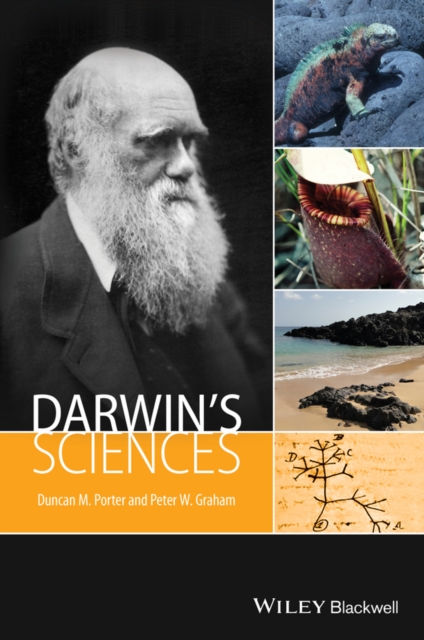
Darwin's sciences
A complete scientific biography of Darwin that takes into account the latest research findings, both published and unpublished, on the life of this remarkable man. Considered the first book to thoroughly emphasize Darwin's research in various fields of endeavor, what he did, why he did it, and its implications for his time and ours. Rather than following a strictly chronological approach - a narrative choice that characteristically offers an ascent to On the Origin of Species (1859) with a rapid decline in interest following its publication and reception - this book stresses the diversity and full extent of Darwin's career by providing a series of chapters centering on various intellectual topics and scientific specializations that interested Darwin throughout his life. Authored by academics with years of teaching and discussing Darwin, Darwin's Sciences is suited to any biologist who is interested in the deeper implications of Darwin's research.
eBook

AEDGE: Atomic experiment for dark matter and gravity exploration in space
This article contains a summary of the White Paper submitted in 2019 to the ESA Voyage 2050 process, which was subsequently published in EPJ Quantum Technology (AEDGE Collaboration et al. EPJ Quant. Technol. 7,6 2020). We propose in this White Paper a concept for a space experiment using cold atoms to search for ultra-light dark matter, and to detect gravitational waves in the frequency range between the most sensitive ranges of LISA and the terrestrial LIGO/Virgo/KAGRA/INDIGO experiments. This interdisciplinary experiment, called Atomic Experiment for Dark Matter and Gravity Exploration (AEDGE), will also complement other planned searches for dark matter, and exploit synergies with other gravitational wave detectors. We give examples of the extended range of sensitivity to ultra-light dark matter offered by AEDGE, and how its gravitational-wave measurements could explore the assembly of super-massive black holes, first-order phase transitions in the early universe and cosmic strings. AEDGE will be based upon technologies now being developed for terrestrial experiments using cold atoms, and will benefit from the space experience obtained with, e.g., LISA and cold atom experiments in microgravity.
Journal Article