
Catalogue Search | MBRL


Are you sure you want to remove the book from the shelf?

{{itemTitle}}
21
result(s) for
"Gray, Susan Elaine"
Sort by:

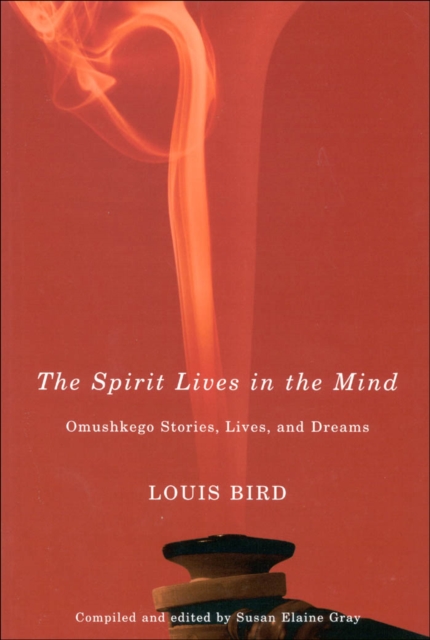
Spirit Lives in the Mind
Cree spiritual beliefs revolve around the sacred places and rich landscape of the Hudson Bay lowlands. The beautiful narratives in The Spirit Lives in the Mind illuminate the meaning and value of spiritual maturity and power, the parallels between Omushkego morality and Roman Catholic teachings, and the importance of maintaining the traditional stories. Bird also offers explanations of shamanism and demonstrates how Catholicism affected Cree tradition.
eBook
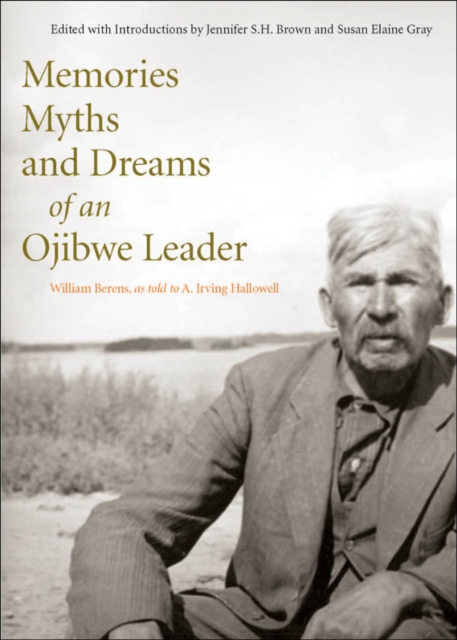
Memories, Myths, and Dreams of an Ojibwe Leader
Because the elderly chief wanted his visitor to understand the Ojibwe world, and because Hallowell was deeply interested in his subject matter and was such a good listener, Berens freely related his dreams and other stories about encounters with powerful beings. The fact that he also shared traditional myths in summer, when Ojibwe people thought it dangerous to discuss such things, shows the depth of his relationship with Hallowell. Berens' reminiscences and story and myth texts are unparalleled as sources for the life, experiences, and outlook of this important Ojibwe leader, and for the insights they provide into the history and culture of his people.
eBook


The Ojibwa world view and encounters with Christianity along the Berens River, 1875-1940
Conversions and the taking on of Christianity had multi-dimensional meanings and were interpreted in a myriad of different ways by Ojibwa people living along the Berens River between 1875 and 1940. Christian rituals and practices were integrated into the Saulteaux world view in ways that were controlled by and meaningful to the participants. Today, both Christian and Ojibwa ideas are interwoven in the lives of Berens River residents. Both strands hold power, meaning and sincerity. There is no doubt that aspects of Christianity sustain many in their daily life and it is equally true that many of the same people's beliefs remain grounded in such Ojibwa concepts as the Thunderbirds, the power of medicine men and conjurors (terms still used at Berens River when people speak in English) and the use of dreams as vehicles of prediction, guidance and foreshadowing. Ojibwa people living along the Berens River experienced and still live a deep, dynamic and complex religion based on the power of belief and yet which is adaptive and flexible. New ideas arriving in their midst, such rituals as the Dream Drum Dance, have often been welcomed if seen as valuable. Contrary to the assumptions of generations of Westerners, the Saulteaux employed empiricism and critical thinking at deep levels. The ability to incorporate outside ideas into an existing world view does not imply an inability to think empirically nor does it suggest a superficial belief system. In positive encounters with Christianity, native people along the Berens River were influenced by a number of factors. These included a wish for literacy and Western education and technical resources, a desire to understand the Bible as a source of potentially helpful and beneficial messages, added divine protection from illness and other crises, protection against bad medicine, access to Western medicine and added dimensions and powers to existing ones derived from traditional ones such as rituals. Where mission efforts were successful in these communities, it was usually as a result of the sustained presence of a devoted missionary who stayed long enough to achieve respect and earn trust. By the late nineteenth century, most Berens River Ojibwa were second generation Christians; thus a tradition and loyalty had been established among families. Christianity, however, was not always accepted out of hand. Lack of support by missionaries, lack of agreement with the lessons taught to children in schools, or lack of need to take on aspects of a new religion and lack of respect by a missionary for sacred Ojibwa rituals could all yield cold responses. Clearly, native people were in control of making choices here--it was they who decided when and how they would or would not accept Christianity.
Dissertation

Bach bromide, indeed
I'm delighted with Joe Queenan's review of the banalities that make up Eric Siblin's
Newspaper Article


Prevalence of Voice Disorders in Teachers and the General Population
Over 3 million teachers in the United States use their voice as a primary tool of trade and are thought to be at higher risk for occupation-related voice disorders than the general population. However, estimates regarding the prevalence of voice disorders in teachers and the general population vary considerably. To determine the extent that teachers are at greater risk for voice disorders, 2,531 randomly selected participants from Iowa and Utah (1,243 teachers and 1,288 nonteachers) were interviewed by telephone using a voice disorder questionnaire. Prevalence—the number of cases per population at risk at a specific time—was determined. The prevalence of reporting a current voice problem was significantly greater in teachers compared with nonteachers (11.0% vs. 6.2%), χ 2 (1)=18.2, p <.001, as was the prevalence of voice disorders during their lifetime (57.7% for teachers vs. 28.8% for nonteachers), χ 2 (1)=215.2, p <.001. Teachers were also significantly more likely than nonteachers to have consulted a physician or speech-language pathologist regarding a voice disorder (14.3% vs. 5.5%), χ 2 (1)=55.3, p <.001. Women, compared with men, not only had a higher lifetime prevalence of voice disorders (46.3% vs. 36.9%), χ 2 (1)=20.9, p <.001, but also had a higher prevalence of chronic voice disorders (>4 weeks in duration), compared with acute voice disorders (20.9% vs. 13.3%), χ 2 (1)=8.7, p =.003. To assess the association between past voice disorders and possible risks, adjusted odds ratios (ORs) were estimated using multiple logistic regression. The results identified that being a teacher, being a woman, being between 40 and 59 years of age, having 16 or more years of education, and having a family history of voice disorders were each positively associated with having experienced a voice disorder in the past. These results support the notion that teaching is a high-risk occupation for voice disorders. Important information is also provided regarding additional factors that might contribute to the development of voice disorders.
Journal Article

Progressive exercise compared with best practice advice, with or without corticosteroid injection, for the treatment of patients with rotator cuff disorders (GRASP): a multicentre, pragmatic, 2 × 2 factorial, randomised controlled trial
Corticosteroid injections and physiotherapy exercise programmes are commonly used to treat rotator cuff disorders but the treatments' effectiveness is uncertain. We aimed to compare the clinical effectiveness and cost-effectiveness of a progressive exercise programme with a single session of best practice physiotherapy advice, with or without corticosteroid injection, in adults with a rotator cuff disorder.
In this pragmatic, multicentre, superiority, randomised controlled trial (2 × 2 factorial), we recruited patients from 20 UK National Health Service trusts. We included patients aged 18 years or older with a rotator cuff disorder (new episode within the past 6 months). Patients were excluded if they had a history of significant shoulder trauma (eg, dislocation, fracture, or full-thickness tear requiring surgery), neurological disease affecting the shoulder, other shoulder conditions (eg, inflammatory arthritis, frozen shoulder, or glenohumeral joint instability), received corticosteroid injection or physiotherapy for shoulder pain in the past 6 months, or were being considered for surgery. Patients were randomly assigned (centralised computer-generated system, 1:1:1:1) to progressive exercise (≤6 sessions), best practice advice (one session), corticosteroid injection then progressive exercise, or corticosteroid injection then best practice advice. The primary outcome was the Shoulder Pain and Disability Index (SPADI) score over 12 months, analysed on an intention-to-treat basis (statistical significance set at 1%). The trial was registered with the International Standard Randomised Controlled Trial Register, ISRCTN16539266, and EuDRACT, 2016-002991-28.
Between March 10, 2017, and May 2, 2019, we screened 2287 patients. 708 patients were randomly assigned to progressive exercise (n=174), best practice advice (n=174), corticosteroid injection then progressive exercise (n=182), or corticosteroid injection then best practice advice (n=178). Over 12 months, SPADI data were available for 166 (95%) patients in the progressive exercise group, 164 (94%) in the best practice advice group, 177 (97%) in the corticosteroid injection then progressive exercise group, and 175 (98%) in the corticosteroid injection then best practice advice group. We found no evidence of a difference in SPADI score between progressive exercise and best practice advice when analysed over 12 months (adjusted mean difference −0·66 [99% CI −4·52 to 3·20]). We also found no evidence of a difference between corticosteroid injection compared with no injection when analysed over 12 months (−1·11 [–4·47 to 2·26]). No serious adverse events were reported.
Progressive exercise was not superior to a best practice advice session with a physiotherapist in improving shoulder pain and function. Subacromial corticosteroid injection provided no long-term benefit in patients with rotator cuff disorders.
UK National Institute for Health Research Technology Assessment Programme.
Journal Article