
Catalogue Search | MBRL


Are you sure you want to remove the book from the shelf?

{{itemTitle}}
108
result(s) for
"Greasley, David"
Sort by:

Economics and history : surveys in cliometrics
\"Economics and History presents six state-of-the-art, comprehensive surveys from some of the leading scholars in cliometrics. The contributions consider a broad range of topics from this highly topical area, covering the following issues: time series econometrics and their applications in cliometrics, international migration, income maintenance programs in the USA in the first half of the 20th Century, social savings, health and stature, and human development - a long run view. This collection will serve as a unique resource for advanced undergraduate and postgraduate students on quantitative and econometrics courses, as well as academics and professional economists more generally\"--Provided by publisher.
Book

Empirical Testing of Genuine Savings as an Indicator of Weak Sustainability: A Three-Country Analysis of Long-Run Trends
Genuine Savings has emerged as a widely-used indicator of sustainable development. This approach to conceptualising what sustainability is about has strong links to work published by Anil Markandya and colleagues over 20 years ago. In this paper, we use long-term data stretching back to 1870 to undertake empirical tests of the relationship between Genuine Savings (GS) and future well-being for three countries: Britain, the USA and Germany. Our tests are based on an underlying theoretical relationship between GS and changes in the present value of future consumption. Based on both single country and panel results, we find evidence supporting the existence of a cointegrating (long run equilibrium) relationship between GS and future well-being, and fail to reject the basic theoretical result on the relationship between these two macroeconomic variables. This provides some support for the GS measure of weak sustainability.
Journal Article

Australia: a land of missed opportunities?
Comprehensive Investment (CI) may provide an indicator of future changes in a country's per capita consumption. The authors explore the utility of the CI indicator for Australia by constructing CI data since 1861 and by estimating their relationship with changes in future consumption over periods of 50 years ahead. The CI measures include changes in natural, produced and human capital, and make allowance for exogenous technological progress. The results are used to consider how Australia's natural capital exploitation influenced the consumption of future generations. Further, the authors gauge if low CI relative to other leading OECD countries resulted in lower consumption levels in Australia over time than feasible, had it saved more.
Journal Article
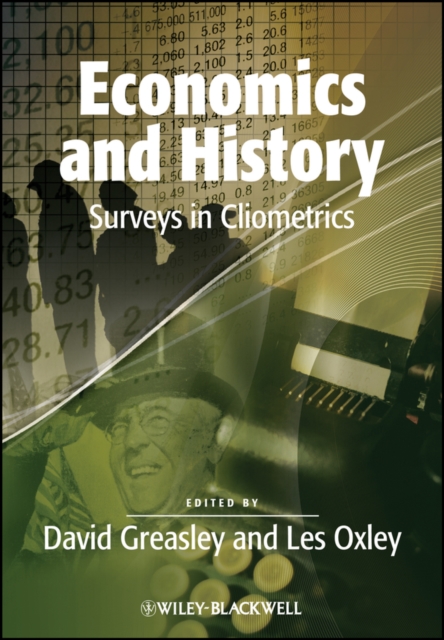
Economics and history : surveys in cliometrics
Economics and History presents six state-of-the-art surveys from some of the leading scholars in cliometrics.The contributions are all written at an accessible level for the non-specialist reader and consider a broad range of issues from this highly topical area.
eBook

The pastoral boom, the rural land market, and long swings in New Zealand economic growth, 1873-1939
Higher farm and manufacturing productivity associated with refrigerated exports led to New Zealand's attainment of the world's highest Human Development Index in 1913. Local responses to export opportunities increased the social depth of land ownership and fostered intensive growth. Closer settlement meant that land-related income gains spread widely, but land market volatility also created instability. New Zealand had the world's highest GDP per capita in 1938, but it experienced long swings in its growth rates. Dramatic swings in rural land market activity engendered by the pastoral boom contributed greatly to a long depression in the 1920s; subsequently a new monetary regime facilitated fast recovery.
Journal Article

Historical wealth accounts for Britain: progress and puzzles in measuring the sustainability of economic growth
Estimates of Britain's comprehensive wealth are reported for the period 1760-2000. They include measures of produced, natural, and human capital, and illustrate the changing composition of Britain's assets over this time period. We show how genuine savings, GS (a year-on-year measure of the change in total capital and a claimed indicator of sustainable development) has evolved over time. Changes in total wealth are compared to alternative, investment-based measures of GS, including variants augmented with the value of exogenous technology. Additionally, the possible effects of population change on wealth, and the implications of including carbon-dioxide emissions in natural capital are considered.
Journal Article


Economics and history
\"Economics and History presents six state-of-the-art, comprehensive surveys from some of the leading scholars in cliometrics. The contributions consider a broad range of topics from this highly topical area, covering the following issues: time series econometrics and their applications in cliometrics, international migration, income maintenance programs in the USA in the first half of the 20th Century, social savings, health and stature, and human development - a long run view. This collection will serve as a unique resource for advanced undergraduate and postgraduate students on quantitative and econometrics courses, as well as academics and professional economists more generally\"--
Book

A Time-Series Perspective on Convergence: Australia, UK and USA since 1870
Tests of the Convergence Hypothesis or the tendency for per capita income levels to narrow over time, have generally utilized cross‐sectional data and have usually found conflicting evidence. In this study we utilize time‐series data on Australia, UK and USA for the period 1870–1992, and time‐series tests, to consider both ‘catching‐up2 and ‘long‐run convergence’. The paper finds evidence in favour of long‐run convergence in per capita income levels for the UK and Australia for the period 1892–1992 and catching‐up in the case of UK and USA, and Australia and USA, giving some support for the exogenous approaches to economic growth.
Journal Article

Fifty Years of Coal-mining Productivity: The Record of the British Coal Industry before 1939
A downward trend in British coal-mining productivity was reversed between the world wars. Declining productivity before 1914 was accompanied by wide regional differences, especially at the coalface. Scotland attained the best overall. productivity, while coalface productivity was highest in Durham and Northumberland. Regional differences narrowed by the 1920s but re-emerged in the 1930s, as mines in the North Midlands outpaced the productivity gains made elsewhere. Only a multifaceted interpretation can explain these distinctive patterns—over time, between regions, and at different stages of the coal-mining operation.
Journal Article