
Catalogue Search | MBRL


Are you sure you want to remove the book from the shelf?

{{itemTitle}}
6
result(s) for
"Greenblatt, Stephen, 1943-, author"
Sort by:


Hamlet in purgatory
This book delves into the author's longtime fascination with the ghost of Hamlet's father, and his daring and ultimately gratifying journey takes him through surprising intellectual territory. It yields an extraordinary account of the rise and fall of Purgatory as both a belief and a lucrative institution as well as a capacious new reading of the power of Hamlet. In the mid-sixteenth century, English authorities abruptly changed the relationship between the living and dead. Declaring that Purgatory was a false poem, they abolished the institutions and banned the practices that Christians relied on to ease the passage to Heaven for themselves and their dead loved ones. Greenblatt explores the fantastic adventure narratives, ghost stories, pilgrimages, and imagery by which a belief in a grisly prison house of souls had been shaped and reinforced in the Middle Ages. He probes the psychological benefits as well as the high costs of this belief and of its demolition.
Book


Will in the world : how Shakespeare became Shakespeare
\"A young man from a small provincial town moves to London in the late 1580s and, in a remarkably short time, becomes the greatest playwright not of his age alone but of all time. How is an achievement of this magnitude to be explained? Stephen Greenblatt brings us down to earth to see, hear, and feel how an acutely sensitive and talented boy, surrounded by the rich tapestry of Elizabethan life, could have become the world's greatest playwright.\"-- Provided by publisher.
Book
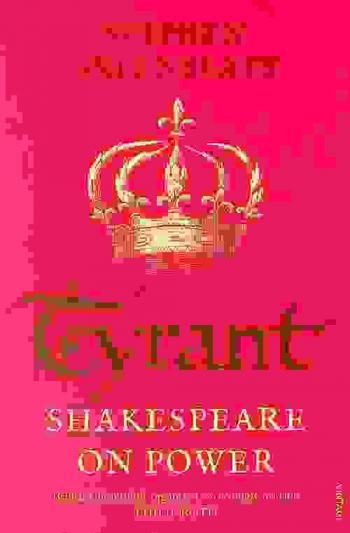
Tyrant : Shakespeare on power
\"How does a truly disastrous leader a sociopath, a demagogue, a tyrant come to power? How, and why, does a tyrant hold on to power? And what goes on in the hidden recesses of the tyrant's soul? For help in understanding our most urgent contemporary dilemmas, William Shakespeare has no peer. As an ageing, tenacious Elizabeth I clung to power, a talented playwright probed the social and psychological roots and the twisted consequences of tyranny. What he discovered in his characters remains remarkably relevant today. With uncanny insight, he shone a spotlight on the infantile psychology and unquenchable narcissistic appetites of demagogues and imagined how they might be stopped. In Tyrant, Stephen Greenblatt examines the themes of power and tyranny in some of Shakespeare's most famous plays from the dominating figures of Richard III, Julius Caesar, Hamlet, Macbeth, and Coriolanus to the subtle tyranny found in Measure for Measure and The Winter's Tale. Tyrant is a highly relevant exploration of Shakespeare's work that sheds new light on the workings of power.\" --Cover.

Dark renaissance : the dangerous times and fatal genius of Shakespeare's greatest rival, Christopher Marlowe
Poor boy. Dark star. Spy. Transgressor. Genius. The Pulitzer Prize-winning author of 'Will in the World' reveals the daring and subversive life of Christopher Marlowe - Shakespeare's contemporary, inspiration, and rival.
BOOK