
Catalogue Search | MBRL


Are you sure you want to remove the book from the shelf?

{{itemTitle}}
12
result(s) for
"Greif, Stephen"
Sort by:
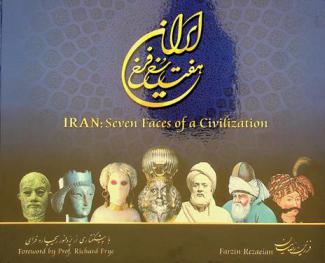
Iran : seven faces of a civilization = Īrān : haft rukh-I tamaddun
Visual recreation of modern and ancient Iran.
Book

Spatial competition, innovation and institutions
This paper considers the possible contribution of spatial competition to the Industrial Revolution and the Great Divergence. Rather than exclusively focusing on the incentives of producers to adopt labor-saving technology, we also consider the incentives of factor suppliers’ organizations such as craft guilds to resist. Once we do so, industrialization no longer depends on market size per se, but on spatial competition between the guilds’ jurisdictions. We substantiate our theory’s claim of spatial competition being an important channel for industrialization (i) by providing historical evidence on the relation between spatial competition, craft guilds and innovation, and (ii) by showing that the calibrated model correctly predicts the timings of the Industrial Revolution and the Great Divergence.
Journal Article

Efficacy and efficiency of indoor nighttime human external cargo mission simulation in a high-fidelity training Centre
Background
The human external cargo (HEC) operations conducted by Helicopter Emergency Medical Services (HEMS) rarely take place at night, making it difficult for crew members to attain and maintain the level of expertise needed to perform winch operations in the dark. As EASA requirements for training cannot currently be met, we evaluated whether simulation training could be an option.
Methods
This paper reports on a training concept using indoor simulation for the training of nighttime HEC operations. Participants’ experience and perceptions were evaluated with a survey and the procedural and economic advantages of the simulation approach were compared with those of the usual outdoor HEC training.
Results
Most participants had limited exposure to real-life nighttime HEC missions before undergoing the simulation-based training. The frequency of training cycles in simulation was much higher compared to conventional training (60 cycles indoors vs. 20 outdoors for HEMS-TC, 20 cycles indoors vs. 4 outdoors for MCM). Trainees perceived that their technical and non-technical skills (NTS) improved with the training. The estimated costs of standard outdoor-based nighttime HEC training (138€ per cycle) are at least 6.5 times higher than the costs of indoor simulated training (approximately 21€ per cycle). With a change to simulation, carbon dioxide emissions could potentially be reduced by more than 35 tons.
Conclusions
Indoor simulation training of night HEC operations has advantages with regard to cost-effectiveness, environmental friendliness, and self-reported improvements in skills and knowledge. Its use is feasible and could improve crew and patient safety and fulfill regulatory demands for training intensity.
Journal Article

TARGIT-R (Retrospective): North American Experience with Intraoperative Radiation Using Low-Kilovoltage X-Rays for Breast Cancer
Background
Single-dose intraoperative radiotherapy (IORT) is an emerging treatment for women with early stage breast cancer. The objective of this study was to define the frequency of IORT use, patient selection, and outcomes of patients treated in North America.
Methods
A multi-institutional retrospective registry was created, and 19 institutions using low-kilovoltage IORT for the treatment of breast cancer entered data on patients treated at their institution before July 31, 2013. Patient selection, IORT treatment details, complications, and recurrences were analyzed.
Results
From 2007 to July 31, 2013, a total of 935 women were identified and treated with lumpectomy and IORT. A total of 822 patients had at least 6 months’ follow-up documented and were included in the analysis. The number of IORT cases performed increased significantly over time (
p
< 0.001). The median patient age was 66.8 years. Most patients had disease that was <2 cm in size (90 %) and was estrogen positive (91 %); most patients had invasive ductal cancer (68 %). Of those who had a sentinel lymph node procedure performed, 89 % had negative sentinel lymph nodes. The types of IORT performed were primary IORT in 79 %, secondary IORT in 7 %, or planned boost in 14 %. Complications were low. At a median follow-up of 23.3 months, crude in-breast recurrence was 2.3 % for all patients treated.
Conclusions
IORT use for the treatment of breast cancer is significantly increasing in North America, and physicians are selecting low-risk patients for this treatment option. Low complication and local recurrence rates support IORT as a treatment option for selected women with early stage breast cancer.
Journal Article

Building the vertebrate codex using the gene breaking protein trap library
One key bottleneck in understanding the human genome is the relative under-characterization of 90% of protein coding regions. We report a collection of 1200 transgenic zebrafish strains made with the gene-break transposon (GBT) protein trap to simultaneously report and reversibly knockdown the tagged genes. Protein trap-associated mRFP expression shows previously undocumented expression of 35% and 90% of cloned genes at 2 and 4 days post-fertilization, respectively. Further, investigated alleles regularly show 99% gene-specific mRNA knockdown. Homozygous GBT animals in ryr1b , fras1 , tnnt2a , edar and hmcn1 phenocopied established mutants. 204 cloned lines trapped diverse proteins, including 64 orthologs of human disease-associated genes with 40 as potential new disease models. Severely reduced skeletal muscle Ca 2+ transients in GBT ryr1b homozygous animals validated the ability to explore molecular mechanisms of genetic diseases. This GBT system facilitates novel functional genome annotation towards understanding cellular and molecular underpinnings of vertebrate biology and human disease. The human genome counts over 20,000 genes, which can be turned on and off to create the proteins required for most of life processes. Once produced, proteins need move to specific locations in the cell, where they are able to perform their jobs. Despite striking scientific advances, 90% of human genes are still under-studied; where the proteins they code for go, and what they do remains unknown. Zebrafish share many genes with humans, but they are much easier to manipulate genetically. Here, Ichino et al. used various methods in zebrafish to create a detailed ‘catalogue’ of previously poorly understood genes, focusing on where the proteins they coded for ended up and the biological processes they were involved with. First, a genetic tool called gene-breaking transposons (GBTs) was used to create over 1,200 strains of genetically altered fish in which a specific protein was both tagged with a luminescent marker and unable to perform its role. Further analysis of 204 of these strains revealed new insight into the role of each protein, with many having unexpected roles and localisations. For example, in one zebrafish strain, the affected gene was similar to a human gene which, when inactivated, causes severe muscle weakness. These fish swam abnormally slowly and also had muscle problems, suggesting that the GBT fish strains could ‘model’ the human disease. This work sheds new light on the role of many previously poorly understood genes. In the future, similar collections of GBT fish strains could help researchers to study both normal human biology and disease. They could especially be useful in cases where the genes responsible for certain conditions are still difficult to identify.
Journal Article

Synopsis of Orthopaedic Trauma Management
User-friendly resource presents state-of-the-art management of orthopaedic traumaOrthopaedic trauma spans the full spectrum of injury, from simple fractures to life-threatening accidents with multiple broken bones.As such, these incidents are a common reason patients visit emergency departments and receive treatment from orthopaedic surgeons.
eBook

The critical pulse
This unprecedented anthology asks thirty-six leading literary and cultural critics to elaborate on the nature of their profession. With the humanities feeling the pinch of financial and political pressures, and its disciplines resting on increasingly uncertain conceptual ground, there couldn't be a better time for critics to reassert their widespread relevance and purpose. These credos boldly defend the function of criticism in contemporary society and showcase its vitality in the era after theory.
Essays address literature and politics, with some focusing on the sorry state of higher education and others concentrating on teaching and the fate of the humanities. All reflect the critics' personal, particular experiences. Deeply personal and engaging, these stories move, amuse, and inspire, ultimately encouraging the reader to develop his or her own critical credo with which to approach the world. Reflecting on the past, looking forward to the future, and committed to the power of productive critical thought, this volume proves the value of criticism for today's skeptical audiences.
Contributors: Andrew Ross, Amitava Kumar, Lisa Lowe, Vincent B. Leitch, Craig Womack, Jeffrey J. Williams, Marc Bousquet, Katie Hogan, Michelle A. Massé, John Conley, Heather Steffen, Paul Lauter, Cary Nelson, David B. Downing, Barbara Foley, Michael Bérubé, Victor Cohen, Gerald Graff, William Germano, Ann Pellegrini, Bruce Robbins, Kenneth Warren, Diana Fuss, Lauren Berlant, Toril Moi, Morris Dickstein, Rita Felski, David R. Shumway, Mark Bauerlein, Devoney Looser, Stephen Burt, Mark Greif, Kathleen Fitzpatrick, Mark McGurl, Frances Negrón-Muntaner, Judith Jack Halberstam
eBook
Spatial Competition, Innovation and Institutions: The Industrial Revolution and the Great Divergence
A market-size-only theory of industrialization cannot explain why England developed nearly two centuries before China. One shortcoming of such a theory is its exclusive focus on producers. We show that once we incorporate the incentives of factor suppliers' organizations such as craft guilds, industrialization no longer depends on market size, but on spatial competition between the guilds' jurisdictions. We substantiate our theory (i) by providing historical and empirical evidence on the relation between spatial competition, craft guilds and innovation, and (ii) by showing the calibrated model correctly predicts the timings of the Industrial Revolution and the Great Divergence.
Paper

Spatial Competition, Innovation and Institutions: The Industrial Revolution and the Great Divergence
Working Paper No. 24727 A market-size-only theory of industrialization cannot explain why England developed nearly two centuries before China. One shortcoming of such a theory is its exclusive focus on producers. We show that once we incorporate the incentives of factor suppliers' organizations such as craft guilds, industrialization no longer depends on market size, but on spatial competition between the guilds' jurisdictions. We substantiate our theory (i) by providing historical and empirical evidence on the relation between spatial competition, craft guilds and innovation, and (ii) by showing the calibrated model correctly predicts the timings of the Industrial Revolution and the Great Divergence.
Paper