
Catalogue Search | MBRL


Are you sure you want to remove the book from the shelf?

{{itemTitle}}
48
result(s) for
"Greyson, Bruce"
Sort by:
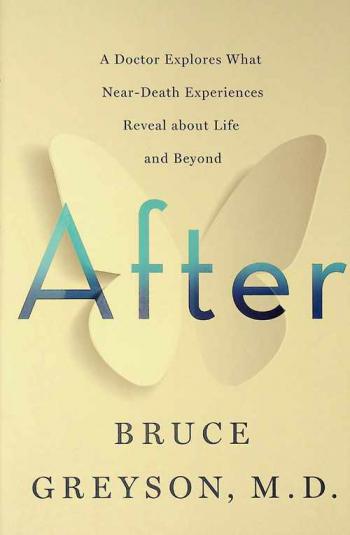
After : a doctor explores what near-death experiences reveal about life and beyond
\"The world's leading expert on near-death experiences reveals his journey toward rethinking the nature of death, life, and the continuity of consciousness. Cases of remarkable experiences on the threshold of death have been reported since ancient times, and are described today by 10% of people whose hearts stop. The medical world has generally ignored these \"near-death experiences,\" dismissing them as \"tricks of the brain\" or wishful thinking. But after his patients started describing events that he could not just sweep under the rug, Dr. Bruce Greyson began to investigate. As a physician without a religious belief system, he approached near-death experiences from a scientific perspective. In After, he shares the transformative lessons he has learned over four decades of research. Our culture has tended to view dying as the end of our consciousness, the end of our existence-a dreaded prospect that for many people evokes fear and anxiety. But Dr. Greyson shows how scientific revelations about the dying process can support an alternative theory. Dying could be the threshold between one form of consciousness and another, not an ending but a transition. This new perspective on the nature of death can transform the fear of dying that pervades our culture into a healthy view of it as one more milestone in the course of our lives. After challenges us to open our minds to these experiences and to what they can teach us, and in so doing, expand our understanding of consciousness and of what it means to be human\"-- Provided by publisher.

Near-death experience and quality of life: additional research
[1] documenting the incidence of near-death experiences (NDEs) in intensive care unit (ICU) patients, and noting that NDEs, contrary to expectation, were not significantly associated with quality of life one year later, as measured by the World Health Organization Quality of Life-Spirituality, Religiousness and Personal Beliefs (WHOQOL-SRPB). [...]prior research has documented a similar lack of effect on quality of life following NDEs, using different measures. Near-death experience WHOQOL-SRPB: World Health Organization Quality of Life-Spirituality, Religiousness and Personal Beliefs Rousseau A-F, Dams L, Massart Q, Choquer L, Cassol H, Laureys S, Misset B, Dardenne N, Gosseries O, Martial C. Incidence of near-death experiences in patients surviving a prolonged critical illness and their long-term impact: a prospective observational study.
Journal Article


Commentary: Enhanced Interplay of Neuronal Coherence and Coupling in the Dying Human Brain
The authors defined cardiac arrest as “the abrupt loss of heart function measured by the inability to obtain pulse activity in the ECG [electrocardiogram]” (p. 2–3). According to worldwide accepted cardiological criteria, cardiac arrest is caused by ventricular fibrillation (VF) or asystole. (2022) showed the patient having ventricular tachycardia but not VF or asystole, and showed continued ECG activity past the moment marked in the figure as the time of the cardiac arrest. [...]of the EEG changes, the patient had not in fact experienced cardiac arrest but was still having ECG activity. Three of those four patients showed EEG inactivity (defined as amplitude of <2 μV, following recommended guidelines for EEG testing in brain death) prior to the cessation of arterial blood pressure and ECG activity; the fourth patient showed infrequent single delta bursts for more than 10 min after electrocardiographic cessation.
Journal Article

Western Scientific Approaches to Near-Death Experiences
Near-death experiences (NDEs) are vivid experiences that often occur in life-threatening conditions, usually characterized by a transcendent tone and clear perceptions of leaving the body and being in a different spatiotemporal dimension. Such experiences have been reported throughout history in diverse cultures, and are reported today by 10% to 20% of people who have come close to death. Although cultural expectations and parameters of the brush with death influence the content of some NDEs, near-death phenomenology is invariant across cultures. That invariance may reflect universal psychological defenses, neurophysiological processes, or actual experience of a transcendent or mystical domain. Research into these alternative explanations has been hampered by the unpredictable occurrence of NDEs. Regardless of the causes or interpretations of NDEs, however, they are consistently associated with profound and long-lasting aftereffects on experiencers, and may have important implications for non-experiencers as well.
Journal Article


Out-of-body experiences associated with seizures
Alterations of consciousness are critical factors in the diagnosis of epileptic seizures. With these alterations in consciousness, some persons report sensations of separating from the physical body, experiences that may in rare cases resemble spontaneous out-of-body experiences. This study was designed to identify and characterize these out-of-body-like subjective experiences associated with seizure activity. Fifty-five percent of the patients in this study recalled some subjective experience in association with their seizures. Among our sample of 100 patients, 7 reported out-of-body experiences associated with their seizures. We found no differentiating traits that were associated with patients' reports of out-of-body experiences, in terms of either demographics; medical history, including age of onset and duration of seizure disorder, and seizure frequency; seizure characteristics, including localization, lateralization, etiology, and type of seizure, and epilepsy syndrome; or ability to recall any subjective experiences associated with their seizures. Reporting out-of-body experiences in association with seizures did not affect epilepsy-related quality of life. It should be noted that even in those patients who report out-of-body experiences, such sensations are extremely rare events that do not occur routinely with their seizures. Most patients who reported out-of-body experiences described one or two experiences that occurred an indeterminate number of years ago, which precludes the possibility of associating the experience with the particular characteristics of that one seizure or with medications taken or other conditions at the time.
Journal Article

Near-Death Experiences and Spiritual Well-Being
People who have near-death experiences often report a subsequently increased sense of spirituality and a connection with their inner self and the world around them. In this study, we examined spiritual well-being, using Paloutzian and Ellison's Spiritual Well-Being Scale, among 224 persons who had come close to death. Participants who reported having near-death experiences reported greater spiritual well-being than those who did not, and depth of spiritual well-being was positively correlated with depth of near-death experience. We discussed the implications of these findings in light of other reported aftereffects of near-death experiences and of spiritual well-being among other populations.
Journal Article

An Initial Study of Extreme, Measurable Forms of Synchronicity
Study Design To recruit participants, we posted announcements on Boston Noetics, an email discussion forum for those interested in the work of the Institute of Noetic Sciences, and on Sign Posts (www.semeionpress.com), the blog associated with CMPE phenomenon. With each of the 10 criteria, a CMPE of average strength on that criterion would score 5. [...] any score of at least 50 (average of five for each of the 10 criteria) qualified something as a CMPE.
Journal Article