
Catalogue Search | MBRL


Are you sure you want to remove the book from the shelf?

{{itemTitle}}
17
result(s) for
"Grogan, Bridget"
Sort by:
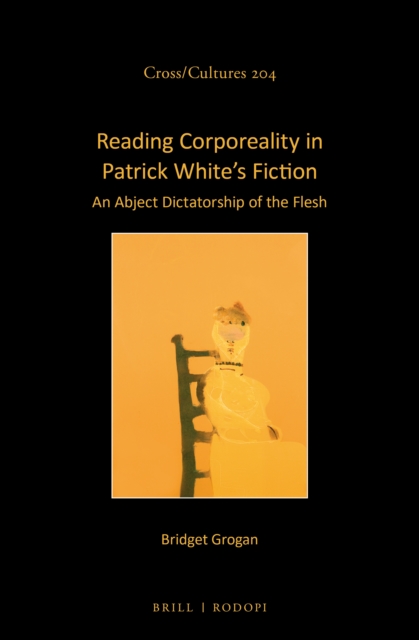
Reading Corporeality in Patrick White's Fiction
In Reading Corporeality in Patrick White's Fiction: An Abject Dictatorship of the Flesh, Bridget Grogan combines theoretical explication, textual comparison, and close reading to argue that corporeality is central to Patrick White's fiction, shaping the characterization, style, narrative trajectories, and implicit philosophy of his novels and short stories. Critics have often identified a radical disgust at play in White's writing, claiming that it arises from a defining dualism that posits the 'purity' of the disembodied 'spirit' in relation to the 'pollution' of the material world. Grogan argues convincingly, however, that White's fiction is far more complex in its approach to the body. Modeling ways in which Kristevan theory may be applied to modern fiction, her close attention to White's recurring interest in physicality and abjection draws attention to his complex questioning of metaphysics and subjectivity, thereby providing a fresh and compelling reading of this important world author.
eBook

Abjection in Dambudzo Marechera's The House of Hunger
In a description of nationalist poems about “a golden age of black heroes; of myths and legends and sprites” (Marechera 74), the narrator of The House of Hunger (1978) observes that these themes are the “exposed veins dripping through the body of the poems.” In this article we extend this observation to argue that, metaphorically on display in Marechera’s novella itself, are the “exposed veins dripping through the body of the [text]” (74). The novella’s themes include colonialism, social destitution, violence, state-sanctioned oppression, identity struggles, poverty, dislocation, disillusionment and anger, all of which are appropriately imaged in Marechera’s visceral metaphor of the pain and violence implicit in the literary text. More specifically, corporeal imagery emphasises the unnamed narrator’s troubled existence, suffusing The House of Hunger in a manner that elicits disgust and horror, thus encouraging the reader’s affective response to the representation of the colonial condition. This article illuminates Marechera’s seeming obsession with corporeality by providing a postcolonial and psychoanalytic reading, focussing in particular on Julia Kristeva’s theory of abjection. Although critics have objected to reading African texts through the lens of psychoanalysis, the article sets out to address this concern, noting the importance of theorists like Frantz Fanon and Joshua D. Esty in justifying psychoanalytic readings of African literature, and drawing resonant parallels between Kristevan theory and Marechera’s perspective on the colonial condition of Zimbabwe (Rhodesia) in the 1970s.
Journal Article

Resuscitating the body: Corporeality in the fiction of Patrick White
Patrick White's fiction is arguably best known for its metaphysics, in particular its presentation of identity as open to a transcendental dissolution. His writing is therefore often read as dismissive of the physical world, exhibiting in particular an impatience, and even disgust, with embodiment. Yet White's novels do not necessarily correlate with a desire to escape the body so much as to evade discursive subjectivity. They are primarily concerned with the individual's attempt to attain some kind of illuminating revelation, an intuitive epiphany that occurs when rational consciousness dissolves and the character yields to moments of communion-with other individuals, with the landscape, with all aspects of physicality including the onset of death, or with repressed and transgressive aspects of the psyche. These instances exemplify what Bill Ashcroft names White's writerly striving for a 'synthesis of self and other' linked to the theme of the 'sacred' within his work ('Horizon' 132). Further, they coincide with the disintegration of socialised identity, a dissolution constituting the redemptive reward or grace bestowed upon White's often disenfranchised protagonists. Like Theodora Goodman of The Aunt's Story, these characters yearn to 'destroy the great monster Self' (128). It has not been the critical consensus, however, that transcendence in White involves transcending subjectivity rather than corporeality. Andrew Riemer argues that White's fiction is 'dedicated to the notion that the body, the flesh and the senses are utterly worthless' (26). Brian Kiernan reads the work as presenting 'the soul imprisoned in the corrupting flesh' (462). And, for Peter Beatson, White's fiction dismisses the body entirely: 'Every book ends with the implication that the shell has, or will split apart, having outlived its protective and gestative functions' (110).
Journal Article

Perceptions of Daisy de Melker: Representations of a Sensational Trial
This article discusses the sensational trial of the serial poisoner Daisy de Melker in terms of the reaction of 1930s South Africa to the transgression of white, English-speaking communal ties and values. The discussion focuses on representations of the events by three writers - Harry Morris, Herman Charles Bosman and Sarah Gertrude Millin. Each attended the trial, directly observing the court proceedings, yet each presents a different perspective. Morris, de Melker's lawyer, provides details of his client's crimes and personality, while exhibiting a subtle ambivalence towards her; Bosman's and Millin's accounts are less direct and factual, harnessing de Melker for their contrasting identifications of social ills. For Bosman, alienated from the white social body by his own former murder trial and conviction, de Melker's trial emphasised the punitive nature of South African society, providing a platform to discuss the barbarism of the death penalty. For Millin, however, de Melker embodied the abjection relating to the criminal disgrace of a white English-speaking woman. Indeed, de Melker's trial resulted in conflicting responses that emphasised the ambivalence, fragility and internal contradictions within white South Africa at the time. These responses reveal race and gender as essential components of sensational trials within the colonial South African body politic.
Journal Article
Abjection in Dambudzo Marechera’s
In a description of nationalist poems about “a golden age of black heroes; of myths and legends and sprites” (Marechera 74), the narrator of The House of Hunger (1978) observes that these themes are the “exposed veins dripping through the body of the poems.” In this article we extend this observation to argue that, metaphorically on display in Marechera’s novella itself, are the “exposed veins dripping through the body of the [text]” (74). The novella’s themes include colonialism, social destitution, violence, state-sanctioned oppression, identity struggles, poverty, dislocation, disillusionment and anger, all of which are appropriately imaged in Marechera’s visceral metaphor of the pain and violence implicit in the literary text. More specifically, corporeal imagery emphasises the unnamed narrator’s troubled existence, suffusing The House of Hunger in a manner that elicits disgust and horror, thus encouraging the reader’s affective response to the representation of the colonial condition. This article illuminates Marechera’s seeming obsession with corporeality by providing a postcolonial and psychoanalytic reading, focussing in particular on Julia Kristeva’s theory of abjection. Although critics have objected to reading African texts through the lens of psychoanalysis, the article sets out to address this concern, noting the importance of theorists like Frantz Fanon and Joshua D. Esty in justifying psychoanalytic readings of African literature, and drawing resonant parallels between Kristevan theory and Marechera’s perspective on the colonial condition of Zimbabwe (Rhodesia) in the 1970s.
Journal Article

Sexual violence and the South African imaginary : review article
Lucy Valerie Graham, State of Peril: Race and Rape in South African Literature. New York: Oxford UP, 2012. x + 253pp. ISBN: 97801997966373.
Journal Article
Chinua Achebe's Things Fall Apart 1958-2008, David Whittaker (Ed.) : review
David Whittaker's Chinua Achebe's Things Fall Apart is an edited collection commemorating the fiftieth anniversary of the publication of Achebe's seminal postcolonial text. Arising from a conference held in London in October 2008, the book provides new discussions and interpretations of Achebe's famous novel; it is not a selection of criticism of the last fifty years, as the title may suggest.
Journal Article

