
Catalogue Search | MBRL


Are you sure you want to remove the book from the shelf?

{{itemTitle}}
4
result(s) for
"Guillermo Perry, Ramona Angelescu Naqvi"
Sort by:
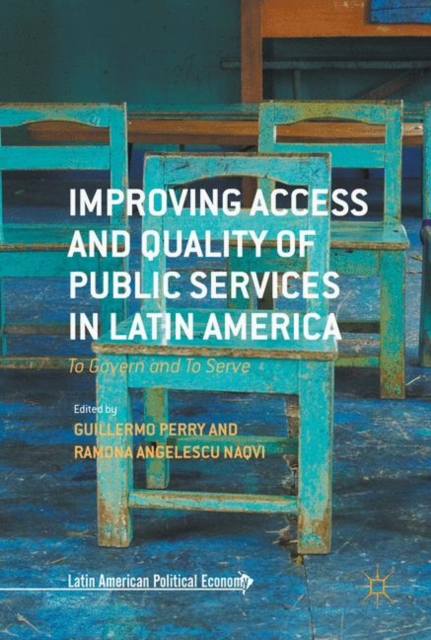
Improving Access and Quality of Public Services in Latin America
This book presents insights from several countries in Latin America and beyond on how to organize critical sectors, such as education, roads and water, to improve quality, access and affordability. The innovative, multi-disciplinary studies in this volume discuss the outcomes of decentralization, school autonomy, participatory budgeting at the local level and other accountability mechanisms. Rich quantitative analyses are complemented and enhanced by insights from interviews and quotes from those on the front lines: politicians, bureaucrats and service providers; as well as a variety of case-studies focusing on wider political economy questions, on the intricacies of political competition and governance reform, and on public spending efficiency in countries as varied as Colombia, Peru, Chile and Uruguay. As the authors demonstrate, Latin America has much to share with the rest of the world in terms of governance and public service delivery experiments and learnings.
eBook

Building a Culture of Accountability in Service Delivery: Conclusions from the GDN Project on Varieties of Governance and Service Delivery
This chapter summarizes the main conclusions from a Global Development Network (GDN) research project that was designed and directed by the authors. It supports them with detailed references to the three Latin American case studies published in this volume, which examined the impact of decentralization reforms on quality of education and water supply in Colombia, the effects of citizen participation in municipal budgeting on the quality of water supply in Peru and the consequences of a wide set of reforms—decentralization, teacher incentives, school autonomy—on the quality and equity of basic education in Chile and Uruguay. It also makes occasional references to some of the other 13 country or multi-country case studies of the GDN project (four in Asia, six in Africa and three in Central and Eastern Europe), covering 30 countries in total.
Book Chapter