
Catalogue Search | MBRL


Are you sure you want to remove the book from the shelf?

{{itemTitle}}
19,923
result(s) for
"Guo, Yuan"
Sort by:

SpatialDWLS: accurate deconvolution of spatial transcriptomic data
Recent development of spatial transcriptomic technologies has made it possible to characterize cellular heterogeneity with spatial information. However, the technology often does not have sufficient resolution to distinguish neighboring cell types. Here, we present spatialDWLS, to quantitatively estimate the cell-type composition at each spatial location. We benchmark the performance of spatialDWLS by comparing it with a number of existing deconvolution methods and find that spatialDWLS outperforms the other methods in terms of accuracy and speed. By applying spatialDWLS to a human developmental heart dataset, we observe striking spatial temporal changes of cell-type composition during development.
Journal Article


Accurate estimation of cell-type composition from gene expression data
The rapid development of single-cell transcriptomic technologies has helped uncover the cellular heterogeneity within cell populations. However, bulk RNA-seq continues to be the main workhorse for quantifying gene expression levels due to technical simplicity and low cost. To most effectively extract information from bulk data given the new knowledge gained from single-cell methods, we have developed a novel algorithm to estimate the cell-type composition of bulk data from a single-cell RNA-seq-derived cell-type signature. Comparison with existing methods using various real RNA-seq data sets indicates that our new approach is more accurate and comprehensive than previous methods, especially for the estimation of rare cell types. More importantly, our method can detect cell-type composition changes in response to external perturbations, thereby providing a valuable, cost-effective method for dissecting the cell-type-specific effects of drug treatments or condition changes. As such, our method is applicable to a wide range of biological and clinical investigations.
Bulk RNA-seq data harbors valuable information about gene expression levels from different cell types in tissue samples. Here, the authors develop DWLS, a computational method for estimating cell-type composition of bulk data by leveraging single-cell RNA-seq-derived cell-type signatures.
Journal Article
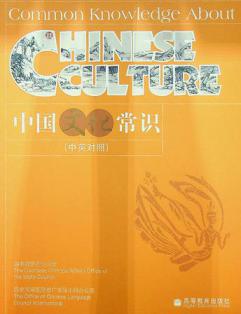
Common knowledge about Chinese culture
Traditional Chinese ideology - Traditional virtues of China - Ancient Chinese literature - Science and technology of ancient China - Traditional Chinese art - Chinese cultural relics - Ancient Chinese architecture - Chinese arts and crafts - Chinese folk customs - Life of the Chinese people.
Book
GiniClust: detecting rare cell types from single-cell gene expression data with Gini index
High-throughput single-cell technologies have great potential to discover new cell types; however, it remains challenging to detect rare cell types that are distinct from a large population. We present a novel computational method, called GiniClust, to overcome this challenge. Validation against a benchmark dataset indicates that GiniClust achieves high sensitivity and specificity. Application of GiniClust to public single-cell RNA-seq datasets uncovers previously unrecognized rare cell types, including Zscan4-expressing cells within mouse embryonic stem cells and hemoglobin-expressing cells in the mouse cortex and hippocampus. GiniClust also correctly detects a small number of normal cells that are mixed in a cancer cell population.
Journal Article

مفاهيم جديدة للدبلوماسية الصينية
ناقش الكاتب خلاله مفهوم التدخل الإبداعي في الدبلوماسية الصينية الجديدة وقدم عددا من القضايا والشخصيات التي تجسده-وفقا له-في تاريخ الممارسات الدبلوماسية الصينية منذ انتهاء الحرب الباردة واستخلص من خلالها عددا من المبادئ والمفاهيم المرتبطة بالتدخل الإبداعي وكيفية تطبيقه وقدم أخيرا عددا من الافتراضات التصورية للتدخل الإبداعي ليمتد تأثيره إلى ممارسات المرحلة القادمة للدبلوماسية الصينية. ثم طرح المؤلف عددا من القضايا التي تحمل في ثناياها مفهوم التدخل الإبداعي ومعناه وتجسد رؤية الدبلوماسيين الصينيين وسعة خيالهم في التعامل مع الأزمات وأبرزها قضية الوساطة في ميانمار والتدخل في أزمة دارفور.
BOOK

Microglia exacerbate white matter injury via complement C3/C3aR pathway after hypoperfusion
Microglial activation participates in white matter injury after cerebral hypoperfusion. However, the underlying mechanism is unclear. Here, we explore whether activated microglia aggravate white matter injury via complement C3-C3aR pathway after chronic cerebral hypoperfusion.
: Adult male Sprague-Dawley rats (n = 80) underwent bilateral common carotid artery occlusion for 7, 14, and 28 days. Cerebral vessel density and blood flow were examined by synchrotron radiation angiography and three-dimensional arterial spin labeling. Neurobehavioral assessments, CLARITY imaging, and immunohistochemistry were performed to evaluate activation of microglia and C3-C3aR pathway. Furthermore, C3aR knockout mice were used to establish the causal relationship of C3-C3aR signaling on microglia activation and white matter injury after hypoperfusion.
: Cerebral vessel density and blood flow were reduced after hypoperfusion (
0.05). Spatial learning and memory deficits and white matter injury were shown (
0.05). These impairments were correlated with aberrant microglia activation and an increase in the number of reactive microglia adhering to and phagocytosed myelin in the hypoperfusion group (
0.05), which were accompanied by the up-regulation of complement C3 and its receptors C3aR (
0.05). Genetic deletion of
significantly inhibited aberrant microglial activation and reversed white matter injury after hypoperfusion (
0.05). Furthermore, the C3aR antagonist SB290157 decreased the number of microglia adhering to myelin (
0.05), attenuated white matter injury and cognitive deficits in chronic hypoperfusion rats (
0.05).
: Our results demonstrated that aberrant activated microglia aggravate white matter injury via C3-C3aR pathway during chronic hypoperfusion. These findings indicate C3aR plays a critical role in mediating neuroinflammation and white matter injury through aberrant microglia activation, which provides a novel therapeutic target for the small vessel disease and vascular dementia.
Journal Article


Neutrinophilic axion-like dark matter
The axion-like particles (ALPs) are very good candidates of the cosmological dark matter, which can exist in many extensions of the standard model (SM). The mass of the ALPs can be as small as \\[{\\mathcal {O}}(10^{-22})~\\mathrm{eV}\\]. On the other hand, the neutrinos are found to be massive and the SM must be extended to explain the sub-eV neutrino masses. It becomes very interesting to consider an exclusive coupling between these two low scale frontiers that are both beyond the SM. The propagation of neutrinos inside the Milky Way would undergo the coherent forward scattering effect with the ALP background, and the neutrino oscillation behavior can be modified by the ALP-induced potential. Assuming a derivative coupling between the ALP and the three generations of active neutrinos, possible impacts on the neutrino oscillation experiments have been explored in this paper. In particular, we have numerically studied the sensitivity of the deep underground neutrino experiment (DUNE). The astrophysical consequences of such coupling have also been investigated systematically.
Journal Article