
Catalogue Search | MBRL


Are you sure you want to remove the book from the shelf?

{{itemTitle}}
11
result(s) for
"Gupta, Sanjeev author"
Sort by:


New Evidenceon Fiscal Adjustment and Growth in Transition Economies
This paper analyzes the relationship between fiscal adjustment and real GDP growth in a panel of 26 transition economies during 1992-2001. Unlike most previous studies using cross-country regressions, the paper finds a positive and statistically significant relationship between fiscal adjustment and growth that is robust to different model specifications and estimation methods. The paper also presents country experiences to delve deeper into the mechanisms that may underlie this statistical relationship
Book

Natural Resource Endowments, Governance, and the Domestic RevenueEffort: Evidence from a Panel of Countries
The recent development literature stresses that countries that receive large revenues from natural resource endowments typically raise less revenue from domestic taxation, and that this creates governance problems because the lower domestic tax effort reduces the incentive for the public scrutiny of government. Our results from a panel of 30 hydrocarbon producing countries indicate that the offset between hydrocarbon revenues and revenues from other domestic sources is about 20 percent but that it is invariant to governance indicators.
eBook

Is it (Still) Mostly Fiscal? Determinants of Sovereign Spreads in Emerging Markets
Using a panel of 30 emerging market economies from 1997 to 2007, this paper investigates the determinants of country risk premiums as measured by sovereign bond spreads. Unlike previous studies, the results indicate that both fiscal and political factors matter for credit risk in emerging markets. Lower levels of political risk are associated with tighter spreads, while efforts at fiscal consolidation narrow credit spreads, especially in countries that experienced prior defaults. The composition of fiscal policy matters: spending on public investment contributes to lower spreads as long as the fiscal position remains sustainable and the fiscal deficit does not worsen.
eBook

How Effective is Fiscal Policy Response in Systemic Banking Crises?
This paper studies the effects of fiscal policy response in 118 episodes of systemic banking crisis in advanced and emerging market countries during 1980-2008. It finds that timely countercyclical fiscal measures contribute to shortening the length of crisis episodes by stimulating aggregate demand. Fiscal expansions that rely mostly on measures to support government consumption are more effective in shortening the crisis duration than those based on public investment or income tax cuts. But these results do not hold for countries with limited fiscal space where fiscal expansions are prevented by funding constraints. The composition of countercyclical fiscal responses matters as well for output recovery after the crisis, with public investment yielding the strongest impact on growth. These results suggest a potential trade-off between short-run aggregate demand support and medium-term productivity growth objectives in fiscal stimulus packages adopted in distress times.
eBook
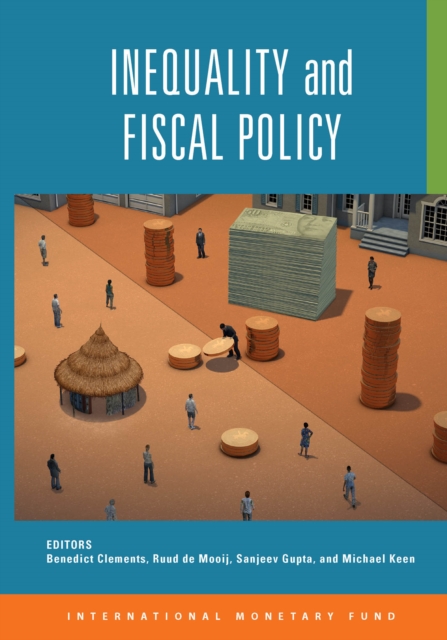
Inequality and fiscal policy (eng)
The sizeable increase in income inequality experienced in advanced economies and many parts of the world since the 1990s and the severe consequences of the global economic and financial crisis have brought distributional issues to the top of the policy agenda. The challenge for many governments is to address concerns over rising inequality while simultaneously promoting economic efficiency and more robust economic growth. The book delves into this discussion by analyzing fiscal policy and its link with inequality. Fiscal policy is the government's most powerful tool for addressing inequality. It affects households 'consumption directly (through taxes and transfers) and indirectly (via incentives for work and production and the provision of public goods and individual services such as education and health). An important message of the book is that growth and equity are not necessarily at odds; with the appropriate mix of policy instruments and careful policy design, countries can in many cases achieve better distributional outcomes and improve economic efficiency. Country studies (on the Netherlands, China, India, Republic of Congo, and Brazil) demonstrate the diversity of challenges across countries and their differing capacity to use fiscal policy for redistribution. The analysis presented in the book builds on and extends work done at the IMF, and also includes contributions from leading academics.
eBook
Energy subsidy reform: lessons and implications
This volume provides the most comprehensive estimates of worldwide energy subsidies currently available, drawing on data from 176 countries in the areas of petroleum products, natural gas, coal, and electricity. It lays out an analysis of \"how to do\" energy subsidy reform, drawing on insights from 22 country case studies and analyses carried out by other institutions, and it offers summary narratives and analyses of reform efforts undertaken in each of those 22 countries.
eBook

New Evidence on Fiscal Adjustment and Growth in Transition Economies
This paper analyzes the relationship between fiscal adjustment and real GDP growth in a panel of 26 transition economies during 1992-2001. Unlike most previous studies using cross-country regressions, the paper finds a positive and statistically significant relationship between fiscal adjustment and growth that is robust to different model specifications and estimation methods. The paper also presents country experiences to delve deeper into the mechanisms that may underlie this statistical relationship.
eBook
Equitable and sustainable pensions
Pension reform is high on the agenda of many advanced and emerging market economies, for many reasons. First, public pensions often constitute a large share of government expenditure. Second, population aging means that reforms would be needed just to keep pension spending from rising in the future. Third, in many economies, low or falling pension coverage will leave large segments of the population without adequate income in old age and at risk of falling into poverty. Although a number of studies have assessed the effects of pension reforms on fiscal sustainability, a systematic analysis of equity issues in pension systemsand how countries have grappled with these issueshas yet to be undertaken. This book brings together the latest research on equity issues related to pension systems and pension reforms in the post-crisis world. Some of the key issues covered include: the effect of pension systems on intergenerational equity and the impact of pension reforms on poverty, the effects of pension reform measures on fiscal sustainability and equity, and the fiscal consequences of achieving different equity goals. It also presents country case studies. The volume provides a rich menu of material to assist policymakers and academic audiences seeking to understand the latest research in this area, as well as the lessons and challenges for the design of reforms.
eBook

Reforma de los subsidios a la energía : Lecciones e implicaciones
Los subsidios a la energía tienen consecuencias económicas de amplio alcance. A pesar de que tienen por objeto proteger a los consumidores, los subsidios agravan los desequilibrios fiscales, desplazan gastos públicos prioritarios y deprimen la inversión privada, en particular en el sector de la energía. Los subsidios también distorsionan la asignación de recursos al promover un consumo excesivo de energía, estimular artificialmente industrias que requieren un uso intensivo de capital, reducir los incentivos a la inversión en energías renovables y acelerar el agotamiento de los recursos naturales. Los hogares de mayores ingresos son en definitiva los principales beneficiarios de los subsidios, con lo cual se agudiza la desigualdad. Incluso las generaciones futuras se ven afectadas por los efectos perjudiciales de un aumento del consumo de energía a través del calentamiento global. Este libro ofrece 1) las estimaciones más completas de los subsidios a la energía disponibles en la actualidad con respecto a 176 países y 2) un análisis de cómo realizar la reforma de los subsidios a la energía, a partir de las conclusiones extraídas de 22 estudios de casos realizados por el personal técnico del FMI y de análisis llevados a cabo por otras instituciones.
eBook