
Catalogue Search | MBRL


Are you sure you want to remove the book from the shelf?

{{itemTitle}}
160
result(s) for
"Gutas, Dimitri"
Sort by:


Why Translate Science?
A collection of documents from antiquity to the 16th century in the historical West (Bactria to the Atlantic), in the original languages with an English translation and introductory essays, about the motivations and purposes of translation from and into Greek, Syriac, Middle Persian, Arabic, Hebrew, and Latin, as given in the personal statements by the translators, scholars, and historians of each society.
eBook

Greek Thought, Arabic Culture
From the middle of the eighth century to the tenth century, almost all non-literary and non-historical secular Greek books, including such diverse topics as astrology, alchemy, physics, botany and medicine, that were not available throughout the eastern Byzantine Empire and the Near East, were translated into Arabic. Greek Thought, Arabic Culture explores the major social, political and ideological factors that occasioned the unprecedented translation movement from Greek into Arabic in Baghdad, the newly founded capital of the Arab dynasty of the 'Abbasids', during the first two centuries of their rule. Dimitri Gutas draws upon the preceding historical and philological scholarship in Greco-Arabic studies and the study of medieval translations of secular Greek works into Arabic and analyses the social and historical reasons for this phenomenon. Dimitri Gutas provides a stimulating, erudite and well-documented survey of this key movement in the transmission of ancient Greek culture to the Middle Ages.
eBook
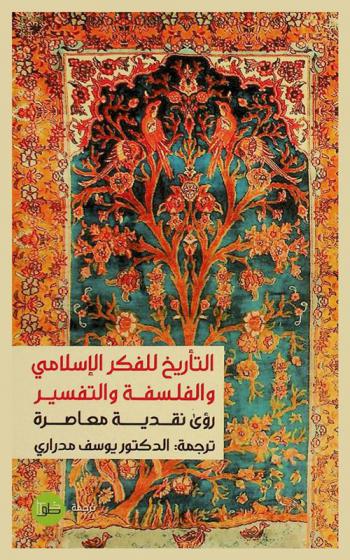
التأريخ للفكر الإسلامي والفلسفة والتفسير : رؤى نقدية معاصرة
يتضمن الكتاب دراسات تنتمي إلى حقول معرفية مختلفة: علم الكلام، الفلسفة الإسلامية، تاريخ المنطق، التفسير، وتاريخ الكتاب. وأغلبها دراسات تطبعها المقاربة التاريخية؛ حيث تم التأريخ للتقاليد المعرفية في الإسلام الوسيط، ومراجعة بعض الأحكام التي سادت في حقلي الدراسات الإسلامية أو الدراسات الشرقية ولعل من أهم العقبات التي تعيق ترجمة العديد من الأعمال الغربية في الدراسات الإسلامية هو أن ترجمة تلك الأعمال تحتاج متخصصين في العلوم الاسلامية عارفين باللغات الاوربية المترجم منها.
Book

The Myth of a Kantian Avicenna
Gutas discusses the myth of a Kantian Avicenna. In his Oriens article on Avicenna's empiricism, he presents what Avicenna calls the principles of syllogism, which are the different types of propositions that form the irreducible and axiomatic starting points of syllogisms and definitions. As Avicenna states both explicitly and implicitly in numerous passages that he cites, these are all based on experience.
Journal Article

The Empiricism of Avicenna
The core of the article presents a systematic survey of Avicenna's empirical epistemology on the basis of his texts (for related subjects also discussed see the table of contents below). The human rational soul, upon its first creation, is absolutely potential, a tabula rasa. As the child grows up, experience (mušāhada) provides him with information about the sensibles through the senses (ḥiss), from which he abstracts (tajrīd) intelligible concepts, and about himself and the operations of his soul through reflection (iʿtibār). The natural operation of his mind (fiṭra) sorts out the concepts so developed and classifies and orders them according to notions of whether they are particular or general, essential or accidental; it invests them with mutual relations like those of affirmation and negation; and then combines them to form definitions and primary and self-evident propositions which constitute the logical and mathematical framework of thinking. Once these primary notions (awwaliyyāt) are acquired at the stage Avicenna calls dispositional intellect (al-ʿaql bi-l-malaka), and with further input from the senses, both external and internal, the intellect acquires other intelligibles through syllogistic thinking and the discovery of middle terms (ḥads), attaining the stages of actual and acquired intellect (al-ʿaql bi-l-fiʿl, al-mustafād). With the help of the empirical datum of one's existence and then the realization of the existence of existence as such, the intellect is able to establish the existence of the necessary existent and of the immaterial substance of his self. In all these operations the function of the intellect is procedural; in itself it has no innate or a priori contents. The texts where Avicenna presents these theories are compared throughout with parallel passages from the work of John Locke, which show a striking similarity to them. The article concludes with a terminological study on the terms tajrīd, tajriba, mušāhada, and maʿnā as used by Avicenna.
Journal Article

Why translate science? : documents from antiquity to the 16th century in the historical West (Bactria to the Atlantic)
From antiquity to the 16th century, translation united culturally the peoples in the historical West (from Bactria to the shores of the Atlantic) and fueled the production and circulation of knowledge. The Hellenic scientific and philosophical curriculum was translated from and into, to mention the most prevalent languages, Greek, Syriac, Middle Persian, Arabic, Hebrew, and Latin.To fill a lack in existing scholarship, this volume collects the documents that present the insider evidence provided in contemporary accounts of the motivations and purposes of translation given in the personal statements by the agents in this process, the translators, scholars, and historians of each society. Presented in the original languages with an English translation and introductory essays, these documents offer material for the study of the historical contextualization of the translations, the social history of science and philosophy in their interplay with traditional beliefs, and the cultural policies and ideological underpinnings of these societies.ContributorsMichael Angold, Pieter Beullens, Charles Burnett, David Cohen, Gad Freudenthal, Dag Nikolaus Hasse, Anthony Kaldellis, Daniel King, Felix Mundt, Ignacio Sánchez, Isabel Toral, Uwe Vagelpohl, and Mohsen Zakeri.
eBook

A NEW “EDITION” OF ḤUNAYN’S RISĀLA , Ḥunayn ibn Isḥāq, Ḥunayn ibn Isḥāq on his Galen Translations , ed. and trans. John C. Lamoreaux. Provo: Brigham Young University Press, 2016. xxxiii-207 pages, series “Eastern Christian Texts” 6. Ḥunayn ibnIsḥāq, Ḥunayn ibn Isḥāq on his Galen Translations, ed. and trans. John C.Lamoreaux. Provo: Brigham Young University Press, 2016. xxxiii-207 pages, series “Eastern Christian Texts” 6
One of the most important medieval documents in the history of medicine and scholarship, and of culture in general, is doubtless the bibliographical treatise (“epistle”, Risāla ) by Ḥunayn b. Isḥāq (808-873) addressed to his patron and patron of the arts, the gentleman courtier ‘Alī b. Yaḥyā b. al-Munaǧǧim (d. 275 / 888-889), listing the translations of Galen into Syriac and Arabic. Its transmission and publication history, though, is extremely complicated.
Journal Article
A NEW “EDITION” OF ḤUNAYN'S RISĀLA
One of the most important medieval documents in the history of medicine and scholarship, and of culture in general, is doubtless the bibliographical treatise (“epistle”, Risāla) by Ḥunayn b. Isḥāq (808-873) addressed to his patron and patron of the arts, the gentleman courtier ‘Alī b. Yaḥyā b. al-Munaǧǧim (d. 275 / 888-889), listing the translations of Galen into Syriac and Arabic. Its transmission and publication history, though, is extremely complicated.
Journal Article