
Catalogue Search | MBRL


Are you sure you want to remove the book from the shelf?

{{itemTitle}}
271
result(s) for
"Guthrie, George"
Sort by:

Review of flow rate estimates of the Deepwater Horizon oil spill
The unprecedented nature of the Deepwater Horizon oil spill required the application of research methods to estimate the rate at which oil was escaping from the well in the deep sea, its disposition after it entered the ocean, and total reservoir depletion. Here, we review what advances were made in scientific understanding of quantification of flow rates during deep sea oil well blowouts. We assess the degree to which a consensus was reached on the flow rate of the well by comparing in situ observations of the leaking well with a time-dependent flow rate model derived from pressure readings taken after the Macondo well was shut in for the well integrity test. Model simulations also proved valuable for predicting the effect of partial deployment of the blowout preventer rams on flow rate. Taken together, the scientific analyses support flow rates in the range of ∼50,000–70,000 barrels/d, perhaps modestly decreasing over the duration of the oil spill, for a total release of ∼5.0 million barrels of oil, not accounting for BP's collection effort. By quantifying the amount of oil at different locations (wellhead, ocean surface, and atmosphere), we conclude that just over 2 million barrels of oil (after accounting for containment) and all of the released methane remained in the deep sea. By better understanding the fate of the hydrocarbons, the total discharge can be partitioned into separate components that pose threats to deep sea vs. coastal ecosystems, allowing responders in future events to scale their actions accordingly.
Journal Article

A machine learning framework for rapid forecasting and history matching in unconventional reservoirs
We present a novel workflow for forecasting production in unconventional reservoirs using reduced-order models and machine-learning. Our physics-informed machine-learning workflow addresses the challenges to real-time reservoir management in unconventionals, namely the lack of data (i.e., the time-frame for which the wells have been producing), and the significant computational expense of high-fidelity modeling. We do this by applying the machine-learning paradigm of transfer learning, where we combine fast, but less accurate reduced-order models with slow, but accurate high-fidelity models. We use the Patzek model (Proc Natl Acad Sci 11:19731–19736,
https://doi.org/10.1073/pnas.1313380110
, 2013) as the reduced-order model to generate synthetic production data and supplement this data with synthetic production data obtained from high-fidelity discrete fracture network simulations of the site of interest. Our results demonstrate that training with low-fidelity models is not sufficient for accurate forecasting, but transfer learning is able to augment the knowledge and perform well once trained with the small set of results from the high-fidelity model. Such a physics-informed machine-learning (PIML) workflow, grounded in physics, is a viable candidate for real-time history matching and production forecasting in a fractured shale gas reservoir.
Journal Article

The Tree and the Temple: Echoes of a New Ingathering and Renewed Exile (Mark 11.12–21)
This article considers Mark's account of the cursing of the fig tree, read in conjunction with Jesus’ temple action. Having reviewed recent proposals on the literary shape of Mark 11.1–12.12, the article proposes a fresh reading of the section's structure. Triple introductions at 11.11, 11.15 and 11.27 are shown to match triple conclusions at 11.11, 11.19 and 12.12, these constituents framing interwoven units running from 11.11 to 12.12. The pattern of triple intercalation suggests that the cursing of the fig tree and Jesus’ temple action should be interpreted one in light of the other. The article then considers the intertextual relationship between Mark's narrative and the scriptural texts it evokes. The study uncovers previously neglected echoes vital for understanding the significance of Jesus’ cursing of the fig tree and temple action. The ‘casting out’ motif in Jeremiah 7–8, as dramatically portrayed in Jesus’ temple action, is set forth as heralding a ‘renewed exile’ for those who reject Jesus’ message, while the mirror motif of ‘ingathering’ in Isa 56.1–8, accentuated by the ‘withered tree’ imagery of 56.3, heralds new opportunity, with those who were previously outsiders to the temple made insiders in the eschatological house of prayer.
Journal Article
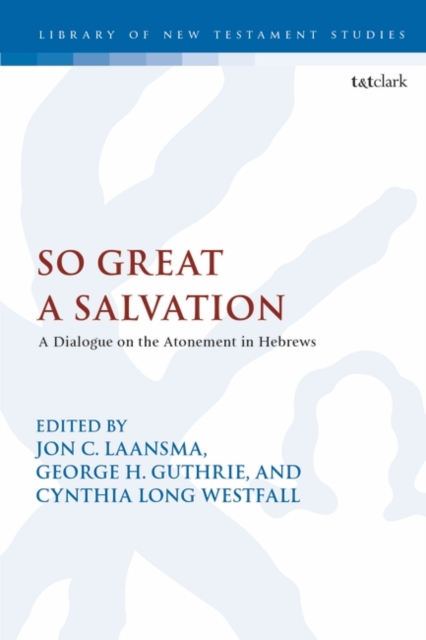
So great a salvation: a dialogue on the atonement in Hebrews
This volume presents a dialogue between historians, exegetes, and theologians on the background and key themes of the atonement in Hebrews. Presenting a range of differing perspectives and contributing to the renewed conversation between biblical and theological scholarship, the argument is structured in two parts: contexts and themes within Hebrews. Focusing on atonement not only in the Old Testament but also in the Greco-Roman world, and touching on themes such as sacrifice, plight and solution, and faith, these contributions shed light on the concept of the atonement in a directly scriptural way. The whole is a definitive collection of studies on the atonement in Hebrews that will be of service well beyond the confines of Hebrews' specialists, a collection as important for what it says about the atonement and the 21st century church as for what it says about Hebrews.
eBook
Healthy Lifestyle Interventions to Combat Noncommunicable Disease—A Novel Nonhierarchical Connectivity Model for Key Stakeholders: A Policy Statement From the American Heart Association, European Society of Cardiology, European Association for Cardiovascular Prevention and Rehabilitation, and American College of Preventive Medicine
Noncommunicable diseases (NCDs) have become the primary health concern for most countries around the world. Currently, more than 36 million people worldwide die from NCDs each year, accounting for 63% of annual global deaths; most are preventable. The global financial burden of NCDs is staggering, with an estimated 2010 global cost of $6.3 trillion (US dollars) that is projected to increase to $13 trillion by 2030. A number of NCDs share one or more common predisposing risk factors, all related to lifestyle to some degree: (1) cigarette smoking, (2) hypertension, (3) hyperglycemia, (4) dyslipidemia, (5) obesity, (6) physical inactivity, and (7) poor nutrition. In large part, prevention, control, or even reversal of the aforementioned modifiable risk factors are realized through leading a healthy lifestyle (HL). The challenge is how to initiate the global change, not toward increasing documentation of the scope of the problem but toward true action—creating, implementing, and sustaining HL initiatives that will result in positive, measurable changes in the previously defined poor health metrics. To achieve this task, a paradigm shift in how we approach NCD prevention and treatment is required. The goal of this American Heart Association/European Society of Cardiology/European Association for Cardiovascular Prevention and Rehabilitation/American College of Preventive Medicine policy statement is to define key stakeholders and highlight their connectivity with respect to HL initiatives. This policy encourages integrated action by all stakeholders to create the needed paradigm shift and achieve broad adoption of HL behaviors on a global scale.
Journal Article
Paul's Triumphal Procession Imagery (2 Cor 2.14–16a): Neglected Points of Background
This article seeks a fresh assessment of Paul's pompa triumphalis imagery at 2 Cor. 2.14–16a by probing a number of neglected aspects of both lexical and cultural background. Included are (1) an analysis of the use of θριαμβεύω in the Greco-Roman literature, with special attention given to claims made concerning the word's use with direct objects; (2) a lexicology of ὀσμή and εὐωδία in literatures of the period; and (3) a probing of the language of ‘salvation’ in the passage, with attention given to a feature of the triumphal procession parades that has until now failed to garner attention in investigations of the passage.
Journal Article

Inventing Hebrews: Design and Purpose in Ancient Rhetoric
First among the strengths of Inventing Hebrews stands the authors' delving into the technical intricacies of classical rhetoric. [...]this account of ancient rhetoric actually confirms the conventionality of certain fruit of scholarship on Hebrews' structure from the past, for example the movement back and forth between deliberative and epideictic forms of discourse, the importance of syncrisis, and the contention that the program of the whole is deliberative in nature. The author follows on the ex- ample of Moses's-and preeminently Jesus's-faithfulness, with the faithlessness of the wilderness wanderers (3:7-19). [...]the point of the passage is not that Jesus is a greater covenant mediator than Moses (neither mediation nor covenant are mentioned in the passage) but that he offers an even better model of faithfulness to follow than respected Moses. [...]the authors have eschewed \"literary indicators\" such as inclusio, hook words, and chiasmus as more to do with ornamentation and thus unable to \"provide a sufficient foundation for the overall structure and logic of a speech like Hebrews\" (p. 5).
Journal Article

Case Report: Subarachnoid Hemorrhage in Woman with Migraines
In a hospital-based series of 482 patients admitted with subarachnoid hemorrhage, initial misdiagnosis occurred in 12 percent of patients.1 Failure to obtain a head CT scan at initial contact was the most common error, occurring in 73 percent of misdiagnosed patients. Among patients with subarachnoid hemorrhage who had normal mental status at first contact (45 percent), the misdiagnosis rate rose to 20 percent; this was associated with a nearly fourfold increase in mortality at 12 months as well as increased morbidity among survivors.2 Sudden \"thunderclap\" (also known as sentinel) headache, regardless of severity or headache history, should raise the clinical suspicion for subarachnoid hemorrhage.
Journal Article

Reactions and reaction rates in the regional aquifer beneath the Pajarito Plateau, north-central New Mexico, USA
Reactions and reaction rates within aquifers are fundamental components of critical hydrological processes. However, reactions simulated in laboratory experiments typically demonstrate rates that are much faster than those observed in the field. Therefore, it is necessary to conduct more reaction rate analyses in natural settings. This study of geochemical reactions in the regional aquifer in the Pajarito Plateau near Los Alamos, New Mexico combines modeling with petrographic assessment to further knowledge and understanding of complex natural hydrologic systems. Groundwater geochemistry shows marked evolution along assumed flow paths. The flow path chosen for this study was evaluated using inverse mass balance modeling to calculate the mass transfer. X-ray diffraction and field emission gun scanning electron microscopy were used to identify possible reactants and products. Considering the mineralogy of the aquifer and saturation indices for the regional water refined initial interpretations. Calculations yielded dissolution rates for plagioclase on the order of 10^sup -15^ mol s^sup -1^ m^sup -2^ and for K-feldspar on the order of 10^sup -17^ mol s^sup -1^ m^sup -2^, orders of magnitude slower than laboratory rates. While these rates agree with other aquifer studies, they must be considered in the light of the uncertainty associated with geometric surface area estimates, ^sup 14^C ages, and aquifer properties.[PUBLICATION ABSTRACT]
Journal Article

So Great a Salvation
This volume draws together specially commissioned studies centered on Hebrews and the atonement. Presenting a range of differing perspectives, the volume is structured in two parts: historical trajectories and key themes within Hebrews.The whole is a definitive collection of studies on the atonement in Hebrews that will be of service well beyond the confines of Hebrews’ specialists, a collection as important for what it says about the atonement and the 21st century church as for what it says about Hebrews. It serves as a resource for further study of Hebrews and the theology of the atonement. At the same time it contributes to the renewing conversation between biblical and theological scholarship
eBook