
Catalogue Search | MBRL


Are you sure you want to remove the book from the shelf?

{{itemTitle}}
59
result(s) for
"Hackert, Stephanie"
Sort by:


The Emergence of the English Native Speaker
The native speaker is one of the central but at the same time most controversial concepts of modern linguistics. With regard to English, it became especially controversial with the rise of the so-called \"New Englishes,\" where reality is much more complex than the neat distinction into native and non-native speakers would make us believe. This volume reconstructs the coming-into-being of the English native speaker in the second half of the nineteenth century in order to probe into the origins of the problems surrounding the concept today. A corpus of texts which includes not only the classics of the nineteenth-century linguistic literature but also numerous lesser-known articles from periodical journals of the time is investigated by means of historical discourse analysis in order to retrace the production and reproduction of this particularly important linguistic ideology.
eBook
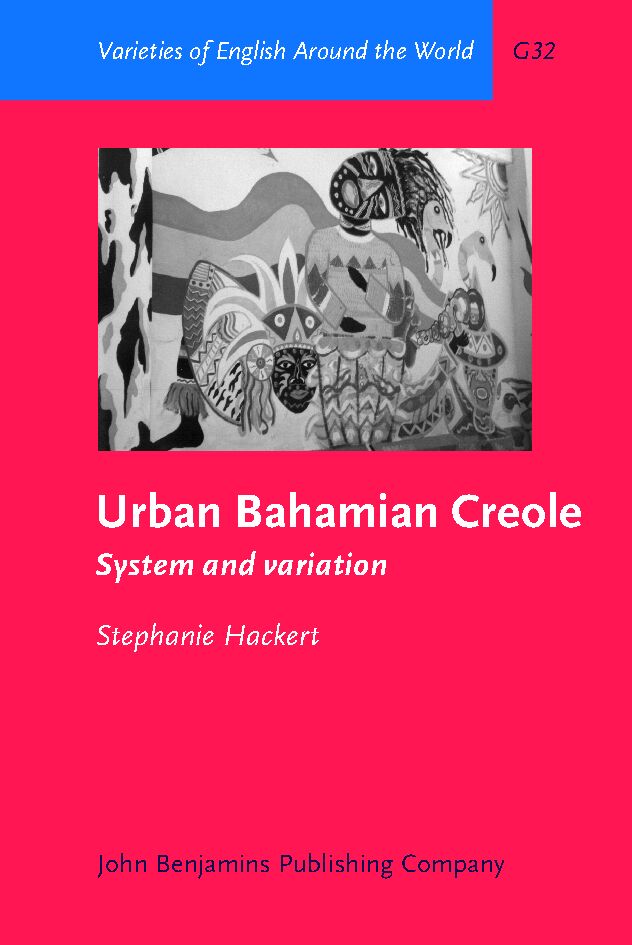
Urban Bahamian Creole : system and variation
This volume, a detailed empirical study of the creole English spoken in the Bahamian capital, Nassau, contributes to our understanding of both urban creoles and tense-aspect marking in creoles. The first part traces the development of a creole in the Bahamas via socio-demographic data and outlines its current status and functions vis-à-vis the standard in politics, the media, and education. The linguistic chapters combine typological and variationist methods to describe exhaustively a comprehensive grammatical subsystem, past temporal reference, offering a discourse-based approach to such controversial categories as the preverbal past marker. The quantitative analysis of variable past inflection, finally, tests not only well-known constraints, such as stativity or social class, but also ethnographically determined ones, such as narrative type. Its results are relevant not only to the study of Caribbean English-lexifier creoles and related varieties, such as African American English, but also to variation and change in urban dialects generally.
eBook

Counting and coding the past: Circumscribing the variable context in quantitative analyses of past inflection
Accurate circumscription of the variable context is crucial to any quantitative analysis of linguistic variation. Investigations of past inflection in African American Vernacular English and Caribbean English creoles thus generally include a more or less detailed section concerning the inclusion or exclusion of particular forms; the theoretical grounds on which these decisions are made, however, are not always spelled out. Consequently, there still does not seem to be agreement on what precisely constitutes the envelope of variation in such investigations—a fact that not only complicates data extraction and analysis but also hampers cross-variety comparisons. This article summarizes and evaluates previous definitions of the scope and relevant contexts of the variable (ed), providing internal (linguistic) argumentation supporting or contraindicating the inclusion or exclusion of particular tokens. My data stem from a larger study of past temporal reference in the urban variety of Bahamian Creole English (Hackert, Stephanie. [2004]. Urban Bahamian Creole: System and variation. Amsterdam: Benjamins), an intermediate creole with close historical links with Gullah as well as relations with African American Vernacular English, Trinidadian Creole, and Barbadian.
Journal Article

