
Catalogue Search | MBRL


Are you sure you want to remove the book from the shelf?

{{itemTitle}}
541,610
result(s) for
"Hall, T"
Sort by:


Reconstruction of the history of anthropogenic CO2 concentrations in the ocean
Where does our CO
2
go?
The ocean is a major carbon sink, absorbing perhaps a third of anthropogenic CO
2
emissions, but there are considerable uncertainties as to the distribution and rate of CO
2
capture. Khatiwala
et al
. present an observationally based reconstruction of anthropogenic carbon uptake in the ocean during the industrial era. They map the regions where it is most concentrated, and track the accumulations over time. The findings indicate that uptake of anthropogenic CO
2
in the oceans has increased sharply since the 1950s, with a small decline in the rate of increase in recent decades. The Southern Ocean is the biggest sink, with over 40% of total uptake. The results also suggest that the terrestrial biosphere was a source of CO
2
until the 1940s, subsequently becoming a sink.
The ocean takes up 20 to 35 per cent of anthropogenic CO
2
emissions, but uncertainties remain as to the distribution of this CO
2
in the ocean, its rate of uptake over the industrial era, and the relative roles of the ocean and terrestrial biosphere in anthropogenic CO
2
sequestration. An observationally based reconstruction of the spatially resolved, time-dependent history of anthropogenic carbon in the ocean over the industrial era now allows these questions to be addressed.
The release of fossil fuel CO
2
to the atmosphere by human activity has been implicated as the predominant cause of recent global climate change
1
. The ocean plays a crucial role in mitigating the effects of this perturbation to the climate system, sequestering 20 to 35 per cent of anthropogenic CO
2
emissions
2
,
3
,
4
. Although much progress has been made in recent years in understanding and quantifying this sink, considerable uncertainties remain as to the distribution of anthropogenic CO
2
in the ocean, its rate of uptake over the industrial era, and the relative roles of the ocean and terrestrial biosphere in anthropogenic CO
2
sequestration. Here we address these questions by presenting an observationally based reconstruction of the spatially resolved, time-dependent history of anthropogenic carbon in the ocean over the industrial era. Our approach is based on the recognition that the transport of tracers in the ocean can be described by a Green’s function, which we estimate from tracer data using a maximum entropy deconvolution technique. Our results indicate that ocean uptake of anthropogenic CO
2
has increased sharply since the 1950s, with a small decline in the rate of increase in the last few decades. We estimate the inventory and uptake rate of anthropogenic CO
2
in 2008 at 140 ± 25 Pg C and 2.3 ± 0.6 Pg C yr
-1
, respectively. We find that the Southern Ocean is the primary conduit by which this CO
2
enters the ocean (contributing over 40 per cent of the anthropogenic CO
2
inventory in the ocean in 2008). Our results also suggest that the terrestrial biosphere was a source of CO
2
until the 1940s, subsequently turning into a sink. Taken over the entire industrial period, and accounting for uncertainties, we estimate that the terrestrial biosphere has been anywhere from neutral to a net source of CO
2
, contributing up to half as much CO
2
as has been taken up by the ocean over the same period.
Journal Article

اللغة الصامتة
أخذ وعطاء غير ملفوظ في العلاقات الإنسانية اليومية، إنها اللغة الصامتة التي تلعب دورا هاما جدا. هنا يقوم عالم إنسان أمريكي بارز بتحليل الطرق المتعددة التي يتحدث بها الناس مع بعضهم البعض دون استخدام كلمات. ترتيب النقر في قن الدجاج، والتنافس العنيف في ملعب المدرسة وكل تصرف وإيماءة غير مقصودين-هذه هي مفردات اللغة الصامتة. وبحسب الدكتور هول تكون مفاهيم المكان والزمان أدوات يمكن لجميع الكائنات البشرية نقل رسائل بواسطتها على سبيل المثال، المكان هو نتاج دفاع غريزي لحيوان ما عن مخبئه، وينعكس في المجتمع البشري في الدفاع الغيور لموظف عن مكتبه، أو في ساحة فناء منزل أمريكي لاتيني باحة مسورة. وبشكل مماثل فإن مفهوم الوقت، الذي يختلف من دقة غربية إلى غموض شرقي، يتوضح من قبل رجال أعمال يترك عميلا ينتظر دون إحساس، أو أحد سكان جزيرة في جنوب المحيط الهادي يقوم بقتل جاره من أجل ظلم عانى منه قبل عشرين سنة.
Book

Lifting Universal Masking in Schools — Covid-19 Incidence among Students and Staff
Among school districts in the greater Boston area, the lifting of masking requirements was associated with an additional 44.9 Covid-19 cases per 1000 students and staff during the 15 weeks after a statewide masking policy was rescinded.
Journal Article
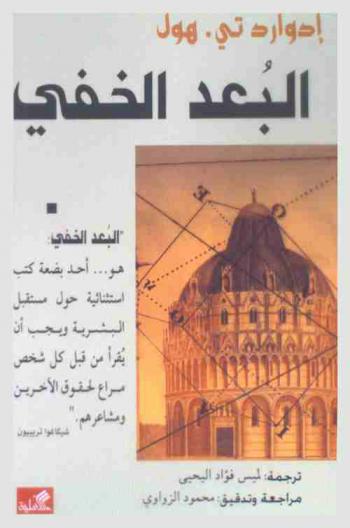
البعد الخفي
تتوزع محتويات الكتاب في محاور مختلفة وهي : الثقافة كوسيلة اتصال، أنظمة المسافة عند الحيوانات، الاكتظاظ والسلوك الاجتماعي عند الحيوانات تجارب (كالهون)، الإدراك الحسي للحيز: مستقبلات عن بعد، الإدراك الحسي للحيز : مستقبلات مباشرة، الحيز البصري، الفن كمفتاح لحل لغز لإدراك الحسي، لغة المكان، المكان في علم الإنسان : نموذج منظم، المسافات عند الإنسان، البروكسيمية في سياق معالجة ثقافات متعددة الألمان والانجليز والفرنسيون، البروكسيمية في سياق تعدد الثقافات : اليابان والعالم العربي، مدن وثقافة، البروكسيمية في سياق تعدد الثقافات : اليابان والعالم العربي، مدن وثقافة، البروكسيمية ومستقبل الإنسان وأخيرا ملحق (جيمس جيبسون) المجموعات المتنوعة الثلاث عشرة للمنظور مستخلصة من الإدراك الحسي للعالم البصري.
Book

Projected future impact of HPV vaccination and primary HPV screening on cervical cancer rates from 2017–2035: Example from Australia
Many countries are transitioning from cytology-based to longer-interval HPV screening. Trials comparing HPV-based screening to cytology report an increase in CIN2/3 detection at the first screen, and longer-term reductions in CIN3+; however, population level year-to-year transitional impacts are poorly understood. We undertook a comprehensive evaluation of switching to longer-interval primary HPV screening in the context of HPV vaccination. We used Australia as an example setting, since Australia will make this transition in December 2017.
Using a model of HPV vaccination, transmission, natural history and cervical screening, Policy1-Cervix, we simulated the planned transition from recommending cytology every two years for sexually-active women aged 18-20 to 69, to recommending HPV screening every five years for women aged 25-74 years. We estimated rates of CIN2/3, cervical cancer incidence, and mortality for each year from 2005 to 2035, considering ranges for HPV test accuracy and screening compliance in the context of HPV vaccination (current coverage ~82% in females; ~76% in males).
Transient increases are predicted to occur in rates of CIN2/3 detection and invasive cervical cancer in the first two to three years following the screening transition (of 16-24% and 11-14% in respectively, compared to 2017 rates). However, by 2035, CIN2/3 and invasive cervical cancer rates are predicted to fall by 40-44% and 42-51%, respectively, compared to 2017 rates. Cervical cancer mortality rates are predicted to remain unchanged until ~2020, then decline by 34-45% by 2035. Over the period 2018-2035, switching to primary HPV screening in Australia is expected to avert 2,006 cases of invasive cervical cancer and save 587 lives.
Transient increases in detected CIN2/3 and invasive cancer, which may be detectable at the population level, are predicted following a change to primary HPV screening. This is due to improved test sensitivity bringing forward diagnoses, resulting in longer term reductions in both cervical cancer incidence and mortality. Fluctuations in health outcomes due to the transition to a longer screening interval are predicted to occur for 10-15 years, but cervical cancer rates will be significantly reduced thereafter due to the impact of HPV vaccination and HPV screening. In order to maintain confidence in primary HPV screening through the transitional phase, it is important to widely communicate that an initial increase in CIN2/3 and perhaps even invasive cervical cancer is expected after a national transition to primary HPV screening, that this phenomenon is due to increased prevalent disease detection, and that this effect represents a marker of screening success.
Journal Article



Regulatory mechanisms of cytoneme-based morphogen transport
During development and tissue homeostasis, cells must communicate with their neighbors to ensure coordinated responses to instructional cues. Cues such as morphogens and growth factors signal at both short and long ranges in temporal- and tissue-specific manners to guide cell fate determination, provide positional information, and to activate growth and survival responses. The precise mechanisms by which such signals traverse the extracellular environment to ensure reliable delivery to their intended cellular targets are not yet clear. One model for how this occurs suggests that specialized filopodia called cytonemes extend between signal-producing and -receiving cells to function as membrane-bound highways along which information flows. A growing body of evidence supports a crucial role for cytonemes in cell-to-cell communication. Despite this, the molecular mechanisms by which cytonemes are initiated, how they grow, and how they deliver specific signals are only starting to be revealed. Herein, we discuss recent advances toward improved understanding of cytoneme biology. We discuss similarities and differences between cytonemes and other types of cellular extensions, summarize what is known about how they originate, and discuss molecular mechanisms by which their activity may be controlled in development and tissue homeostasis. We conclude by highlighting important open questions regarding cytoneme biology, and comment on how a clear understanding of their function may provide opportunities for treating or preventing disease.
Journal Article