
Catalogue Search | MBRL


Are you sure you want to remove the book from the shelf?

{{itemTitle}}
72
result(s) for
"Halligan, Benjamin"
Sort by:

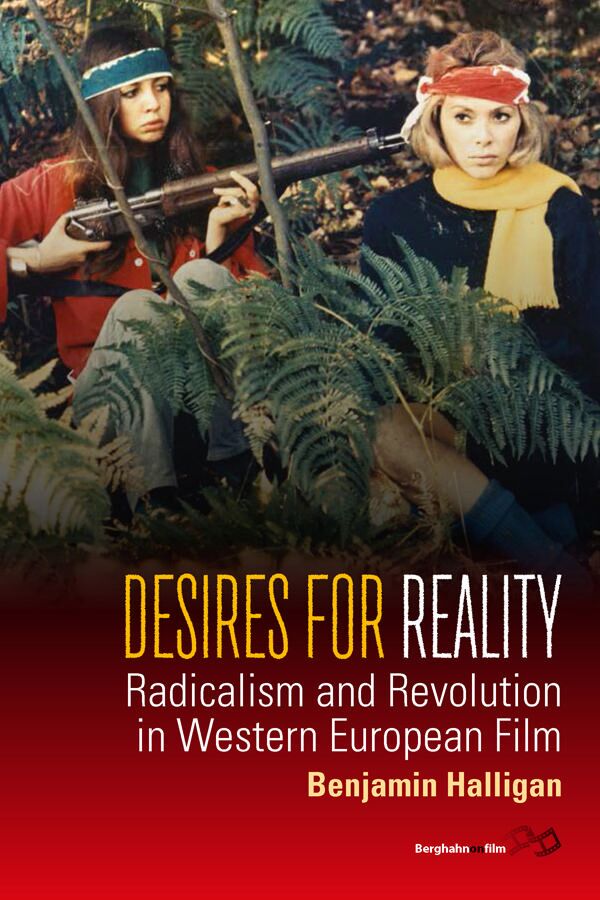
Desires for Reality
As with many aspects of European cultural life, film was galvanized and transformed by the revolutionary fervor of 1968. This groundbreaking study provides a full account of the era's cinematic crises, innovations, and provocations, as well as the social and aesthetic contexts in which they appeared. The author mounts a genuinely fresh analysis of a contested period in which everything from the avant-garde experiments of Godard, Pasolini, Schroeter, and Fassbinder to the \"low\" cinematic genres of horror, pornography, and the Western reflected the cultural upheaval of youth in revolt-a cinema for the barricades.
eBook


The Music Documentary
The Music Documentary offers a wide-range of approaches, across key moments in the history of popular music, in order to define and interrogate this prominent genre of film-making. The writers in this volume argue persuasively that the music documentary must be considered as an essential cultural artefact in documenting stars and icons, and musicians and their times - particularly for those figures whose fame was achieved posthumously.
In this collection of fifteen essays, the reader will find comprehensive discussions of the history of music documentaries, insights in their production and promotion, close studies of documentaries relating to favourite bands or performers, and approaches to questions of music documentary and form, from the celluloid to the digital age.
eBook


Mark E. Smith and The Fall: Art, Music and Politics
This volume offers a comprehensive range of approaches to the work of Mark E. Smith and his band The Fall in relation to music, art and politics. Mark E. Smith remains one of the most divisive and idiosyncratic figures in popular music after a recording career with The Fall that spans thirty years. Although The Fall were originally associated with the contemporaneous punk explosion, from the beginning they pursued a highly original vision of what was possible in the sphere of popular music. While other punk bands burned out after a few years, only to then reform decades later as their own cover bands, The Fall continue to evolve while retaining a remarkable consistency, even with the frequent line-up changes that soon left Mark E. Smith as the only permanent member of the group. The key aspect of the group that this volume explores is the invariably creative, unfailingly critical and often antagonistic relations that characterize both the internal dynamics of the group and the group's position in the pop cultural surroundings. The Fall's ambiguous position in the unfolding histories of British popular music and therefore in the new heritage industries of popular culture in the UK, from post-punk to anti-Thatcher politics, to the 'Factory fiction of Manchester' and on into Mark E. Smith's current role as ageing enfant terrible of rock, illustrates the uneasy relationship between the band, their critical commentators and the historians of popular music. This volume engages directly with this critical ambiguity. With a diverse range of approaches to The Fall, this volume opens up new possibilities for writing about contemporary music beyond traditional approaches grounded in the sociology of music, Cultural Studies and music journalism - an aim which is reflected in the variety of provocative critical approaches and writing styles that make up the volume.
eBook

“This Is Father Berrigan Speaking from the Underground”: Daniel Berrigan SJ and the Conception of a Radical Theatre
The letter “Father Berrigan Speaks to the Actors from Underground” suggests the conception of a radical theatre, intended as a contribution to a cultural front against the US government as it escalated the war in Vietnam. Berrigan’s dramatization of the trial in which he and fellow antiwar activists were arraigned for publicly burning draft cards in 1968,
, coincided with Berrigan’s efforts to continue his ministry while a fugitive.
Journal Article

“Use/Abuse/Everyone/Everything”: A Dialogue on LA Plays Itself
[...]not quite Woodstock [US, Michael Wadleigh, 1970] but not yet The Brady Bunch or sporting the \"clone\" look. The tattoo turns the gay sex into a radical peace symbol, and suggests the gay sex as a positive therapy for post-conflict distress, perhaps healthier than drugs and alcohol and a range of activities associated with \"dropping out.\" Since part of the challenge of dealing with such a film from this time is that anything oppositional seems to take on a heightened importance, deservedly so or otherwise. The material is effectively the Ministry of Information for the besieged \"forces of faggotry\" (as Truscott described the Gay Power defenders of the Stonewall Inn in 1969).23 And I don't want to suggest that explicit hardcore queer imagery in itself is somehow automatically at the vanguard of the post-1968 sexual revolution. [...]Boys in the Sand is deeply conventional: the men are typically beautiful, the sex is expectedly erotic and mutually hedonistic, the narratives are intact (and flesh out clichés: beach pick-ups, a workman with a tool belt, sex in a swimming pool), the gaze at Casey Donovan is rewarded with nudity, arousal, and endless intercourse.
Journal Article

New Punk Cinema
New Punk Cinema is the first book to examine a new breed of film that is indebted to the punk spirit of experimentation, do-it-yourself ethos, and an uneasy, often defiant relationship with the mainstream. An array of established and emerging scholars trace and map the contours of new punk cinema, from its roots in neorealism and the French New Wave, to its flowering in the work of Lars von Trier and the Dogma 95 movement. Subsequent chapters explore the potentially democratic and even anarchic forces of digital filmmaking, the influences of hypertext and other new media, the increased role of the viewer in arranging and manipulating the chronology of a film, and the role of new punk cinema in plotting a course beyond the postmodern. The book examines a range of films, including The Blair Witch Project, Time Code, Run Lola Run, Memento, The Celebration, Gummo, and Requiem for a Dream.New Punk Cinema is ideal for classroom use at the undergraduate and graduate levels, as well as for film scholars interested in fresh approaches to the emergence of this vital new turn in cinema.Features* Offers a comprehensive examination of the term 'new punk' cinema.* Provides several new approaches for the study of digital cinema.* Includes close analysis of several key new punk films and directors.
eBook
