
Catalogue Search | MBRL


Are you sure you want to remove the book from the shelf?

{{itemTitle}}
8
result(s) for
"Hammond, Andrew, 1967-"
Sort by:

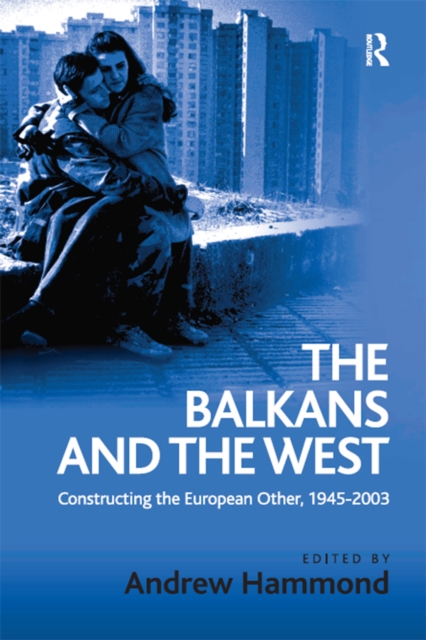
The Balkans and the West
This collection of essays locates, investigates and challenges the manner in which the Balkans and the West have constructed each other since 1945. Scholars from the two sections of the continent explore a wide range of fiction, film, journalism, travel writing and diplomatic records both to analyse Western European balkanism and to study Balkan representations of the West over the last fifty years. The first section looks back to the Cold War, examining the divergent, often favourable images of the Balkans that existed in Western culture, as well as the variety of responses that appeared in South-East European writings on the West. The second section analyses the transitions that took place in representation during the 1990s. Here, contributors explore both the harsh denigration of the Balkans which came to dominate western discourse after the initial euphoria of 1989, and the emerging tradition of contesting Western balkanism in South-East European cultural production. Through this dual emphasis, the volume exposes the representational practices that help to maintain a deeply divided Europe, and challenges the economic and political injustices that result. Despite the rise to prominence of postcolonial theory, with its awareness of global inequality, the current crises in many parts of South-East Europe have received scant attention in literary and cultural studies. The Balkans and the West addresses this deficiency. Ranging in focus from Serbian cinema to Romanian travel literature, from Western economic writings to Yugoslav fiction, and from public discourse in Albania to NATO's vast propaganda machine, the essays offer wide insight into representation and power in the contemporary European context.
Andrew Hammond is a lecturer in twentieth-century literature at the Swansea Institute, University of Wales, UK
Contents: Introduction, Andrew Hammond; Britain and the Yugoslav general election of November 1945, Jim Evans; Primitivism and the modern: a prolonged misunderstanding, Felicity Rosslyn; The rhetoric of economics: Cold War representation of development in the Balkans, Michael Haynes; 'The red threat': Cold War rhetoric and the British novel, Andrew Hammond; Seeing red: America and its allies through the eyes of Enver Hoxha, Timothy Less; Paradoxes of occidentalism: on travel literature in Ceausescu's Romania, Alex Drace-Francis; Images of the west in Serbian and Croatian prose fiction, 1945-95, Celia Hawkesworth; Western writing and the (re)construction of the Balkans after 1989: the Bulgarian case, Yonka Krasteva; Albanians, Albanianism and the strategic subversion of stereotypes, Stephanie Schwandner-Sievers; Albania after isolation: the transformation of public perceptions of the west, Fatos Lubonja; Between a Balkan 'home' and the 'west': popular conceptions of the west in Bulgaria after 1945, Galia I. Valtchinova; Miloševic, Serbia and the west during the Yugoslav wars 1991-95, Tom Gallagher; Savage tribes and mystic feuds: western foreign policy statement on Bosnia in the early 1990s, Riikka Kuusisto; The Balkans conflict and the emergence of the information operations doctrine, Philip M. Taylor; War in the hall of mirrors: NATO bombing and Serbian cinema, Nevena Dakovic; Bibliography; Index.
eBook
Global Cold War Literature
In countries worldwide, the Cold War dominated politics, society and culture during the second half of the twentieth century. Global Cold War Literatures offers a unique look at the multiple ways in which writers from Asia, Africa, Europe and North and South America addressed the military conflicts, revolutions, propaganda wars and ideological debates of the era.
While including essays on western European and North American literature, the volume views First World writing, not as central to the period, but as part of an international discussion of Cold War realities in which the most interesting contributions often came from marginal or subordinate cultures. To this end, there is an emphasis on the literatures of the Second and Third Worlds, including essays on Latin American poetry, Soviet travel writing, Chinese autobiography, African theatre, North Korean literature, Cuban and eastern European fiction, and Middle Eastern fiction and poetry.
With the post-Cold War era still in a condition of emergence, it is essential that we look back to the 1945-89 period to understand the political and cultural forces that shaped the modern world. The volume's analysis of those forces and its focus on many of the 'hot spots' - Afghanistan, Iran, North Korea - that define the contemporary 'war on terror', make this an essential resources for those working in Postcolonial, American and English Literatures, as well as in History, Comparative Literature, European Studies and Cultural Studies. Global Cold War Literatures is a suitable companion volume to Hammond's Cold War Literature: Writing the Global Conflict, also available from Routledge.
eBook
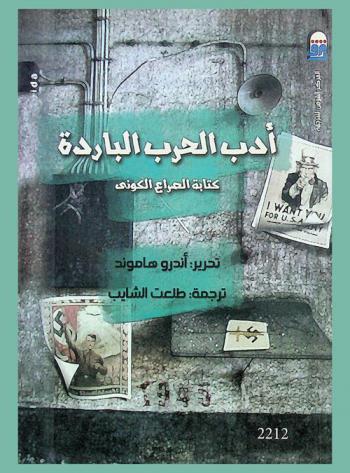
أدب الحرب الباردة : كتابة الصراع الكوني
كانت الحرب الباردة هي الصراع الأطول في قرن أهم ما يميزه هو حجم هذا الصراع وضراوته. في المعركة بين الغرب الديمقراطي والشرق الشيوعي، لم يمر عام تقريبا دون أن يقوم الغرب بتنظيم أو خوض أو تمويل حرب خارجية خلفت الملايين من القتلى الدراسات التي يضمها هذا الكتاب تحلل الرد الأدبي على الإنقلابات والتمردات وعمليات الاحتلال في أنحاء مختلفة من هذا الكوكب، وتستكشف التوجهات الفكرية والأسلوبية لعداءات وخصومات الحرب الباردة كما ظهرت فى الكتابة العالمية.
Book
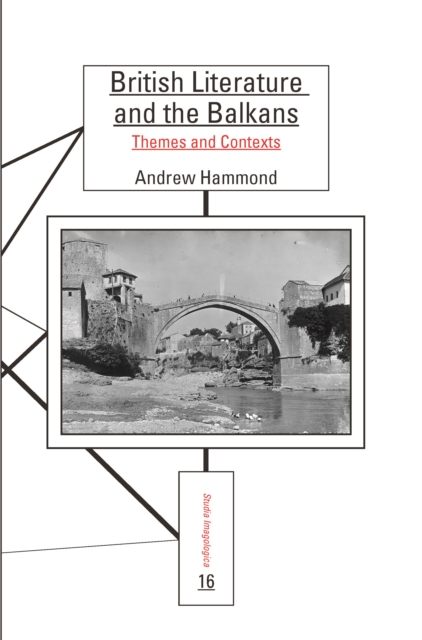
British literature and the Balkans : themes and contexts
The manner in which south-east Europe is viewed by western cultures has been an increasingly important area of study over the last twenty years. During the 1990s, the wars in the former Yugoslavia reactivated denigratory images of the region that many commentators perceived as a new, virulent strain of intra-European prejudice. British Literature and the Balkans is a wide-ranging and original analysis of balkanist discourse in British fiction and travel writing. Through a study of over 300 texts, the volume explores the discourse's emergence in the imperial nineteenth century and its extensive transformations during the twentieth and twenty-first centuries. There will be a particular focus on the ways in which the most significant currents in western thought - Romanticism, empiricism, imperialism, nationalism, communism - have helped to shape the British concept of the Balkans. The volume will be of interest to those working in the area of European cross-cultural representation in the disciplines of Literary Studies, Cultural Studies, European Studies, Anthropology and History.
eBook
Cold War Literature
The Cold War was the longest conflict in a century defined by the scale and brutality of its conflicts. In the battle between the democratic West and the communist East there was barely a year in which the West was not organising, fighting or financing some foreign war. It was an engagement that resulted – in Korea, Guatemala, Nicaragua and elsewhere – in some twenty million dead. This collection of essays analyses the literary response to the coups, insurgencies and invasions that took place around the globe, and explores the various thematic and stylistic trends that Cold War hostilities engendered in world writing.
Drawing together scholars of various cultural backgrounds, the volume focuses upon such themes as representation, nationalism, political resistance, globalisation and ideological scepticism. Eschewing the typical focus in Cold War scholarship on Western authors and genres, there is an emphasis on the literary voices that emerged from what are often considered the ‘peripheral’ regions of Cold War geo-politics.
Ranging in focus from American postmodernism to Vietnamese poetry, from Cuban autobiography to Maoist theatre, and from African fiction to Soviet propaganda, this book will be of real interest to all those working in twentieth-century literary studies, cultural studies, history and politics.
Andrew Hammond is a Senior Lecturer of English Literature at the Swansea Institute, University of Wales.
1. The Yellow Peril in the Cold War: Fu Manchu and the Manchurian Candidate 2. The Cold War Representation of the West in Russian Literature 3. \"Is It Chaos? Or Is It a Building Site?\": British Theatrical Responses to the Cold War and Its Aftermath 4. Beyond the Apocalypse of Closure: Nuclear Anxiety in Postmodern Literature of the United States 5. The Reds and the Blacks: The Historical Novel in the Soviet Union and Postcolonial Africa 6. Marxist Literary Resistance to the Cold War 7. Poetry, Politics and War: Representations of the American War in Vietnamese Poetry’ 8. Remembering War and Revolution on the Maoist Stage 9. Revolution and Rejuvenation: Imagining Communist Cuba 10. An Anxious Triangulation: Cold War, Nationalism and Regional Resistance in East-Central European Literatures 11.\"Lifting Each Other off Our Knees\": South African Women’s Poetry of Resistance, 1980-1989 12. Outwitting the Politburo: Politics and Poetry behind the Iron Curtain 13. The Anti-American: Graham Greene and the Cold War in the 1950s 14. The Excluded Middle: Intellectuals and the ‘Cold War’ in Latin America. Bibliography. Index
eBook
