
Catalogue Search | MBRL


Are you sure you want to remove the book from the shelf?

{{itemTitle}}
4
result(s) for
"Handke, Peter. author"
Sort by:

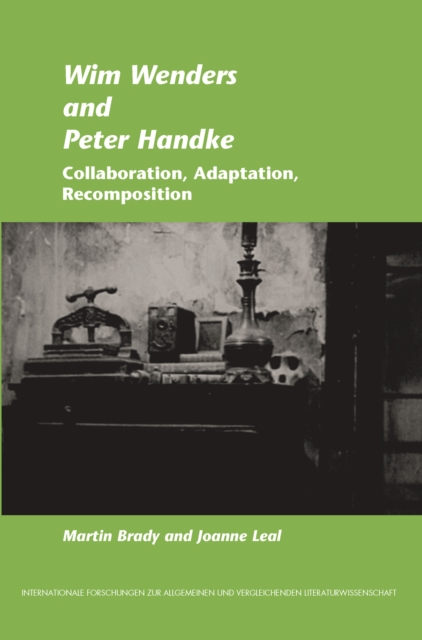
Wim Wenders and Peter Handke : collaboration, adaptation, recomposition
This is the first volume in English to examine in detail one of the most remarkable collaborations between a writer and filmmaker in European cinema. Focusing on the four films Wim Wenders and Peter Handke made between 1969 and 1987 (3 American LPs, The Goalkeeper's Fear of the Penalty, Wrong Move, and Wings of Desire), it explores the productive tension between adaptation and collaboration and demonstrates the different ways in which text- and image-makers can recompose film's constituent media (literature, still and moving images, music, drama). The study reveals that this partnership had significant aesthetic and conceptual repercussions for both artists, resulting in a series of single-authored works which manifest the same kinds of intertextuality and disjunctive intermediality that are the hallmark of the collaborations themselves. These include Wenders's Alice in the Cities, Handke's films The Chronicle of On-Going Events and The Left-Handed Woman , and his novels Short Letter, Long Farewell and A Moment of True Feeling. While the Wenders-Handke partnership is unique, it contributes to a broader understanding of cinematic adaptation and different models of intermedial collaboration. This volume will be of interest to those working in the fields of Adaptation, Film, and German Studies.
eBook

The Moravian night : a story
\"An odyssey through the mind and memory of a washed-up writer from one of Europe's most provocative novelists.\"--Provided by publisher.
Book

Till day you do part, or, A question of light
Described as an answer to or at least an echo of Samuel Beckett's Krapp's Last tape, this book is a monologue delivered by the \"she\" in Beckett's play. The monologue is prefaced with a description of two stone figures. While the male figure remains \"as dead and gone as anyone can,\" the female bursts into life, and her monologue gradually focuses on Krapp's use of pauses and language to dominate the other characters in the Beckett play. Ultimately, however, her complaints and critique of Krapp become a declaration of her love for Krapp or at least an affirmation of their attachment, as the two of them are ultimately bound together, perhaps even inseparable.
Book