
Catalogue Search | MBRL


Are you sure you want to remove the book from the shelf?

{{itemTitle}}
1,319
result(s) for
"Hanson, Peter"
Sort by:


SIRT1 ameliorates oxidative stress induced neural cell death and is down-regulated in Parkinson’s disease
Background
Sirtuins (SIRTs) are NAD
+
dependent lysine deacetylases which are conserved from bacteria to humans and have been associated with longevity and lifespan extension. SIRT1, the best studied mammalian SIRT is involved in many physiological and pathological processes and changes in SIRT1 have been implicated in neurodegenerative disorders, with SIRT1 having a suggested protective role in Parkinson’s disease. In this study, we determined the effect of SIRT1 on cell survival and α-synuclein aggregate formation in SH-SY5Y cells following oxidative stress.
Results
Over-expression of SIRT1 protected SH-SY5Y cells from toxin induced cell death and the protection conferred by SIRT1 was partially independent of its deacetylase activity, which was associated with the repression of NF-кB and cPARP expression. SIRT1 reduced the formation of α-synuclein aggregates but showed minimal co-localisation with α-synuclein. In post-mortem brain tissue obtained from patients with Parkinson’s disease, Parkinson’s disease with dementia, dementia with Lewy bodies and Alzheimer’s disease, the activity of SIRT1 was observed to be down-regulated.
Conclusions
These findings suggests a negative effect of oxidative stress in neurodegenerative disorders and possibly explain the reduced activity of SIRT1 in neurodegenerative disorders. Our study shows that SIRT1 is a pro-survival protein that is downregulated under cellular stress.
Journal Article

Ingenious : the unintended cost of human innovation
Evolution is the process by which species adapt over time to their environments. The tricky part about human evolution is that, as technology builders, we have the power to alter our environments--and even build new, unprecedented conditions in which to immerse ourselves. This is an extraordinary mastery of nature. Not only can we keep the ruthless process of natural selection at bay; we can force nature to bend to us. But the effects of upending the evolutionary process are not as simple as they may seem. Gluckman and Hanson, both leaders in the exciting new field of evolutionary medicine, explore how, even as our ingenious innovations allow us to thrive, they create unforeseen consequences that demand further ingenuity. We've made the environments around us more food-rich, for example--but at the cost of rampant obesity. We've learned to wipe out the pathogens that most commonly make us ill, but in doing so encouraged the rise of antibiotic-resistant superbugs that our bodies are desperately unable to fend off. We have created new information and communication environs that stimulate our intellectual curiosity and challenge our abstract thinking capacities. The downsides are new forms of social dysfunction and sources of psychological stress. Ironically, in many ways, our efforts to be more comfortable have led to dire consequences for our health. Every time we transform our world, we are confronted by a world that challenges us anew. Ingenious opens our eyes to the dangers we face and offers solutions we cannot ignore.-- Provided by publisher
Book

Hepatocellular senescence induces multi-organ senescence and dysfunction via TGFβ
Cellular senescence is not only associated with ageing but also impacts physiological and pathological processes, such as embryonic development and wound healing. Factors secreted by senescent cells affect their microenvironment and can induce spreading of senescence locally. Acute severe liver disease is associated with hepatocyte senescence and frequently progresses to multi-organ failure. Why the latter occurs is poorly understood. Here we demonstrate senescence development in extrahepatic organs and associated organ dysfunction in response to liver senescence using liver injury models and genetic models of hepatocyte-specific senescence. In patients with severe acute liver failure, we show that the extent of hepatocellular senescence predicts disease outcome, the need for liver transplantation and the occurrence of extrahepatic organ failure. We identify the TGFβ pathway as a critical mediator of systemic spread of senescence and demonstrate that TGFβ inhibition in vivo blocks senescence transmission to other organs, preventing liver senescence induced renal dysfunction. Our results highlight the systemic consequences of organ-specific senescence, which, independent of ageing, contributes to multi-organ dysfunction.
Kiourtis et al. show that liver senescence triggers senescence and dysfunction in other organs through TGFβ secretion from the liver.
Journal Article

Nutrition and lifestyle for pregnancy and breastfeeding
\"Explaining the practical implications of new discoveries in 'life-course biology', Nutrition and Lifestyle for Pregnancy and Breastfeeding is an informed resource on factors that affect offspring development. The impact of parental lifestyle and behavioural choices influence not only fetal development and birth outcomes, but also postnatal development, yet guidance on appropriate diet, behaviour, and exposures during pregnancy is often confusing and contradictory. With accessible explanations of the latest scientific research, and clear summaries and recommendations, this book is a valuable and authoritative guide for all levels of health care providers. The authors provide an overview of the background evidence, highlighting the importance of lifestyle choices prior to and during pregnancy. In-depth discussions of nutritional and lifestyle factors that impact on pregnancy and offspring outcomes are based on the latest research and exploration of key scientific studies. Nutrition and Lifestyle for Pregnancy and Breastfeeding is a manual offering both scientific and clinical evidence to empower health care providers and ensure they have the information necessary to confidently care for prospective and new parents.\"-- Publisher's website.
Book

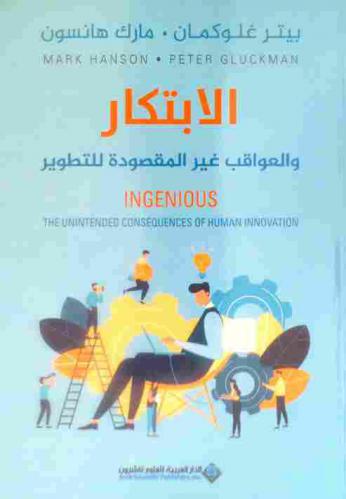
الابتكار والعواقب غير المقصودة للتطوير
يسلط كل من (بيتر غلوكمان، ومارك هانسون) في كتاب \"الابتكار والعواقب غير المقصودة للتطوير\" الضوء على ما سيحدث إن كانت ابتكاراتنا قادرة على العودة بنا إلى طبيعتنا.. ولهذا الغرض كان لا بد من العودة إلى السؤال الأولي : كيف تطور الإنسان من مرحلة الصيد والجمع حتى أصبح ما هو عليه الآن في عالم تقني معقد ومتزايد ؟ وللإجابة على هذا السؤال وغيره يتابع المؤلفان النقاش حول النتائج غير المتوقعة لتطورنا المميز، فبرأيهما إن ما يجعلنا ما نحن عليه الآن هو تفاعل بين حيويتنا الموروثة والمتطورة من جهة وبين قدرتنا على إيصال الأفكار المعقدة للتعلم ولصناعة الأشياء من جهة أخرى، فالتشخيص يجب أن يسبق المعالجة الفعالة، وفي الوقت نفسه يمكننا إدراك أن هذا مجرد بداية للمرحلة التالية من تطورنا الذي سيستهلك كل عبقريتنا لكي يتحقق.
BOOK

Sirtuin-2 Protects Neural Cells from Oxidative Stress and Is Elevated in Neurodegeneration
Sirtuins are highly conserved lysine deacetylases involved in ageing, energy production, and lifespan extension. The mammalian SIRT2 has been implicated in Parkinson’s disease (PD) where studies suggest SIRT2 promotes neurodegeneration. We therefore evaluated the effects of SIRT2 manipulation in toxin treated SH-SY5Y cells and determined the expression and activity of SIRT2 in postmortem brain tissue from patients with PD. SH-SY5Y viability in response to oxidative stress induced by diquat or rotenone was measured following SIRT2 overexpression or inhibition of deacetylase activity, along with α-synuclein aggregation. SIRT2 in human tissues was evaluated using Western blotting, immunohistochemistry, and fluorometric activity assays. In SH-SY5Y cells, elevated SIRT2 protected cells from rotenone or diquat induced cell death and enzymatic inhibition of SIRT2 enhanced cell death. SIRT2 protection was mediated, in part, through elevated SOD2 expression. SIRT2 reduced the formation of α-synuclein aggregates but showed minimal colocalisation with α-synuclein. In postmortem PD brain tissue, SIRT2 activity was elevated compared to controls but also elevated in other neurodegenerative disorders. Results from both in vitro work and brain tissue suggest that SIRT2 is necessary for protection against oxidative stress and higher SIRT2 activity in PD brain may be a compensatory mechanism to combat neuronal stress.
Journal Article

District 9
\"Director Neill Blomkamp teams with producer Peter Jackson for this tale of extraterrestrial refugees stuck in contemporary South Africa. It's been 28 years since the aliens made first contact, but there was never any attack from the skies, nor any profound technological revelation capable of advancing our society. Instead, the aliens were treated as refugees. They were the last of their kind, and in order to accommodate them, the government of South Africa set up a makeshift home in District 9 as politicians and world leaders debated how to handle the situation. As the humans begin to grow wary of the unwelcome intruders, a private company called Multi-National United (MNU) is assigned the task of controlling the aliens. But MNU is less interested in the aliens' welfare than attempting to understand how their weaponry works. Should they manage to make that breakthrough, they will receive tremendous profits to fund their research. Unfortunately, the highly advanced weaponry requires alien DNA in order to be activated. When MNU field operative Wikus van der Merwe (Sharlto Copley) is exposed to biotechnology that causes his DNA to mutate, the tensions between the aliens and the humans intensifies. Wikus is the key to unlocking the alien's technology, and he quickly becomes the most wanted man on the planet. Ostracized and isolated, Wikus retreats to District 9 in a desperate bid to shake his dogged pursuers\"--Allmovie.com, viewed August 31, 2017.
DVD

Rapidly progressive osteoarthritis (RPOA) in companion animals treated with bedinvetmab (Librela™): an expected pathophysiological phenomenon or a cause for concern?
First approved for use in October 2020 (EU) and May 2023 (U.S.), bedinvetmab offers a novel mechanism of action by targeting NGF, a key mediator in pain pathways, thereby providing relief for canine OA patients (1,3). [...]while bedinvetmab represents a promising option for managing OA pain in dogs, the emergence of adverse events resembling RPOA warrants careful consideration. Case reports are generally regarded as week in terms of scientific and medical evidence and we need better processes for integrating them into scientific and medical knowledge. [...]research is imperative to determine the incidence, risk factors, and pathogenesis of RPOA in canine patients, thereby ensuring the safe and effective use of anti-NGF therapies in veterinary practice.
Journal Article