
Catalogue Search | MBRL


Are you sure you want to remove the book from the shelf?

{{itemTitle}}
13
result(s) for
"Harari, Yuval N. author"
Sort by:

Unstoppable us
\"From world-renowned historian and philosopher Yuval Noah Harari, the New York Times bestselling author of Sapiens, comes an exciting, brand-new illustrated book for middle-grade readers that looks at the early history of humankind. Even though we'll never outrun a hungry lion or outswim an angry shark, humans are pretty impressive-and we're the most dominant species on the planet. So how exactly did we become \"unstoppable\"? The answer to that is one of the strangest tales you'll ever hear. And it's a true story. From learning to make fire and using the stars as guides to cooking meals in microwaves and landing on the moon, prepare to uncover the secrets and superpowers of how we evolved from our first appearances millions of years ago. Acclaimed author Yuval Noah Harari has expertly crafted an extraordinary story of how humans learned to not only survive but also thrive on Earth, complete with maps, a timeline, and full-color illustrations that bring his dynamic, unputdownable writing to life\"-- Provided by publisher.
Book

Jewish Magic before the Rise of Kabbalah
Magic culture is certainly fascinating. But what is it? What, in fact, are magic writings, magic artifacts? Originally published in Hebrew in 2010, Jewish Magic Before the Rise of Kabbalah is a comprehensive study of early Jewish magic focusing on three major topics: Jewish magic inventiveness, the conflict with the culture it reflects, and the scientific study of both. The first part of the book analyzes the essence of magic in general and Jewish magic in particular. The book begins with theories addressing the relationship of magic and religion in fields like comparative study of religion, sociology of religion, history, and cultural anthropology, and considers the implications of the paradigm shift in the interdisciplinary understanding of magic for the study of Jewish magic. The second part of the book focuses on Jewish magic culture in late antiquity and in the early Islamic period. This section highlights the artifacts left behind by the magic practitioners-amulets, bowls, precious stones, and human skulls-as well as manuals that include hundreds of recipes. Jewish Magic before the Rise of Kabbalah also reports on the culture that is reflected in the magic evidence from the perspective of external non-magic contemporary Jewish sources. Issues of magic and religion, magical mysticism, and magic and social power are dealt with in length in this thorough investigation. Scholars interested in early Jewish history and comparative religions will find great value in this text.
eBook
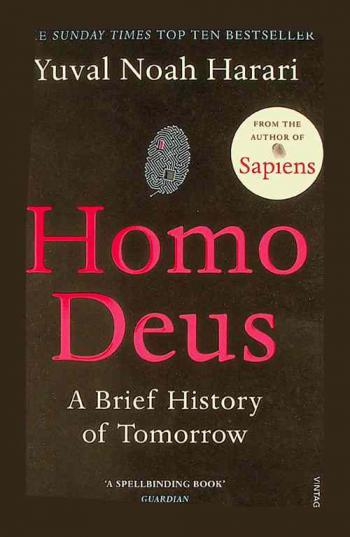
Homo Deus : a brief history of tomorrow
\"Over the past century, humankind has managed to do the impossible and rein in famine, plague, and war. For the first time ever, more people die from eating too much than from eating too little; more people die from old age than from infectious diseases; and more people commit suicide than are killed by soldiers, terrorists and criminals put together. The average American is a thousand times more likely to die from binging at McDonald's than from being blown up by Al Qaeda. What then will replace famine, plague, and war at the top of the human agenda? As the self-made gods of planet Earth, what destinies will we set for ourselves, and which quests will we undertake? Homo Deus explores the projects, dreams and nightmares that will shape the twenty-first century -- from overcoming death to creating artificial life. It asks the fundamental questions: Where do we go from here? And how will we protect this fragile world from our own destructive powers? This is the next stage of evolution. This is Homo Deus.\" --Publisher's Web site.
Book

Homo deus : a brief history of tomorrow
\"Over the past century humankind has managed to do the impossible and rein in famine, plague, and war ... For the first time ever, more people die from eating too much than from eating too little; more people die from old age than from infectious diseases; and more people commit suicide than are killed by soldiers, terrorists, and criminals put together. The average American is a thousand times more likely to die from binging at McDonald's than from being blown up by al Qaeda. What then will replace famine, plague, and war at the top of the human agenda?\"--Amazon.com.
Book


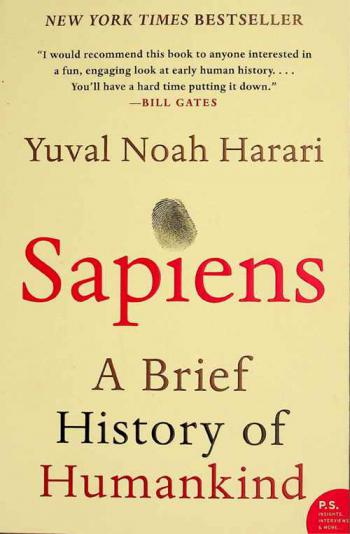
Sapiens : a brief history of humankind
\"From a renowned historian comes a groundbreaking narrative of humanity's creation and evolution--a #1 international bestseller--that explores the ways in which biology and history have defined us and enhanced our understanding of what it means to be \"human.\" One hundred thousand years ago, at least six different species of humans inhabited Earth. Yet today there is only one--homo sapiens. What happened to the others? And what may happen to us? Most books about the history of humanity pursue either a historical or a biological approach, but Dr. Yuval Noah Harari breaks the mold with this highly original book that begins about 70,000 years ago with the appearance of modern cognition. From examining the role evolving humans have played in the global ecosystem to charting the rise of empires, Sapiens integrates history and science to reconsider accepted narratives, connect past developments with contemporary concerns, and examine specific events within the context of larger ideas .Dr. Harari also compels us to look ahead, because over the last few decades humans have begun to bend laws of natural selection that have governed life for the past four billion years. We are acquiring the ability to design not only the world around us, but also ourselves. Where is this leading us, and what do we want to become? Featuring 27 photographs, 6 maps, and 25 illustrations/diagrams, this provocative and insightful work is sure to spark debate and is essential reading for aficionados of Jared Diamond, James Gleick, Matt Ridley, Robert Wright, and Sharon Moalem\"-- Provided by publisher.
Book