
Catalogue Search | MBRL


Are you sure you want to remove the book from the shelf?

{{itemTitle}}
292
result(s) for
"Harper, Benjamin"
Sort by:

Star Wars. Feel the force!
\"Discover the amazing power of the Force and the Jedi Knights who can control it!\"--P. [4] of cover.
Book
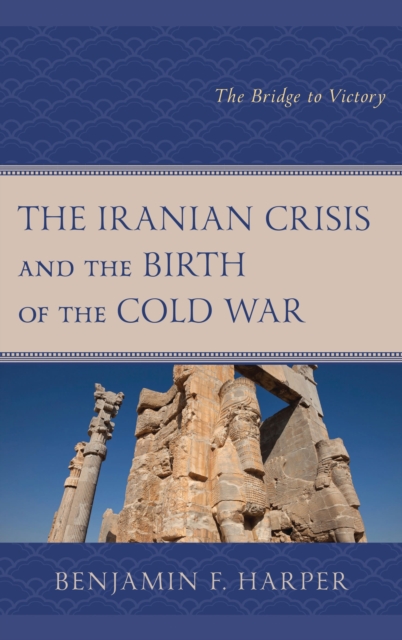
The Iranian Crisis and the Birth of the Cold War
This work examines the Iranian Crisis of 1946 and its active role in shaping the Cold War that followed.It is intended to serve as a case study of how the United States was able to successfully flex its short-lived atomic monopoly and achieve its international objectives in the early postwar era.
eBook

Pecos Bill, monster wrangler : a graphic novel
Raised by Sasquatches, Pecos Bill now lives with the Crypto Kids Gang on a ranch devoted to protecting mythical creatures, and travels the world finding cryptids and bringing them to the sanctuary--but the ranch is getting crowded, the waterholes are drying up, and a girl named Sue is determined to ride Bill's bunyip, despite being warned about the tempermental beast.
Book

Unscripting Curriculum: Toward a Critical Trans Pedagogy
In this essay, Harper B. Keenan draws on his own experience as a white queer and trans educator to consider the meaning of a critical trans pedagogy. Amid dissonant narratives of equal rights and subjection, he explores how his classroom teaching is shaped by his own experience of gender conditioning as well as by the contemporary political climate surrounding trans identity. Keenan argues that a critical trans pedagogy requires \"unscripting\" and must necessarily support children in constructing new knowledge.
Journal Article

Rolling with BB-8!
When his owner is captured, BB-8, a shy droid, teams up with Rey and Finn to keep the secrets he holds safe from the First Order.
Book

Comparison of Cemented and Uncemented Fixation in Total Knee Arthroplasty
As a result of reading this article, physicians should be able to :1. Understand the rationale behind using uncemented fixation in total knee arthroplasty.2.Discuss the current literature comparing cemented and uncemented total knee arthroplasty3. Describe the value of radiostereographic analysis in assessing implant stability.4. Appreciate the limitations in the available literature advocating 1 mode of fixation in total knee arthroplasty. Total knee arthroplasty performed worldwide uses either cemented, cementless, or hybrid (cementless femur with a cemented tibia) fixation of the components. No recent literature review concerning the outcomes of cemented vs noncemented components has been performed. Noncemented components offer the potential advantage of a biologic interface between the bone and implants, which could demonstrate the greatest advantage in long-term durable fixation in the follow-up of young patients undergoing arthroplasty. Several advances have been made in the backing of the tibial components that have not been available long enough to yield long-term comparative follow-up studies. Short-term radiostereographic analysis studies have yielded differing results. Although long-term, high-quality studies are still needed, material advances in biologic fixation surfaces, such as trabecular metal and hydroxyapatite, may offer promising results for young and active patients undergoing total knee arthroplasty when compared with traditional cemented options.
Journal Article

The wolf and the seven kids : a Grimm and gross retelling
In this humorous adaptation of the fairy tale, Mama Goat sets out to get pizza for little Mikey's birthday party, first warning her seven kids not to fall for Mr. Wolf's tricks--but Mr. Wolf is hungry, clever, and persistent, and when Mama returns and finds six of her babies gone, she sets out to make a citizen's arrest and put a stop to Mr. Wolf's villainy forever.
Book

Sulfur isotopic zonation in the Cadia district, southeastern Australia: exploration significance and implications for the genesis of alkalic porphyry gold–copper deposits
The alkalic porphyry gold–copper deposits of the Cadia district occur in the eastern Lachlan Fold Belt of New South Wales, Australia. The district comprises four porphyry deposits (Ridgeway, Cadia Quarry, Cadia Hill, and Cadia East) and two iron–copper–gold skarn deposits (Big Cadia and Little Cadia). Almost 1,000 tonnes of contained gold and more than four million tonnes of copper have been discovered in these systems, making Cadia the world’s largest known alkalic porphyry district, in terms of contained gold. Porphyry gold–copper ore at Cadia is associated with quartz monzonite intrusive complexes, and is hosted by central stockwork and sheeted quartz–sulfide–(carbonate) vein systems. The Cadia porphyry deposits are characterized by cores of potassic and/or calc–potassic alteration assemblages, and peripheral halos of propylitic alteration, with late-stage phyllic alteration mostly restricted to fault zones. Hematite dusting is an important component of the propylitic alteration assemblage, and has produced a distinctive reddening of feldspar minerals in the volcanic wall rocks around the mineralized centers. Sulfide mineralization is strongly zoned at Ridgeway and Cadia East, with bornite-rich cores surrounded by chalcopyrite-rich halos and peripheral zones of pyrite mineralization. The Cadia Hill and Cadia Quarry deposits have chalcopyrite-rich cores and pyrite-rich halos, and Cadia Hill contains a high-level bornite-rich zone. Distinctive sulfur isotopic zonation patterns have been identified at Ridgeway, Cadia Hill, and Cadia East. The deposit cores are characterized by low δ34Ssulfide values (−10 to −4‰), consistent with sulfide precipitation from an oxidized (sulfate-predominant) magmatic fluid at 450 to 400°C. Pyrite grains that occur in the propylitic alteration halos typically have δ34Ssulfide values near 0‰. There is a gradual increase in δ34Ssulfide values outwards from the deposit cores through the propylitic halos. Water–rock interaction during propylitic alteration caused magmatic sulfate reduction and concomitant oxidation of ferrous iron-bearing minerals, resulting in enrichment of 34S in pyrite and also producing the distinctive reddened, hematite-rich alteration halos to the Cadia deposits. These results show that sulfur isotope analyses have potential applications in the exploration of alkalic porphyry-style deposits, with zones of depleted δ34Ssulfide values most prospective for high-grade mineralization.
Journal Article
The Mission Project: Teaching History and Avoiding the Past in California Elementary Schools
In this article, Harper B. Keenan investigates the treatment of violence in elementary history education through a case study of a fourth-grade unit on the colonial history of California featuring \"the mission project,\" a long-standing tradition in California's elementary schools that has students construct a miniature model of a Spanish colonial mission. Grounded in broader social and historical contexts, the study explores how the use of model making invites children to engage with colonial history and what the assignment reveals about how adults teach children about the violent past. Keenan argues that the mission project perpetuates a societal pattern of \"ritual avoidance.\"
Journal Article
