
Catalogue Search | MBRL


Are you sure you want to remove the book from the shelf?

{{itemTitle}}
152
result(s) for
"Harper, Sue"
Sort by:

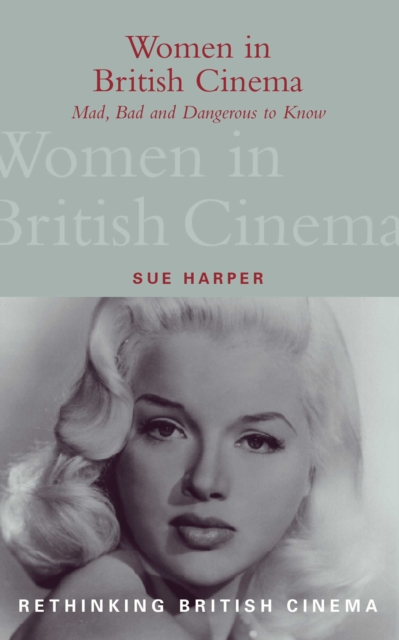
Women in British Cinema
This book takes a broad perspective and analyses the ways in which the British film industry has dealt with women and their creativity from 1930 to the present.The first part of the book deals comprehensively with different historical periods in British film culture, showing how the 'agency' of production company, director, distribution company.
eBook

Lata osiemdziesiąte. „Brytyjczycy szczytują
Dekada lat 80. upłynęła pod znakiem rewolucji kulturalnej i politycznej, której następstwa są nadal przemożne. W latach 1979-1990 ster rządów dzierżyła Margaret Thatcher, która narzuciła Brytyjczykom zdumiewająco brutalny reżim, a w miejsce ideałów zgody powszechnej i odpowiedzialności publicznej propagowała kulturę rywalizacji i indywidualizmu. Polityka gospodarcza, a także konserwatywna ideologia tej dekady nie pozostały bez wpływu na kinematografię. Harper w swoim eseju skupia się przede wszystkim na reprezentacji płci w filmach brytyjskich tamtego czasu, ujawnia jak wiele z nich było nie tylko peanem na cześć tożsamości narodowej, ale też ostentacyjną pochwałą męskości o wyjątkowo zamkniętym i agresywnym charakterze. Zjawisko to było obecne nie tylko w filmach głównego nurtu, zgodnych z obowiązującą linią ideologiczną thatcheryzmu, ale też w obrazach, które występowały przeciw niej, a przemawiały w imieniu grup marginalizowanych (np. homoseksualistów). Harper śledzi reprezentacje kobiecości w kinie tej dekady, analizując twórczość zarówno klasycznych reżyserów brytyjskich, jak i twórców awangardowych. Bezlitośnie obnaża seksistowskie tendencje filmowców, oszczędzając bardzo niewielu z nich. Tekst jest tłumaczeniem rozdziału z książki Sue Harper Women in British Cinema: Mad, Bad and Dangerous to Know, Continuum, London 2000. © 2000 by The Continuum International Publishing Group London – New York. Ze względu na ograniczenia praw autorskich artykuł jest dostępny tylko w wydaniu papierowym.
Journal Article

British Cinema of the 1950s
In this definitive and long-awaited history of 1950s British cinema, Sue Harper and Vincent Porter draw extensively on previously unknown archive material to chart the growing rejection of post-war deference by both film-makers and cinema audiences. Competition from television and successive changes in government policy all forced the production industry to become more market-sensitive. The films produced by Rank and Ealing, many of which harked back to wartime structures of feeling, were challenged by those backed by Anglo-Amalgamated and Hammer. The latter knew how to address the rebellious feelings and growing sexual discontents of a new generation of consumers. Even the British Board of Film Censors had to adopt a more liberal attitude. The collapse of the studio system also meant that the screenwriters and the art directors had to cede creative control to a new generation of independent producers and film directors. Harper and Porter explore the effects of these social, cultural, industrial, and economic changes on 1950s British cinema.
eBook
The British women’s picture: Methodology, agency and performance in the 1970s
The term ‘British women’s picture’ contains a range of issues which we need to
unpick. It would be possible to discuss films made by women, for women or about
women. In the first, the issue of female agency needs to be interrogated: the contributions made by women in different areas; art direction, costume design, scriptwriting and so on. I began this task in the second half of Women in British Cinema
(2000), in which it became clear that female autonomy was determined by the
managerial structures of the industry. Films such as A Taste of Honey (1961) and
Rita, Sue and Bob Too (1986) were dominated by the ideas of their female writers,
who had managed to find a voice in the production process. It was easier for
women to develop their creativity in some periods than in others. In the 1950s,
for example, it was possible for Muriel Box and Wendy Toye to develop directorial careers. With Box, it was family connections, combined with her own
facility with the dominant realist mode, which advanced her career. With Toye,
it was the cumbersome structure of the Rank organisation, plus the 1950s industry’s preference for comedy, a genre in which she excelled. Another period in
which female directors flourished was in the alternative cinema of the 1970s.
Exasperated by what they saw as the venal mainstream industry, avant-garde
directors such as Ariel Levy, Sally Potter, Annabel Nicholson and Laura Mulvey
operated in a relatively unfettered manner, and produced explicitly feminist films.
It would be feasible to construct a narrative about films by women, but it wouldneed to be scrupulously related to mainstream production and also to cultural
and social developments. The danger of such a project is that it might lead us
into an uncritical feminist approach, in which the mainstream industry is presented as a conspiracy against hapless females. I am chary of such an approach
for two reasons: first because it encourages a victim-mentality among female
artists and critics, and second, because it simplifies the inner workings of patriarchy. That is always intellectually fatal. Patriarchy, like all systems of social
control, manifests (indeed requires) powerful images of the social groups over
which it holds sway. In order to function properly, it also needs texts which
show the pleasures of the losers as well as the winners in its system.
What about our second category – films for women? This can be a helpfulway of analysing patterns in British cinema, as long as it is carefully historicised.
‘Woman’s film’ needs to be understood as an industrial category – that is tosay, a category devised by studios for a target female audience. Evidence of this
type of targeting can be found in the advice to cinema managers in the trade
journals, about how to select specific films. Films were frequently categorised
according to the class likely to respond positively to the film. Thunder Rock (1943),
for example, was presented as high-brow fare for the better halls: ‘such fantasy
is not for the hoi-polloi’ (Today’s Cinema, 18 September 1942). Trade journals also
emphasised the gender of the target audience: Clara Dean (1932) was recommended as ‘good programme booking, particularly for the masses with strong
feminine and emotional appeal’ (Kinematograph Weekly 26 May 1932). Trade
advice about target audiences is plentiful until the early 1960s, but disappears
thereafter. The second source of evidence about target audiences is the publicity
material provided by studios, which gives clues about how the films were
intended to function. The producers of Gainsborough costume melodrama were
quite clear about the ideal viewers for their films. Publicity material on Madonna
of the Seven Moons (1944) suggest that it be sold through the headline ‘Split-Mind
Disorder Gives Idea For Year’s Finest Romance!’ They urged that this would
appeal to ‘curiosity, that great feminine characteristic. Trade on this!’ (Press books
for Madonna held in BFI Library.) Similar material on Caravan (1946) and The
Wicked Lady (1945) indicates that producers were more interested in the profit
women could generate than in the textual pleasure they might experience.
What is notable about British cinema is that the market category of woman’sfilm was relatively short-lived. As a discrete cultural form, it spread from the
1930s to the late 1950s. What took its place in the market was the ‘family film’,
which foregrounded children and wholesome values, and which was an important aspect of provision throughout the 1960s and 1970s. Partly because of this
emphasis on generational rather than gender distinctions, ‘woman’s film’ was
not an industrial category in Britain during the 1960s. This was for two reasons. First, audience demographics had changed, and second (and probably as a
consequence of that), studios were no longer producing films predicated on a
female perspective. Of course, in working with the notion of films for women,
the question of the gendered nature of taste must also be addressed. It is clear
from work that has been done on female film taste in the 1930s, 1940s and 1950s
(Kuhn 2002; James 2009; Glancy 2009; Harper and Porter 2003) that female
viewers in all three decades used films for far different purposes than their male
counterparts. But after that, there is a paucity of evidence about film taste in
general, but particularly about female film taste. This may be because fewer
films were specifically aimed at female audiences, or possibly because evidence
of their taste has been lost, or not thought valuable enough to keep.
The third category, and the one to which I want to devote the remainder of thischapter, is films about women. By this I mean films which are preoccupied by
women’s role, by their feelings (whether socially convenient or not), their appearance and their symbolic function. These films are neither celebratory of, nor
admonitory towards, the gender group on which they focus. That is not to say
that they are neutral: rather, one of their social functions is to draw a line between
the sacred and the profane, for a particular (often narrow) historical period.
Book Chapter
Research skills
As film students our first task is to distinguish between primary and secondary resources. On one level this is quite simple; primary sources are the raw materials of our craft. A primary source is a film in the first instance: it is the text which we can comment on. Other sorts of primary material are scripts, interviews, statistics, advertisements, and so on. In the case of all of these we are free to work on them and interpret them in an appropriate way. It is important to do this mindfully and carefully, so as to come to a balanced assessment of different resources and approaches.
Book Chapter
Studying film at university
Why study film at university? On the face of it, this looks like a simple question which could elicit simple answers - 'because I enjoyed studying film at 6th form college', 'because it will help me towards a career as a film director'. Answers like these, though, won't get us very far. Film Studies, like other academic disciplines, needs its students to be driven by a passion for the subject in all its forms, and Film Studies students need to have an intellectual hunger for knowledge about all aspects of the moving image. This desire to understand the inner workings of the cinema should be the first qualification for a student of film.
Book Chapter

A MESSAGE TO THE READER/MESSAGE AUX LECTEURS/UN MENSAJE AL LECTOR
The program was structured with four sub-themes which provided a sound framework and a basis for ensuring that each day was interesting and challenging, as well as free ranging and diverse. Participants enjoyed the opportunity of sharing in an environment where differing professional backgrounds could be recognised, and the specialised knowledge and skills they bring to early childhood programs could be celebrated - parents, lawyers, police, doctors, nurses, social workers, teachers and childcare workers were all part of the overwhelming response to the Call for Papers. Should you be interested in reading other papers that were presented at the Congress, a visit to the OMEP Australia web page, www.omepaustralia.com.au will be of particular interest.
Journal Article