
Catalogue Search | MBRL


Are you sure you want to remove the book from the shelf?

{{itemTitle}}
794
result(s) for
"Harris, Jeff"
Sort by:

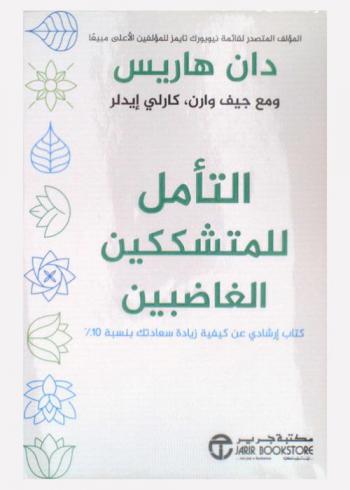
Meditation for fidgety skeptics : a 10% happier how-to book
\"In Meditation for Fidgety Skeptics, Harris and his friend Jeff Warren, a masterful teacher and Meditation MacGyver, embark on a cross-country quest to tackle the myths, misconceptions, and self-deceptions that stop people from meditating.\"--Amazon.com
Book

Editorial for Special Issue “Smart Exploration of Critical Minerals: Integrating Multi-Source Data for Enhanced Mineral Prospectivity Mapping”
The accelerating global demand for critical minerals, driven by the energy transition, electrification, and advanced technologies, has intensified the need for more efficient and reliable mineral exploration strategies [...]
Journal Article

Oxidized iron in garnets from the mantle transition zone
The oxidation state of iron in Earth’s mantle is well known to depths of approximately 200 km, but has not been characterized in samples from the lowermost upper mantle (200–410 km depth) or the transition zone (410–660 km depth). Natural samples from the deep (>200 km) mantle are extremely rare, and are usually only found as inclusions in diamonds. Here we use synchrotron Mössbauer source spectroscopy complemented by single-crystal X-ray diffraction to measure the oxidation state of Fe in inclusions of ultra-high pressure majoritic garnet in diamond. The garnets show a pronounced increase in oxidation state with depth, with Fe3+/(Fe3++ Fe2+) increasing from 0.08 at approximately 240 km depth to 0.30 at approximately 500 km depth. The latter majorites, which come from pyroxenitic bulk compositions, are twice as rich in Fe3+ as the most oxidized garnets from the shallow mantle. Corresponding oxygen fugacities are above the upper stability limit of Fe metal. This implies that the increase in oxidation state is unconnected to disproportionation of Fe2+ to Fe3+ plus Fe0. Instead, the Fe3+ increase with depth is consistent with the hypothesis that carbonated fluids or melts are the oxidizing agents responsible for the high Fe3+ contents of the inclusions.
Journal Article

Straight outta Deadwood
\"Once again, we return to the Old West with a new posse of top authors spin tales of horror, fantasy, and science fiction. We take no prisoners as they explore what really was, and mix in what might have been. Charlaine Harris [The Sookie Stackhouse Series, Midnight, Texas] shows us a glimpse inside her new series as a tormented gunfighter faces a true demon of her past. Mike Resnick [The Buntline Special] reveals what Doc Holiday thought was so funny on his last day. Jeffrey Mariotte [Desperados, Graveslingers] introduces us to a man who specializes in pictures of the dead who won't stay dead. Jane Lindskold [The Firekeeper Saga, The Star Kingdom Series (with David Weber)] teaches us not to underestimate a schoolmarm when her students are in jeopardy. And Shane Hensley [Deadlands] cooks up a stew that threatens to send every famous lawman in history to their graves! Plus, a dozen more stories of how the west was wilder than any history book could contain, such as a new Native American legend by Stephen Graham Jones and a Mormon troubleshooter straddling the line between his faith and the supernatural by D.J. Butler. The west that was rides again with west that could have been in this follow-up to Straight Outta Tombstone! Contributors: Mike Resnick D.J. Butler Jane Lindskold Shane Hensely Jeffrey J. Mariotte Steve Ransic Tem Stephen Graham Jones Derrick Ferguson Frog and Esther Jones Cliff Winnig Jennifer Campbell-Hicks Alex Acks Marsheilla Rockwell Mario Acevedo Betsy Dornbusch Travis Heerman\"-- Provided by publisher.
BOOK

Helium in diamonds unravels over a billion years of craton metasomatism
Chemical events involving deep carbon- and water-rich fluids impact the continental lithosphere over its history. Diamonds are a by-product of such episodic fluid infiltrations, and entrapment of these fluids as microinclusions in lithospheric diamonds provide unique opportunities to investigate their nature. However, until now, direct constraints on the timing of such events have not been available. Here we report three alteration events in the southwest Kaapvaal lithosphere using U-Th-He geochronology of fluid-bearing diamonds, and constrain the upper limit of He diffusivity (to
D
≈ 1.8 × 10
−19
cm
2
s
−1
), thus providing a means to directly place both upper and lower age limits on these alteration episodes. The youngest, during the Cretaceous, involved highly saline fluids, indicating a relationship with late-Mesozoic kimberlite eruptions. Remnants of two preceding events, by a Paleozoic silicic fluid and a Proterozoic carbonatitic fluid, are also encapsulated in Kaapvaal diamonds and are likely coeval with major surface tectonic events (e.g. the Damara and Namaqua–Natal orogenies).
Diamonds encapsulate the deep Earth fluids that form them, providing windows to deep mantle processes. This study constrains their ages, based on uranium-thorium-to-helium radioactive decay in the fluids and helium diffusivity in diamond, and relates diamond formation to geological events in Southern Africa.
Journal Article

Urban allies : ten brand-new collaborative stories
These collaborative stories unite two beloved characters from two different urban fantasy series in each of ten electrifying new stories.
Book
Archaean and Proterozoic diamond growth from contrasting styles of large-scale magmatism
Precise dating of diamond growth is required to understand the interior workings of the early Earth and the deep carbon cycle. Here we report Sm-Nd isotope data from 26 individual garnet inclusions from 26 harzburgitic diamonds from Venetia, South Africa. Garnet inclusions and host diamonds comprise two compositional suites formed under markedly different conditions and define two isochrons, one Archaean (2.95 Ga) and one Proterozoic (1.15 Ga). The Archaean diamond suite formed from relatively cool fluid-dominated metasomatism during rifting of the southern shelf of the Zimbabwe Craton. The 1.8 billion years younger Proterozoic diamond suite formed by melt-dominated metasomatism related to the 1.1 Ga Umkondo Large Igneous Province. The results demonstrate that resolving the time of diamond growth events requires dating of individual inclusions, and that there was a major change in the magmatic processes responsible for harzburgitic diamond formation beneath Venetia from the Archaean to the Proterozoic.
Dating of inclusions within diamonds is used to reconstruct Earth’s geodynamic history. Here, the authors report isotope data on individual garnet inclusions within diamonds from Venetia, South Africa, showing that two suites of diamonds define two isochrons, showing the importance of dating individual inclusions.
Journal Article


Lithological and compositional diversity of diamond substrates beneath the Koidu kimberlite reveals addition of subducted sediments
Six diamond-bearing eclogite xenoliths with oceanic crust protoliths and 370 mineral inclusions in 104 diamonds recovered from the Koidu kimberlite complex in Sierra Leone provide insight into the lithological and compositional diversity of the lithospheric mantle beneath the West African Craton. Diamond formation beneath Koidu is predominantly associated with eclogitic substrates that originated from subduction and high-pressure metamorphism of oceanic crust, as indicated by a dominance of eclogitic (78%) over peridotitic (17%) and mixed paragenesis diamonds (5%). Peridotitic diamonds contain olivine inclusions with very high Mg# (92.2–94.7; median = 94.2), indicative of derivation from dunite or harzburgite protoliths. Moreover, a peridotitic spinel with Cr# = 50.9 suggests that it equilibrated with orthopyroxene-free dunite. 44% of Koidu diamonds contain coesite, of which some coexist with omphacite, eclogitic garnet, and/or kyanite. Most analysed eclogitic garnet inclusions have extremely high δ
18
O values ( ≥ + 9.9‰) and occur with clinopyroxene inclusions that have very high jadeite components (~ 70 mol%). These high jadeite components are a close match to clinopyroxenes in high-pressure metapelites, which have a phase assemblage that includes coesite and kyanite. Our data suggest that the eclogitic mineral inclusions in most Koidu diamonds have oceanic basalt protoliths that were mingled with pelagic sediments, which may have increased δ
18
O values to levels much higher than observed for other eclogites at Koidu and shifted the originally basaltic bulk compositions closer to that of pelites. Most eclogitic mineral inclusions in Koidu diamonds have elemental compositions not observed for Koidu eclogite xenoliths, which have clear oceanic crust protolith (oceanic lavas and cumulates) signatures without significant crustal sediment contamination. These findings suggest the subduction of distinct packages of oceanic crust into the Koidu lithospheric mantle through time.
Journal Article