
Catalogue Search | MBRL


Are you sure you want to remove the book from the shelf?

{{itemTitle}}
26
result(s) for
"Harris, Jonathan, author"
Sort by:


The utopian globalists
THE UTOPIAN GLOBALISTS
\"Crossing continents, historical periods and cultural genres, Jonathan Harris skilfully traces the evolution of utopian ideals from early modernism to the spectacularised and biennialised (or banalised as some would say) contemporary art world of today.\"
Michael Asbury, University of the Arts, London
The Utopian Globalists is the second in a trilogy of books by Jonathan Harris examining the contours, forces, materials and meanings of the global art world, along with its contexts of emergence since the early twentieth century. The first of the three studies, Globalization and Contemporary Art (Wiley-Blackwell, 2011), anatomized the global art system through an extensive anthology of over 30 essays contextualized through multiple thematic introductions. The final book in the series, Contemporary Art in a Globalized World (forthcoming, Wiley-Blackwell), combines the historical and contemporary perspectives of the first and second books in an account focused on the 'mediatizations' shaping and representing contemporary art and its circuits of global production, dissemination and consumption.
This innovative and revealing history examines artists whose work embodies notions of revolution and human social transformation. The clearly structured historical narrative takes the reader on a cultural odyssey that begins with Vladimir Tatlin's constructivist model for a 'Monument to the Third International' (1919), a statement of utopian globalist intent, via Picasso's 1940s commitment to Soviet communism and John and Yoko's Montreal 'Bedin', to what the author calls the 'late globalism' of the Unilever Series at London's Tate Modern.
The book maps the ways artists and their work engaged with, and offered commentary on, modern spectacle in both capitalist and socialist modernism, throughout the eras of the Russian Revolution, the Cold War and the increasingly globalized world of the past 20 years. In doing so, Harris explores the idea that the utopian -globalist lineage in art remains torn between its yearning for freedom and a deepening identification with spectacle as a media commodity to be traded and consumed.
eBook


The End of Byzantium
By 1400, the once-mighty Byzantine Empire stood on the verge of destruction. Most of its territories had been lost to the Ottoman Turks, and Constantinople was under close blockade. Against all odds, Byzantium lingered on for another fifty years until 1453, when the Ottomans dramatically toppled the capital's walls. During this bleak and uncertain time, ordinary Byzantines faced difficult decisions to protect their livelihoods and families against the death throes of their homeland. In this evocative and moving book, Jonathan Harris explores individual stories of diplomatic maneuverings, covert defiance, and sheer luck against a backdrop of major historical currents and offers a new perspective on the real reasons behind the fall of this extraordinarily fascinating empire.
eBook

The utopian globalists : artists of worldwide revolution, 1919-2009
\"An innovative history and critical account mapping the ways artists and their works have engaged with, and offered commentary on, modern spectacle in both capitalist and socialist modernism over the past ninety years. Focuses on artists whose work expresses the concept of revolutionary social transformation Provides a strong historical narrative that adds structure and clarity Features a cogent and innovative critique of contemporary art and institutions Covers 100 years of art from Vladimir Tatlin's constructivist 'Monument to the Third International', to Picasso's late 1940s commitment to Communism, to the Unilever Series sponsored Large Artworks installed at London's Tate Modern since 2000. Includes the only substantial account in print of John Lennon and Yoko Ono's 1969 Montreal 'Bed-in' Offers an accessible description and interpretation of Debord's 'society of the spectacle' theory \"-- Provided by publisher.
Book

Untimely Matter in the Time of Shakespeare
Selected byChoicemagazine as an Outstanding Academic Title for 2009 The New Historicism of the 1980s and early 1990s was preoccupied with the fashioning of early modern subjects. But, Jonathan Gil Harris notes, the pronounced tendency now is to engage with objects. From textiles to stage beards to furniture, objects are read by literary critics as closely as literature used to be. For a growing number of Renaissance and Shakespeare scholars, the play is no longer the thing: the thing is the thing. Curiously, the current wave of \"thing studies\" has largely avoided posing questions of time. How do we understand time through a thing? What is the time of a thing? InUntimely Matter in the Time of Shakespeare, Harris challenges the ways we conventionally understand physical objects and their relation to history. Turning to Renaissance theories of matter, Harris considers the profound untimeliness of things, focusing particularly on Shakespeare's stage materials. He reveals that many \"Renaissance\" objects were actually survivals from an older time-the medieval monastic properties that, post-Reformation, were recycled as stage props in the public playhouses, or the old Roman walls of London, still visible in Shakespeare's time. Then, as now, old objects were inherited, recycled, repurposed; they were polytemporal or palimpsested. By treating matter as dynamic and temporally hybrid, Harris addresses objects in their futurity, not just in their encapsulation of the past.Untimely Matter in the Time of Shakespeareis a bold study that puts thematériel-the explosive, world-changing potential-back into a \"material culture\" that has been too often understood as inert stuff.
eBook

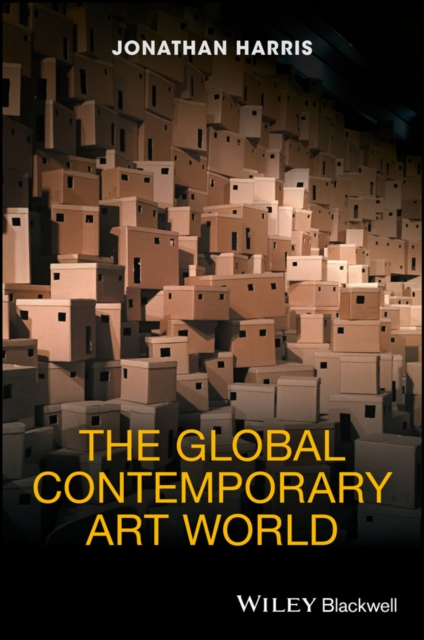
The global contemporary art world
The final installment in the critically-acclaimed trilogy on globalization and art explores the growing dominance of Asian centers of art
This book takes readers on a fascinating journey around five Asian centers of contemporary art and its myriad institutions, agents, forms, materials, and languages, while posing vital questions about the political economy of culture and the power of visual art in a multi-polar world. He analyzes the financial powerhouse of Art Basel Hong Kong, new media art in South Korea, the place of the Kochi Biennale within contemporary art in India, transnational art and art education in China, and the geo-politics of art patronage in Palestine, and he develops a highly original synthesis of theoretical perspectives and empirical research.
Drawing on detailed case studies and personal insights gained from his extensive experience of the contemporary art scene in Asia, Professor Harris examines the evolving relationship between the western centers of art practice, collection, and validation and the emerging \"peripheries\" of Asian Tiger societies with burgeoning art centers. And he arrives at the somewhat controversial conclusion that dominance of the art world is rapidly slipping away from Europe and North America.
The Global Contemporary Art World is essential reading for undergraduates and postgraduate students in modern and contemporary art, art history, art theory and criticism, cultural studies, the sociology of culture, and globalization studies. It is also a vital resource for research students, academics, and professionals in the art world.
eBook

Macroeconomics in context
'Macroeconomics in Context' lays out the principles of macroeconomics in a manner that is thorough, up to date, and relevant to students. Like its counterpart, 'Microeconomics in Context', the book is attuned to economic realities. These books offer affordability, engaging treatment of high-interest topics from sustainability to financial crisis and rising inequality, and clear, straightforward presentation of economic theory. Policy issues are presented in context - historical, institutional, social, political, and ethical - and always with reference to human well-being.
Book
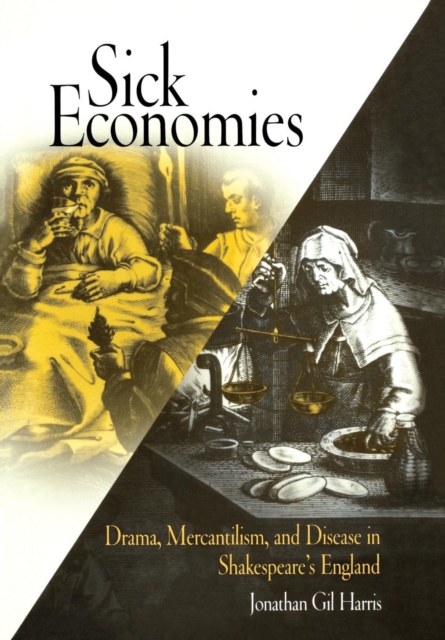
Sick economies : drama, mercantilism, and disease in Shakespeare's England
Sick Economies: Drama, Mercantilism, and Disease in Shakespeare's England teases out the double helix of the pathological and the economic in two seemingly disparate spheres of early modern textual production: drama and mercantilist writing.
eBook