
Catalogue Search | MBRL


Are you sure you want to remove the book from the shelf?

{{itemTitle}}
35
result(s) for
"Hartling, Ole"
Sort by:

Euthanasia and assisted dying: the illusion of autonomy—an essay by Ole Hartling
The main arguments for legalisation are respecting self-determination and alleviating suffering. Since those arguments appear self-evident, my book Euthanasia and the Ethics of a Doctor’s Decisions—An Argument Against Assisted Dying1 aimed to contribute to the international debate on this matter. The public’s response to opinion poll questions on voluntary euthanasia show that people can scarcely imagine not being able to make up their own minds, nor can they imagine not having the choice. [...]a healthy person answering a poll may have difficulty imagining being in a predicament where they simply would not wish to be given the choice. The wish to die arises against a backdrop: of desperation, a feeling of hopelessness, possibly a feeling of being superfluous. [...]it is under these circumstances that the right to self-determination is exercised and the decision is made. According to prevailing ideas about autonomy, patients initially evaluate their quality of life themselves, but ultimately it is those around them who end up gauging that quality and the value of their life.
Journal Article
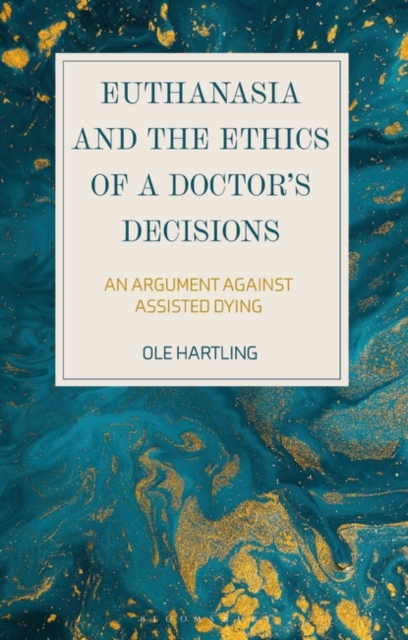
Euthanasia and the ethics of a doctor's decisions : an argument against assisted dying
Why do so many doctors have profound misgivings about the push to legalise euthanasia and assisted suicide? Ole Hartling uses his background as a physician, university professor and former chairman of the Danish Council of Ethics to introduce new elements into what can often be understood as an all too simple debate. Alive to the case that assisted dying can be driven by an unattainable yearning for control, Hartling concentrates on two fundamental questions: whether the answer to suffering is to remove the sufferer, and whether self-determination in dying and death is an illusion. He draws on his own experience as a medical doctor to personalize the ethical arguments, share patients' narratives and make references to medical literature. Here is a sceptical stance towards euthanasia, one that is respectful to those who hold different opinions and well-informed about the details and nuances of different euthanasia practices. Written from a Scandinavian perspective, where respect for autonomy and high quality palliative care go hand in hand, Hartling's is a nuanced, valuable contribution to the arguments that surround a question doctors have faced since the birth of medicine. He shows us how the intentions of doing something good can sometimes lead to even greater dilemmas, opening us up to those situations where an inclination to end suffering by ending life is deeply conflicting both for the clinician and for any fellow human being.
eBook


Euthanasia and the Ethics of a Doctor S Decisions: An Argument Against Assisted Dying
Why do so many doctors have profound misgivings about the push to legalise euthanasia and assisted suicide? Ole Hartling uses his background as a physician, university professor and former chairman of the Danish Council of Ethics to introduce new elements into what can often be understood as an all too simple debate. Alive to the case that assisted dying can be driven by an unattainable yearning for control, Hartling concentrates on two fundamental questions: whether the answer to suffering is to remove the sufferer, and whether self-determination in dying and death is an illusion. He draws on his own experience as a medical doctor to personalize the ethical arguments, share patients' narratives and make references to medical literature. Here is a sceptical stance towards euthanasia, one that is respectful to those who hold different opinions and well-informed about the details and nuances of different euthanasia practices. Written from a Scandinavian perspective, where respect for autonomy and high quality palliative care go hand in hand, Hartling's is a nuanced, valuable contribution to the arguments that surround a question doctors have faced since the birth of medicine. He shows us how the intentions of doing something good can sometimes lead to even greater dilemmas, opening us up to those situations where an inclination to end suffering by ending life is deeply conflicting both for the clinician and for any fellow human being.
eBook

Breast screening: the facts—or maybe not
Peter Gøtzsche and colleagues argue that women are still not given enough, nor correct, information about the harms of screening
Journal Article

16 Assisted death – an area of medicalisation of death
IntroductionAssisted suicide and euthanasia can be seen as a result of a medicalization of death. It can be viewed as yet another example of the illusion as to the powers we have over life and death, and of our medical possibilities of controlling them.As seen from the enclosed contributions in this seminar Ole Hartling, m.d., associate professor and former chairman of the Danish Council of Ethics will discuss assisted death – an area of medicalisation shrouded in good intentions and euphemisms but demanding on the patient-physician relationship.Assisted suicide and euthanasia can be seen as a result of a medicalisation of death. It can be viewed as yet another example of the illusion as to the powers we have over life and death, and of our medical possibilities of controlling them.Every so often embellishing language is being used to ‘sell’ the message of beneficial medical practises such as diagnostic and screening procedures. This also appertains to assisted death. The term ‘euthanasia’ is Greek and means ‘good death’, and thus in itself is a euphemism.Even blatantly ruthless attitudes have been cloaked in suave language. There is mounting evidence that in countries that have legalized assisted death, patients with disabilities are being offered ‘a beautiful death’ instead of help. This disguises the risk that people with severe handicaps or chronic diseases may be indirectly coerced to choose death if they are denied needed assistance to maintain their existence.Propagators of assisted death lean heavily on the concept of respecting the right to self-determination (individual autonomy).However, whether autonomy is genuinely possible in connection with assisted dying is questioned as autonomy will always be relative to an assessment of the patient’s quality of life. Moreover, the patient cannot be uninfluenced by how their surroundings (for example family, friends and medical staff) regard his or her situation. The patient’s decision may seem autonomous, but it may well be an introjection of the disdain in which the patient is held by the community.Finally, it is discussed how legalization of assisted dying can affect the patient-physician relationship. The conclusion is that if the distressed and despairing person is met with the understanding that now death is to be preferred, this, at the same time, carries the message that this person can be done without.Morten Magelssen, a Norwegian medical doctor will focus on the distinction between treatment limitation and euthanasia, and argue that an exaggerated view of medicine’s power stands in danger of erasing this distinction.Humility and realism vs. hubris and medicalization in the assisted dying debate.Euthanasia on the one hand and treatment limitation on the other are clearly different courses of action. However, a lively philosophical debate has concerned whether the differences are morally relevant, and thus whether societies are justified in regulating them differently. In most countries, euthanasia is prohibited whereas treatment limitation (withdrawing or withholding life-prolonging treatment) is legally and morally accepted. A classical answer to the question of morally relevant differences is that whereas euthanasia involves both intending and causing the patient’s death, treatment limitation involves no such intention, and if life is shortened the patient dies from their disease, not from the physician’s actions.This talk proposes to look at this issue from the perspective of medicalization. It will be argued that the classical answer presupposes a humble yet realistic view of the purposes and possibilities of medicine; whereas critics of the classical view stand in danger of promoting an inflated view of medicine’s powers, thus risking both hubris and an unhelpful medicalization. Specifically, if medicine’s powers over life and death are exaggerated, then death ensuing from treatment withdrawal becomes something suspect, a morally dubious causation of death from which the doctor cannot escape moral responsibility.Finally, Morten Horn a Norwegian specialist in neurology will call into the question whether assisted dying cannot in reality be included in the concept of treatment being rather a negative treatment.Assisted dying differs from all other forms of treatment – can be viewed as ‘negative treatment’In medical ethics, much has been said about over-treatment, and about non-treatment decisions (NTDs), and about assisted dying (euthanasia or physician-assisted suicide). In this talk, I would present the view that all these issues – in themselves complex and with many ramifications – all relate to or are based on one fundamental, if hypothetical point in time: The moment of natural death.All humans are expected to be living their lives up until the moment of natural death. However, in some patients (in fact, probably in most patients, in a modern society), life is prolonged through medical interventions, beyond that moment of natural death. This might be due to dramatic interventions, like cardiopulmonary resuscitation. Or it could be more subtle measures, like antihypertensive medication, which reduces the risk for cerebrovascular disease.In other patients, death is hastened, either involuntarily, due to violence or accidents, or (at least nominally) voluntarily, due to either suicide or assisted dying interventions.Using the simple model of a rolling car, I will try to explain the fundamental difference between prolonging life, and shortening life, relative to the (theoretical) moment of natural death.In this model, the concept of non-treatment decisions becomes moot – because in actuality, there are only treatment decisions. All treatment relies on two conditions: That the intervention is medically indicated, and that the patient consents to treatment (explicitly or implicitly). If life is to be prolonged, such an intervention needs to fulfil these two conditions. Over-treatment consists of treatment that either fulfils no medical intervention, and/or goes against the patient’s wishes (explicit or implicit).Assisted dying is a form of ‘treatment’ that is fundamentally different from all other kinds of medical treatment, in that it shortens, rather than prolongs life. Whether it is over-treatment or just appropriate treatment is difficult to tell; the main point is that it is treatment going in the opposite direction from all other forms of treatment. It may be seen as ‘negative treatment’, and fundamentally different from so-called non-treatment decisions with regards to the relation to the point of natural death.
Journal Article

Prevalence of torture and trauma history among immigrants in primary care in Denmark: do general practitioners ask?
Abstract
Background
Torture survivors typically present with varied and complex symptoms, which may challenge assessment by general practitioners (GPs). This study explored the prevalence of torture and trauma history among immigrants born in non-Western countries presenting to GPs in Denmark and the extent to which GPs ask this population about torture or trauma history.
Methods
Based on a self-reported questionnaire among non-western immigrant patients, we used bivariate analyses to determine the prevalence of torture and trauma history and the proportion of patients being asked by their GP about this. Data were analysed using multivariate logistic regression.
Results
From 46 GP clinics, 300 questionnaires were finalized by immigrant patients. Twenty-eight percent of the patients had a history of torture. Of these, significantly more were men (70%) than women (29%). About half of the torture survivors (55%) had been asked by their GP about torture history. The odds ratio (OR, 95% confidence interval) for being asked about torture history by the GP was 1.28 (0.46–3.53) among women compared with men. Compared with Southeast Europe, OR for being a torture survivor among male immigrants from Middle East-North African region and South and East Asia was 1.83 (0.81–4.15) and 0.25 (0.08–0.82), respectively.
Conclusions
Our results suggest that torture and trauma are widespread among immigrants presenting to GPs. In our study, the GPs had managed to detect half of the torture survivors. A more systematic approach to detection in General Practice is advisable, and more knowledge on how and when to ask is needed.
Journal Article
3 The new diagnosis: prolonged grief disorder – what does it do to us, what does it do for us?
On the sky of diagnoses a new star is born: Prolonged Grief Disorder.In the WHO’s 11th classification of diagnoses, ICD11, grief has been transformed from an existential phenomenon into a disorder, if the person has a persistent and pervasive longing for the deceased or preoccupation with the deceased, if it diverts from cultural, social or religious norms and causes significant impairment in general functioning, and if it continues for more than 6 months.It is yet unknown how the diagnosis will be implemented in each country and the precise nomenclature is under construction.In this symposium we will discuss the cultural and social culture that lead us to this new diagnosis – how did we get to a point where grief became a disorder? The yearning for making a diagnosis is substantial because a diagnosis indicates ‘manageability’. At the same time the labelling turns a person into a patient.We will discuss the contents and criteria of the diagnosis, some of the current academic work and research concerning grief; and we will discuss what impact the diagnosis may have in the consultation room between doctor and patient, but also what occurs when the diagnosis leaves the room and moves into other spheres of our personal lives and society; what are the consequences getting a diagnosis and who are the interested parties.Scientists and clinicians from different fields will discuss possibilities, limits and even dangers of the new diagnosis from their respective perspectives.We claim that this medicalisation of a normal condition is a consequence of a cultural development driven not only by a wish to do good but by commercial interests as well.Niels Saxtrup, GP, The Research Unit for General Practice Copenhagen (DK), representing Danish College of GP’s in the working group to develop the Danish national clinical guidelines for PGD.Peter Clement Lund, sociologist, Pd.D.-fellow, Department of Communication and Psychology, Aalborg University (DK).Christina Schacht-Magnussen, Clinical Psychologist, specialist and supervisor in Psychotherapy, representing Danish College of Psychologists in the in the working group to develop the Danish national clinical guidelines for PGD.Ole Hartling, consultant and former chairman of the Danish Council of Ethics.ObjectivesOur objective is to discuss the construction of a new diagnosis from various perspectives and the ‘grief-industry’ as a driver for overdiagnosis.MethodWe will construct 4 presentations, one from each of us. Followed by a discussion.
Journal Article
Breast Screening: The Facts – or Maybe Not
Critical view of the Department of Health leaflet 'Breast Screening: the facts' (2006) because of its lack of information about harms attributed to routine breast screening programmes. Details are given of an alternative leaflet, which describes risk of unnecessary treatment and anxiety from false positive diagnoses. [(BNI unique abstract)] 19 references
Journal Article