
Catalogue Search | MBRL


Are you sure you want to remove the book from the shelf?

{{itemTitle}}
71
result(s) for
"Hassing, Arne"
Sort by:

Church Resistance to Nazism in Norway, 1940-1945
Church Resistance to Nazism in Norway, 1940-1945 examines the evolution of the Lutheran state Church of Norway in response to the German occupation. While German Protestant churches generally accepted Nazism and state incorporation, Norway s churches rejected both Nazism and ideological alignment. Arne Hassing moves through the history of the Church of Norway s relationship to the Nazi state, from its initial confused complicities to its open resistance and separation. He writes engagingly of the people at the center of this struggle and reflects on how the resistance affected the postwar church and state.
eBook
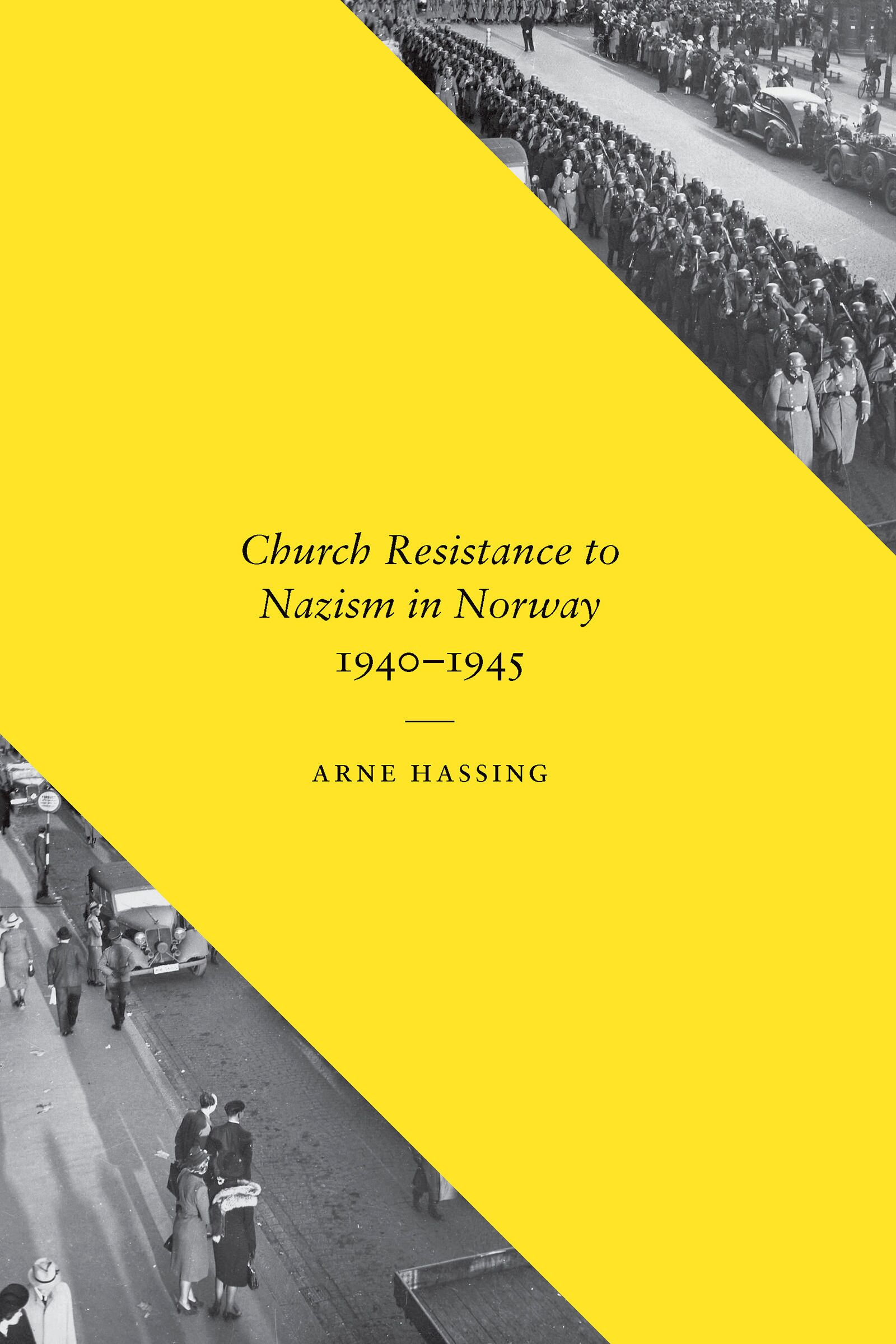
Church Resistance to Nazism in Norway, 1940-1945
Church Resistance to Nazism in Norway, 1940-1945 examines the evolution of the Lutheran state Church of Norway in response to the German occupation. While German Protestant churches generally accepted Nazism and state incorporation, Norway's churches rejected both Nazism and ideological alignment. Arne Hassing moves through the history of the Church of Norway's relationship to the Nazi state, from its initial confused complicities to its open resistance and separation. He writes engagingly of the people at the center of this struggle and reflects on how the resistance affected the postwar church and state.
eBook

In Defense of a Just State
When Hitler could not achieve his optimal political settlement, his compromise was the Commissarial Council, installed by Terboven on 25 September 1940. The Commissarial Council was not a government, because each minister answered to Terboven, but the Reichskommissar banned all other parties and declared that the NS was “the Norwegian people’s only possible way to freedom and independence.” As already noted, ten of the thirteen commissioner ministers were NS members, including the Commissioner Minister of Church and Education.
The NS’s immediate aims were to install party members in key state offices, reorganize the bureaucracy, take control of professional and trade
Book Chapter
The Autonomous Church
This chapter is about the formation of an autonomous church organization to serve its members with “Word and sacrament”; the next chapter is the story of the NS’s attempt to rebuild the state church. Both chapters are also about each side’s strategy to contain the other, to deny the other legitimacy.
At first glance, building an organization may seem peripheral to the story of the church’s resistance to Nazism, a diversion from the important issues, but that is not so. The clergy’s mass resignation on Easter 1942 made it central. Deprived of the economic and institutional support of the state,
Book Chapter
Weserübung
Germany invaded Poland on 1 September 1939, and three days later the United Kingdom declared war on Germany. The United Kingdom, however, was not prepared to go to war on Polish soil, leading to the “Phony War,” a pause in hostilities that would last over seven months. The bishop of Oslo was one of many who saw an opening and threw themselves into mediating a peace settlement.
Berggrav knew that he could use the ecumenical movement as a platform to promote reconciliation, but he faced a problem: as long as there was no reconciliation within his own church, he had
Book Chapter
The Resignation of the Bishops
On New Year’s Eve 1941, the Axis remained in control of most of Europe and eastern Asia. The Germans occupied or controlled western, central, and southern Europe and the Balkans, and on the Atlantic their submarines were devastating Allied shipping. In Asia, the Japanese controlled the Pacific Rim and the islands and had inflicted heavy losses on the British. On 7 December 1941, they attacked Pearl Harbor.
Pearl Harbor brought the United States into the war and offered grounds for Allied hope, but the United States was unprepared for war and help would not be immediate In early December on
Book Chapter
Against Compulsory Labor Service
Between the fall of 1942 and the spring of 1943, the war in Europe shifted in favor of the Allies. Churchill hesitated about claiming too much, but he thought that November 1942 was “the end of the beginning.”¹ That seemed to be the Norwegian view as well; the Gestapo’s November report emphasized the new confidence of “the Norwegian population” in an Allied victory, and reports from all over the country noted expressions of “joy” from “Jøssings,” the NS name for their opponents.²
In the early fall, German armies had been advancing on all fronts: in Russia, they closed in on
Book Chapter
In Defense of the Church
As summer approached in 1941, the United States and the Soviet Union were not engaged in the war. The United States was a sympathetic neutral party, but it would not be drawn into the war until the Japanese attack on Pearl Harbor on 7 December 1941. The Soviet Union was also neutral, but in a different position. Germany and the Soviet Union had signed a Non-Aggression Pact on 23 August 1939, but after Hitler’s invasion of Poland the Soviet Union suddenly shared a border with Germany.
Hitler believed in the evolution of species, the distinctiveness of races, and the survival
Book Chapter
Easter 1942
The Annunciation Day protest proceeded as planned, but not without signs of unrest in the ranks. Some pastors in Kristiansand and Stavanger only read summaries or did not read the protest statement at all.¹ Behind their decisions was the realization that the status quo was problematic. If the crisis justified the resignation of the bishops, why not the clergy? How could the clergy remain in office and not recognize the Quisling-appointed bishops and deans? Were the protests squandering the church’s spiritual and moral capital? Should the clergy resign without a new provocation?² In the meantime, the government dismissed four clergy
Book Chapter