
Catalogue Search | MBRL


Are you sure you want to remove the book from the shelf?

{{itemTitle}}
63
result(s) for
"Havercroft, Jonathan"
Sort by:


A constitution for the ocean? An agora on ocean governance
This introduction briefly discusses the global constitutional issues raised by ocean governance and introduces the three pieces from our Agora contributors.
Journal Article

The British Academy Brian Barry Prize Essay Why Is There No Just Riot Theory?
Given the prevalence of riots throughout human history, the lack of normative theorizing about them compared to other forms of political violence is striking. The author hypothesizes that this is due to riots' extra-institutionality. Riots are extra-public because they involve the participation of crowds, rather than institutionalized groups such as parties or social movements. They are extra-state because they violate the state's monopoly on violence. Riots are extra-legal because they constitute a form of unlawful assembly. They are also extra-parliamentary because they operate outside the normal legislative process. This article considers justifiable reasons to resist each of these foundational institutions, and proposes provisional criteria for a justifiable riot. The author concludes by urging political theorists to further examine the normative dimension of riots.
Journal Article
Contested compliance of obligations under international law: A take from Global Constitutionalism
Taking Global Constitutionalism as an agora, a platform for international interdisciplinary discussions this article asks a question about the state we are in with regard to the international order as an order that is not just a ‘rule-based order’ but also more substantially, a ‘legal order’ based on the rule of law. The topic is illustrated with reference to examples of ‘contested compliance’ i.e. objections to implementing international law and/or international rulings by international actors on behalf of signatories of states parties of a treaty. Three questions guide this discussion. The first is a question of normative change: are we facing a change regarding United Nations member states’ respect for and handling of the rule of law, or is a larger change of international law itself imminent? The second is a question about the effects of the shift from ‘normal’ contestations of norms to ‘deep’ contestations of the international order itself. And the third is a question about pluralism and diversity: are the UN Charter Order’s institutions, conventions and organisations sufficiently equipped to respond to an ever more diverse range of internationally, transnationally, and sub-nationally raised justice-claims? The article elaborates on each of the three themes in light of the current situation of contested compliance with obligations under international law.
Journal Article
Climate change and the challenge to liberalism
In this editorial, we consider the ways in which liberal constitutionalism is challenged by and presents challenges to the climate crisis facing the world. Over recent decades, efforts to mitigate the climate crisis have generated a new set of norms for states and non-state actors, including regulatory norms (emission standards, carbon regulations), organising principles (common but differentiated responsibility) and fundamental norms (climate justice, intergenerational rights, human rights). However, like all norms, these remain contested. Particularly in light of their global reach, their specific behavioural implications and interpretations and the related obligations to act remain debatable and the overwhelming institutionalization of the neoliberal market economy makes clear and effective responses to climate change virtually impossible within liberal societies.
Journal Article
Private law, private international law and public interest litigation
Private actors and institutions, and by extension private law itself, are increasingly being forced to reckon with a multiplicity of challenges that extend beyond the domain of private law as it is traditionally conceived. They reflect threats to the global constitutional order and liberal constitutionalism, and threats to individual and collective fundamental rights and constitutional values. As a result, the role of private law in framing and facilitating the development of the global economy and globalization often does not fall within the direct purview of public international lawyers. This editorial aims to examine the role of private law in the litigation and enforcement of public interests against the background of the public/private divide. This is done in light of the increasing role adopted by private actors, including corporations, beyond the private realm.
Journal Article
The pendulum swings back: New authoritarian threats to liberal democratic constitutionalism
For the past decade, the most salient form of this has been internal crisis.3 As we observed following Trump, Brexit, and a general resurgence of far-right parties across the diverse polities, ‘far right populist authoritarianism’ poses an immediate threat to LDC.4 Yet, a year after Trump’s defeat and with the EU having survived Brexit in part because states central to its integrity, such as France, have – so far – resisted far right populist leadership, the norms of constitutionalism have shown a measure of robustness.5 The possibility that LDC might ultimately be extinguished by far-right populism remains, but so far it has survived a number of traumatic political events internal to its established champions. The authoritarian weaponization of the values of global constitutionalism Weaponization of the values of LDC against constitutional democracies has taken three significant forms: exploiting crises of migration, which raise tensions for the commitment to human rights; claims that ethnic collective self-determination grants autocratic regimes the right to annex or co-opt all or part of democratic regimes; and manipulating constitutionalism’s commitment to speech and discourse rights to surreptitiously meddle (through new technology) in popular self-determination. Given the commitment of LDC to recognizing the intrinsic value of persons and the subsequent universality of rights, managing refugee migration – crudely stated, excluding migrants from entry into polities – raises a fundamental tension: philosophically, national origin is arbitrary, and differentiating persons on its basis contravenes liberalism’s Kantian inclinations.10 The presence of migration has been exploited domestically by far-right ethnonationalists within constitutionalist regimes. Western officials have suggested that the authoritarian president of Belarus, Aleksandr Lukashenko, has deliberately admitted refugees from war-torn and economically deprived areas into Belarus and then funnelled them to the Polish border11 as a reprisal for Western condemnation of his allegedly fraudulent electoral victory in the 2020 and subsequent Western sanctions.12 The particular scenario is reminiscent of President Tayyip Erdogan’s deployment of migration policy as a bargaining chip with the European Union when Western governments reacted to his expansion of his executive powers in Turkey.13 However, the Belarus–Poland crisis presents additional layers: according to Western powers, Lukashenko is acting as a proxy for Russia in his efforts to undermine the European Union, a constitutional arrangement forged in cosmopolitan ethnopluralism rather than autocratic ethnonationalism; and the engagement with Poland in particular targets a state that faces concerns of far-right democratic backsliding based in ethnonationalism – precisely the type of drift rightward driven by anti-immigrant xenophobia.
Journal Article
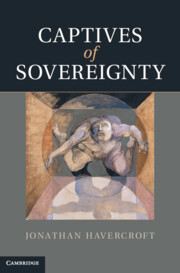
Captives of Sovereignty
A picture of sovereignty holds the study of politics captive. Captives of Sovereignty looks at the historical origins of this picture of politics, critiques its philosophical assumptions and offers a way to move contemporary critiques of sovereignty beyond their current impasse. The first part of the book is diagnostic. Why, despite their best efforts to critique sovereignty, do political scientists who are dissatisfied with the concept continue to reproduce the logic of sovereignty in their thinking? Havercroft draws on the writings of Hobbes and Spinoza to argue that theories of sovereignty are produced and reproduced in response to skepticism. The second part of the book draws on contemporary critiques of skeptical arguments by Wittgenstein and Cavell to argue that their alternative way of responding to skepticism avoids the need to invoke a sovereign as the final arbiter of all political disputes.
eBook

Soul-Blindness, Police Orders and Black Lives Matter
What does it mean to see someone as human, as a member of humankind? What kind of call for justice is it to demand that a group be seen as human beings? This article explores a fundamental kind of injustice: one of perception and how we respond to our perceptions. Drawing on Cavell, Wittgenstein and Rancière, we elucidate “soul blindness” as a distinct and basic form of injustice. Rancière’s police orders and Cavell’s soul blindness are mutually constitutive; the undoing of police orders entails a politics of soul dawning. Soul dawning entails acknowledging the humanity of others without erasing difference. In the concluding section, we consider white obliviousness to the Black Lives Matters (BLM) movement as a case of soul blindness. Part of the political import of BLM is its capacity to illustrate how practices of soul blindness in the United States constitute whiteness in a racialized police order.
Journal Article
Decolonising global constitutionalism
[...]of the 102 settlers on the Mayflower voyage only 28 of the adults were members of the Puritan congregation, while almost half of the settlers were not Puritans, but passengers who had been recruited by the company sponsoring the voyage.2 The motivations for the endeavour were a mixture of a desire for religious freedom and hope that the new colony would be profitable for the London-based financial backers who expected the colonists to do seven years of labour for the investors in exchange for receiving patent for the colonial land. Fearing that this would make any settlement ungovernable, the passengers on the ship committed to ‘covenant and combine ourselves together into a civil Body Politik, for our better Ordering and Preservation’ and promised ‘all due Submission and Obedience’ to ‘such just and equal Laws, Ordinances, Acts, Constitutions, and Officers, from time to time, as shall be thought most meet and convenient for the general Good of the Colony’.3 Together with the Declaration of Independence and the United States Constitution the Mayflower Compact is often seen as one of the three foundational constitutional documents of the US. Unfortunately, as the number of settlers in the Plymouth Colony grew, the agreement between the Wampanoag and Pilgrims would break down, leading eventually to King Philip’s War in 1675–1676 that killed 40 per cent of the population of the Wampanoag nation, and the enslavement of the remaining Indigenous population.6 From a global constitutionalist perspective, the story of the Mayflower highlights both the promise and the precarity of transnational law. The Mayflower enterprise was only possible because of the three bedrock agreements: the Mayflower Compact to establish democracy and the rule of law amongst the settlers; the treaty with the Wampanoag to provide the trade and security that enabled the settlers to survive their first years in the Americas; and the contract between the settlers and the investors back in England to provide the initial funding for the expedition in exchange for the indentured labour and resource expropriation of the Americas by the colonists.
Journal Article