
Catalogue Search | MBRL


Are you sure you want to remove the book from the shelf?

{{itemTitle}}
2
result(s) for
"Hayes, David (David John), author"
Sort by:

Confronting penal excess : retribution and the politics of penal minimalism
\"This monograph considers the correlation between the relative success of retributive penal policies in English-speaking liberal democracies since the 1970s, and the practical evidence of increasingly excessive reliance on the penal state in those jurisdictions. It sets out three key arguments. Firstly, that increasingly excessive conditions in England and Wales over the last three decades represent a failure of retributive theory. Secondly, that the penal minimalist cause cannot do without retributive proportionality, at least in comparison to the limiting principles espoused by rehabilitation, restorative justice, and penal abolitionism. Thirdly that, accordingly, another retributivism is necessary if we are to confront penal excess. Hayes offers a sketch of this new approach, 'late retributivism', as both a theory of punishment and of minimalist political strategy, within a democratic society. Centrally, criminal punishment is approached as both a political act and a policy choice. Consequently, penal theorists must take account of contemporary political contexts in designing and advocating for their theories. Although Hayes's inquiry focuses primarily on England and Wales, its models of retributivism and of academic contribution to democratic penal policy-making are relevant to other jurisdictions, too\"-- Provided by publisher.
Book
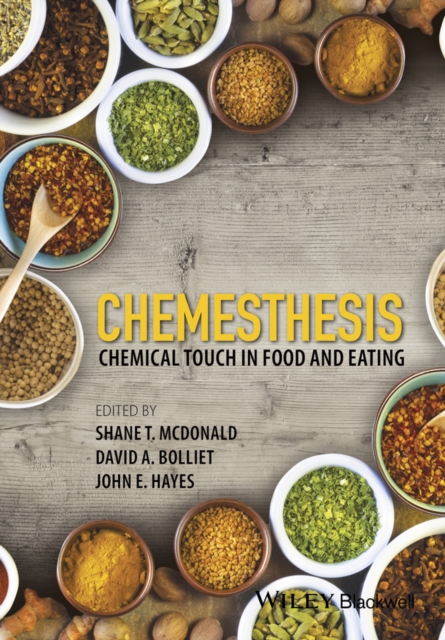
Chemesthesis
Chemesthesis are the chemically initiated sensations that occur via the touch system. Examples in the mouth include the burn of capsaicinoids in chilies, the cooling of menthol in peppermint, and the tingle of carbonation. It is physiologically distinct from taste and smell, but is increasingly understood to be just as important as these senses for their contribution to flavor, especially with the sustained growth in interest in spicy foods from around the world.
Chemesthesis: Chemical Touch in Food and Eating surveys the modern body of work on chemesthesis, with a variety of contributors who are well known for their expertise on the topic. After a forward by John Prescott and an introduction by Barry Green (who originally coined the term chemesthesis 25 years ago), the book moves on to survey chemesthetic spices and address the psychology and physiology of chemesthesis; practical sensory and instrumental analysis; the interaction of chemesthesis with other chemical senses; health ramifications; and the application of chemesthesis in food. The major types of chemesthesis, including pungency/burning, cooling, tingling, nasal irritation, and numbing, are each covered in their own chapter. The book concludes with a look to the future.
This is the first comprehensive book on chemesthesis since 1990, when Barry Green and his colleagues edited a volume on the perception of chemical irritants, including those in food. This new book is intended to be a vital resource for anyone interested in the sensory impact of the food we eat, including food scientists, sensory professionals, analytical chemists, physiologists, culinary scientists, and others.
eBook