
Catalogue Search | MBRL


Are you sure you want to remove the book from the shelf?

{{itemTitle}}
756
result(s) for
"Hayes, Steven"
Sort by:


Evolving the future: Toward a science of intentional change
Humans possess great capacity for behavioral and cultural change, but our ability to manage change is still limited. This article has two major objectives: first, to sketch a basic science of intentional change centered on evolution; second, to provide examples of intentional behavioral and cultural change from the applied behavioral sciences, which are largely unknown to the basic sciences community. All species have evolved mechanisms of phenotypic plasticity that enable them to respond adaptively to their environments. Some mechanisms of phenotypic plasticity count as evolutionary processes in their own right. The human capacity for symbolic thought provides an inheritance system having the same kind of combinatorial diversity as does genetic recombination and antibody formation. Taking these propositions seriously allows an integration of major traditions within the basic behavioral sciences, such as behaviorism, social constructivism, social psychology, cognitive psychology, and evolutionary psychology, which are often isolated and even conceptualized as opposed to one another. The applied behavioral sciences include well-validated examples of successfully managing behavioral and cultural change at scales ranging from individuals to small groups to large populations. However, these examples are largely unknown beyond their disciplinary boundaries, for lack of a unifying theoretical framework. Viewed from an evolutionary perspective, they are examples of managing evolved mechanisms of phenotypic plasticity, including open-ended processes of variation and selection. Once the many branches of the basic and applied behavioral sciences become conceptually unified, we are closer to a science of intentional change than one might think.
Journal Article

Process-based CBT : the science and core clinical competencies of cognitive behavioral therapy
\"Edited by Steven C. Hayes and Stefan G. Hofmann, and based on the new training standards developed by the Inter-Organizational Task Force on Cognitive and Behavioral Psychology Doctoral Education, this groundbreaking textbook presents the core competencies of cognitive behavioral therapy (CBT) in an innovative, practically applicable way, with contributions from some of the luminaries in the field of behavioral science. CBT is one of the most proven-effective and widely used forms of psychotherapy today. But while there are plenty of books that provide an overview of CBT, this is the first to present the newest recommendations set forth by a special task force of the Association for Behavioral and Cognitive Therapies--and that focuses on the application of these interventions based on a variety of approaches for doctoral-level education and training. Starting with an exploration of the science and theoretical foundations of CBT, then moving into a thorough presentation of the clinical processes, this book constitutes an accessible, comprehensive guide to grasping and using even the most difficult competencies. Each chapter of Process-Based CBT is written by a leading authority in that field, and their combined expertise presents the best of behavior therapy and analysis, cognitive therapy, and the acceptance and mindfulness therapies. Most importantly, in addition to gaining an up-to-date understanding of the core processes, with this premiere text you'll learn exactly how to put them into practice for maximum efficacy. For practitioners, researchers, students, instructors, and other professionals working with CBT, this breakthrough textbook--poised to set the standard in coursework and training--provides the guidance you need to fully comprehend and utilize the core competencies of CBT in a way that honors the behavioral, cognitive, and acceptance and mindfulness wings of the tradition\"-- Provided by publisher.
Book

Evaluating machine learning models for clothing size prediction using anthropometric measurements from 3D body scanning
An analysis of a dataset comprising 677 participants revealed substantial discrepancies in size categorization. Only 63 individuals (9.15%) maintained consistency across bust, waist, and hip measurements, whereas 614 participants (90.84%) exhibited size variations, and 35.45% were not adequately accommodated by the existing sizing scheme. These findings highlight significant challenges in garment selection, potentially leading to dissatisfaction and increased return rates. This study evaluated the effectiveness of support vector machine (SVM) and principal component analysis-SVM (PCA-SVM) models for clothing size prediction via 3D body scanning data. The traditional SVM model, which focuses on primary measurements, achieves an accuracy of 89.66%, outperforming the PCA-SVM model (68.97%), which incorporates additional dimensions. These results underscore the effectiveness of SVMs in predicting clothing size categories and emphasise the intricate relationship between body morphology and garment fit.
Journal Article


The Effectiveness of Acceptance and Commitment Therapy for Adolescent Mental Health: Swedish and Australian Pilot Outcomes
Depression, anxiety and stress are common problems among adolescents. Teaching young people coping strategies in school-based intervention programs is one promising approach hoped to remedy the negative consequences of distress in adolescence. The aim of the two pilot studies was to examine the effect of a brief intervention based on the principles of Acceptance and Commitment Therapy (ACT) on depressive symptomatology (Australian study,
N
= 66) and stress (Swedish study,
N
= 32) among adolescents screened for psychosocial problems in school settings. In both studies, subjects were assigned to receive the ACT-group-intervention, or a control intervention featuring individual support from the school health care. The Australian study was a planned comparison, with random allocation for girls, plus one replication of a boys group. The Swedish study used a randomized controlled design. The ACT-intervention was an 8-session manualized group program. The Australian study showed significant reductions in depressive symptoms with a large effect, and significant reductions in psychological inflexibility with a medium effect when compared to the control group who received standard care. In the Swedish study, the ACT-intervention group, when compared to the control group, reported significantly lower levels of stress with a large effect size, and marginally significant decrease of anxiety, and marginally significant increased mindfulness skills. Taken together, the ACT-intervention seems to be a promising intervention for reducing stress and depressive symptoms among young adolescents in school and should be tested in full-sized studies. Limitations of these two pilots include small samples.
Journal Article

Learning ACT : an acceptance & commitment therapy skills training manual for therapists
\"Acceptance and commitment therapy (ACT) is among the most remarkable developments in contemporary psychotherapy. This second edition of the pioneering ACT skills-training manual for clinicians provides a comprehensive update--essential for both experienced practitioners and those new to using ACT and its applications. ACT is a proven-effective treatment for numerous mental health issues, including depression, anxiety, stress, addictions, eating disorders, schizophrenia, borderline personality disorder, and more. With important revisions based on new developments in contextual behavioral science, Learning ACT, Second Edition includes up-to-date exercises and references, as well as material on traditional, evidence-based behavioral techniques for use within the ACT framework. In this fully revised and updated edition of Learning ACT, you'll find workbook-format exercises to help you understand and take advantage of ACT's unique six process model--both as a tool for diagnosis and case conceptualization, and as a basis for structuring treatments for clients. You'll also find up-to-the-minute information on process coaching, new experiential exercises, an increased focus on functional analysis, and downloadable extras that include role-played examples of the core ACT processes in action. By practicing the exercises in this workbook, you'll learn how this powerful modality can improve clients' psychological flexibility and help them to live better lives. Whether you're a clinician looking for in-depth training and better treatment outcomes for individual clients, a student seeking a better understanding of this powerful modality, or anyone interested in contextual behavioral science, this second edition provides a comprehensive revision to an important ACT resource\"-- Provided by publisher.
Book
Psychological flexibility and cognitive-affective processes in young adults’ daily lives
Psychological flexibility plays a crucial role in how young adults adapt to their evolving cognitive and emotional landscapes. Our study investigated a core aspect of psychological flexibility in young adults: adaptive variability and maladaptive rigidity in the capacity for behavior change. We examined the interplay of these elements with cognitive-affective processes within a dynamic network, uncovering their manifestation in everyday life. Through an Ecological Momentary Assessment design, we collected intensive longitudinal data over 3 weeks from 114 young adults ages 19 to 32. Using a dynamic network approach, we assessed the temporal dynamics and individual variability in flexibility in relation to cognitive-affective processes in this sample. Rigidity exhibited the strongest directed association with other variables in the temporal network as well as highest strength centrality, demonstrating particularly strong associations to other variables in the contemporaneous network. In conclusion, the results of this study suggest that rigidity in young adults is associated with negative affect and cognitions at the same time point and the immediate future.
Journal Article
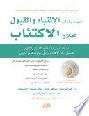
دليل عمل تركيز الانتباه والقبول لعلاج الاكتئاب : استخدام طريقة العلاج بالقبول والإلتزام لتخطي حالة الاكتئاب وخلق حياة تستحق العيش
يتناول كتاب (دليل عمل تركيز الانتباه والقبول لعلاج الاكتئاب : استخدام طريقة العلاج بالقبول والإلتزام لتخطي حالة الاكتئاب وخلق حياة تستحق العيش) والذي قام بتأليفه (د. كيرك ستروساهل، ود. باتريسيا روبنسون) ويقع في حوالي (345) صفحة من القطع المتوسط موضوع (الاكتئاب والصحة النفسية) مستعرضا المحتويات التالية : الفص الأول : وجهات نظر جديدة عن الاكتئاب، الفصل الثاني : قابلية البشر للإصابة بالاكتئاب، الفصل الثالث : كله قابل للتطبيق، الفصل الرابع : فهم العقل وتركيز الانتباه.
Book

Embracing the Complexity of our Inner Worlds: Understanding the Dynamics of Self-Compassion and Self-Criticism
Objectives
Although research in self-compassion has been rapidly growing, there is still substantial controversy about its meaning and measurement. The controversy centers on Neff’s popular Self- Compassion Scale (SCS) and the argument that compassionate self-responding (CSR) and uncompassionate self-responding (UCS) are a single dimension versus the argument that they are two semi-independent, unipolar dimensions, with UCS not reflective of “true” self-compassion.
Methods
We review the evidence for both positions and conclude that the data cannot yet resolve the debate.
Results
Neither position is proven to be right or wrong. We recommend the way forward is to let go of traditional factor analytic approaches and examine self-compassionate behavior as a dynamic network of interacting processes that are influenced by context. This leads us to three classes of testable hypotheses. The link between CS and UCS will depend on the timeframe of measurement, current circumstances, and individual differences.
Conclusions
We propose a middle ground to the SCS debate; rather than supporting the single total score, 2-factor score (CSR and UCS) or the 6-factor score (the six subscales of the SCS), we argue these constructs interact dynamically, and the decision of which scoring method to use should depend on the three testable contextual hypotheses.
Journal Article