
Catalogue Search | MBRL


Are you sure you want to remove the book from the shelf?

{{itemTitle}}
185,174
result(s) for
"He, Ji"
Sort by:
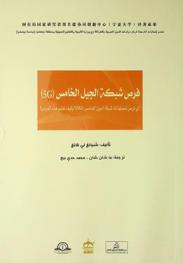
فرص شبكة الجيل الخامس (5G) : أي فرص تحملها لنا شبكة الجيل الخامس (5G) ؟ وكيف نغتنم هذه الفرص ؟
يثير الجيل الخامس (5G) متابعة العالم بأسره ويحظى أيضا باهتمام في الصين من القمة إلى القاعدة، وكل ذلك يبرهن على أمر معين وهو ما يتحلى به الناس من تطلع عميق تجاه الجيل الخامس (5G) بعد أن عشنا الجيل الرابع من الاتصالات (4G) ونحن على ثقة بأن الجيل الخامس (5G) يمثل فرصة كبرى لتغيير العالم ؛ فما الفرص التي سيجلب لنا الجيل الخامس (5G) يا ترى ؟ ومتى ستظهر هذه الفرص ؟ وكيف تغتنمها ؟ ؛ بعد فترة طويلة من المراقبة والتحليل والإحساس ومن خلال رسم خط مستقيم من الفرص ونظرة استشرافية شاركنا خبير الاتصالات شيانغ لي قانغ فرص الجيل الخامس (5G)، وهذا لم يسمح للمزيد من الناس بمعرفة ما الذي يعنيه الجيل الخامس (5G) فحسب، بل اطلعوا بشكل أوضح على ما يكن أن ينجز الجيل الخامس (5G) واستوعبوا أكثر من ذلك ما يمكن أن يفعله كل واحد منا من خلال الجيل الخامس (5G)
BOOK

Lagrange crisis and generalized variational principle for 3D unsteady flow
Purpose
A three-dimensional (3D) unsteady potential flow might admit a variational principle. The purpose of this paper is to adopt a semi-inverse method to search for the variational formulation from the governing equations.
Design/methodology/approach
A suitable trial functional with a possible unknown function is constructed, and the identification of the unknown function is given in detail. The Lagrange multiplier method is used to establish a generalized variational principle, but in vain.
Findings
Some new variational principles are obtained, and the semi-inverse method can easily overcome the Lagrange crisis.
Practical implications
The semi-inverse method sheds a promising light on variational theory, and it can replace the Lagrange multiplier method for the establishment of a generalized variational principle. It can be used for the establishment of a variational principle for fractal and fractional calculus.
Originality/value
This paper establishes some new variational principles for the 3D unsteady flow and suggests an effective method to eliminate the Lagrange crisis.
Journal Article


The simpler, the better: Analytical methods for nonlinear oscillators and fractional oscillators
In engineering, a fast estimation of the periodic property of a nonlinear oscillator is much needed. This paper reviews some simplest methods for nonlinear oscillators, including He’s frequency formulation, the max-min approach and the homotopy perturbation method. A mathematical insight into He’s frequency formulation is given, and the weighted average is introduced to further improve the estimated accuracy of the frequency. Fractional oscillators are also discussed.
Journal Article


Microbial regulation of terrestrial nitrous oxide formation: understanding the biological pathways for prediction of emission rates
The continuous increase of the greenhouse gas nitrous oxide (N2O) in the atmosphere due to increasing anthropogenic nitrogen input in agriculture has become a global concern. In recent years, identification of the microbial assemblages responsible for soil N2O production has substantially advanced with the development of molecular technologies and the discoveries of novel functional guilds and new types of metabolism. However, few practical tools are available to effectively reduce in situ soil N2O flux. Combating the negative impacts of increasing N2O fluxes poses considerable challenges and will be ineffective without successfully incorporating microbially regulated N2O processes into ecosystem modeling and mitigation strategies. Here, we synthesize the latest knowledge of (i) the key microbial pathways regulating N2O production and consumption processes in terrestrial ecosystems and the critical environmental factors influencing their occurrence, and (ii) the relative contributions of major biological pathways to soil N2O emissions by analyzing available natural isotopic signatures of N2O and by using stable isotope enrichment and inhibition techniques. We argue that it is urgently necessary to incorporate microbial traits into biogeochemical ecosystem modeling in order to increase the estimation reliability of N2O emissions. We further propose a molecular methodology oriented framework from gene to ecosystem scales for more robust prediction and mitigation of future N2O emissions.
This review summarizes the major microbial pathways of soil N2O production, and key environmental factors modulating their relative contributions, and further proposes to use a combination of state-of-the-art approaches for better source partitioning and incorporation of microbial datasets to achieve better predictive ecosystem models.
Journal Article


A Tutorial Review on Fractal Spacetime and Fractional Calculus
This tutorial review of fractal-Cantorian spacetime and fractional calculus begins with Leibniz’s notation for derivative without limits which can be generalized to discontinuous media like fractal derivative and q-derivative of quantum calculus. Fractal spacetime is used to elucidate some basic properties of fractal which is the foundation of fractional calculus, and El Naschie’s mass-energy equation for the dark energy. The variational iteration method is used to introduce the definition of fractional derivatives. Fractal derivative is explained geometrically and q-derivative is motivated by quantum mechanics. Some effective analytical approaches to fractional differential equations, e.g., the variational iteration method, the homotopy perturbation method, the exp-function method, the fractional complex transform, and Yang-Laplace transform, are outlined and the main solution processes are given.
Journal Article

A modified Li-He’s variational principle for plasma
Purpose
It is extremely difficult to establish a variational principle for plasma. Kalaawy obtained a variational principle by using the semi-inverse method in 2016, and Li and He suggested a modification in 2017. This paper aims to search for a generalized variational formulation with a free parameter.
Design/methodology/approach
The semi-inverse method is used by suitable construction of a trial functional with some free parameters.
Findings
A modification of Li-He’s variational principle with a free parameter is obtained.
Originality/value
This paper suggests a new approach to construction of a trial-functional with some free parameters.
Journal Article