
Catalogue Search | MBRL


Are you sure you want to remove the book from the shelf?

{{itemTitle}}
808,345
result(s) for
"He, Yu"
Sort by:
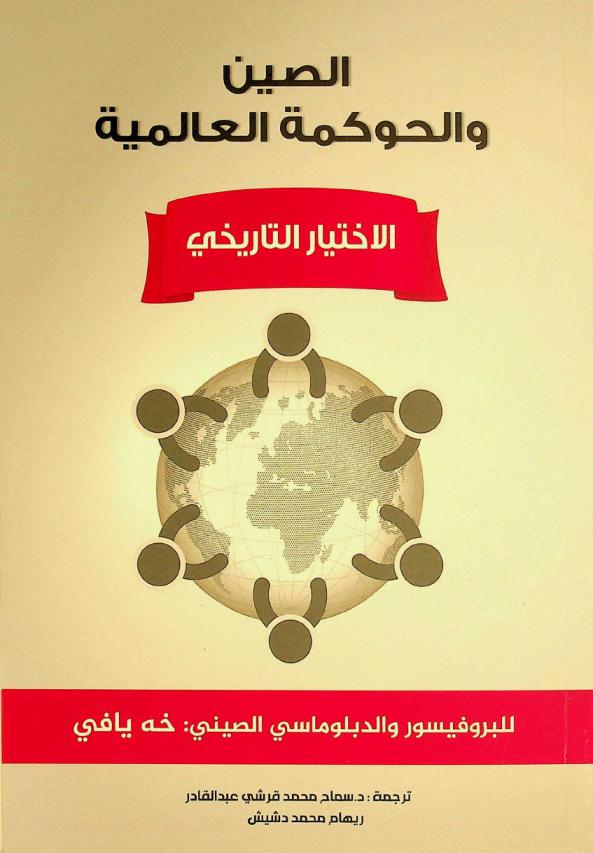
الصين والحوكمة العالمية : الاختيار التاريخي
يقدم هذا الكتاب دراسة وافية لأصل وتاريخ الحوكمة العالمية ومسيرة إصلاحها، مع التركيز على دور ومهام مجموعة العشرين وتطورها، ومقارنة بالدراسات السابقة، نجد أن هذا الكتاب يولي اهتماما بالعدالة والثقافة غير الغربية والدول النامية ودورها في الحوكمة العالمية. كما يستعرض الكتاب تاريخ المشاركة الصينية في الحوكمة العالمية وتطورها من الاقصاء إلى الاعتراف بها، ومن المراقبة إلى المشاركة، ومن الدور العادي إلى الدور الفاعل يتطرق الكتاب كذلك إلى قضية الحوكمة الإقليمية والعلاقات الصينية الأمريكية، وكيفية استغلال الصين المزاياها من أجل أداء دورها بشكل أفضل في الشؤون العالمية. وأخيرا، يقدم توصيات سياسية للصين القيادة إصلاح الحوكمة العالمية، وقد استند المؤلف في جميع هذه المحاور على شهاداته الشخصية أثناء أدائه لمهامه الدبلوماسية. يعد هذا الكتاب مرجعا أساسيا للباحثين في الحوكمة العالمية والدراسات الصينية. والعلاقات الدولية. كما أنه مرجع مهم أيضا للمهتمين بالقضايا الدولية، وخاصة الحوكمة العالمية ودور الصين في الساحة الدولية.

Autophagy and multidrug resistance in cancer
Multidrug resistance (MDR) occurs frequently after long‐term chemotherapy, resulting in refractory cancer and tumor recurrence. Therefore, combatting MDR is an important issue. Autophagy, a self‐degradative system, universally arises during the treatment of sensitive and MDR cancer. Autophagy can be a double‐edged sword for MDR tumors: it participates in the development of MDR and protects cancer cells from chemotherapeutics but can also kill MDR cancer cells in which apoptosis pathways are inactive. Autophagy induced by anticancer drugs could also activate apoptosis signaling pathways in MDR cells, facilitating MDR reversal. Therefore, research on the regulation of autophagy to combat MDR is expanding and is becoming increasingly important. We summarize advanced studies of autophagy in MDR tumors, including the variable role of autophagy in MDR cancer cells.
Journal Article


Giant orbital magnetoelectric effect and current-induced magnetization switching in twisted bilayer graphene
Recently, quantum anomalous Hall effect with spontaneous ferromagnetism was observed in twisted bilayer graphenes (TBG) near 3/4 filling. Importantly, it was observed that an extremely small current can switch the direction of the magnetization. This offers the prospect of realizing low energy dissipation magnetic memories. However, the mechanism of the current-driven magnetization switching is poorly understood as the charge currents in graphenes are generally believed to be non-magnetic. In this work, we demonstrate that in TBG, the twisting and substrate induced symmetry breaking allow an out of plane orbital magnetization to be generated by a charge current. Moreover, the large Berry curvatures of the flat bands give the Bloch electrons large orbital magnetic moments so that a small current can generate a large orbital magnetization. We further demonstrate how the charge current can switch the magnetization of the ferromagnetic TBG near 3/4 filling as observed in the experiments.
The mechanism of current-driven magnetization switching in twisted bilayer graphene (TBG) is poorly understood. Here, He et al. show that a small current can generate a large orbital magnetization due to symmetry breaking by the twisting and substrate in TBG, leading to a giant orbital magnetoelectric effect.
Journal Article


Induction-concurrent chemoradiotherapy with or without sintilimab in patients with locoregionally advanced nasopharyngeal carcinoma in China (CONTINUUM): a multicentre, open-label, parallel-group, randomised, controlled, phase 3 trial
Anti-PD-1 therapy and chemotherapy is a recommended first-line treatment for recurrent or metastatic nasopharyngeal carcinoma, but the role of PD-1 blockade remains unknown in patients with locoregionally advanced nasopharyngeal carcinoma. We assessed the addition of sintilimab, a PD-1 inhibitor, to standard chemoradiotherapy in this patient population.
This multicentre, open-label, parallel-group, randomised, controlled, phase 3 trial was conducted at nine hospitals in China. Adults aged 18–65 years with newly diagnosed high-risk non-metastatic stage III–IVa locoregionally advanced nasopharyngeal carcinoma (excluding T3–4N0 and T3N1) were eligible. Patients were randomly assigned (1:1) using blocks of four to receive gemcitabine and cisplatin induction chemotherapy followed by concurrent cisplatin radiotherapy (standard therapy group) or standard therapy with 200 mg sintilimab intravenously once every 3 weeks for 12 cycles (comprising three induction, three concurrent, and six adjuvant cycles to radiotherapy; sintilimab group). The primary endpoint was event-free survival from randomisation to disease recurrence (locoregional or distant) or death from any cause in the intention-to-treat population. Secondary endpoints included adverse events. This trial is registered with ClinicalTrials.gov (NCT03700476) and is now completed; follow-up is ongoing.
Between Dec 21, 2018, and March 31, 2020, 425 patients were enrolled and randomly assigned to the sintilimab (n=210) or standard therapy groups (n=215). At median follow-up of 41·9 months (IQR 38·0–44·8; 389 alive at primary data cutoff [Feb 28, 2023] and 366 [94%] had at least 36 months of follow-up), event-free survival was higher in the sintilimab group compared with the standard therapy group (36-month rates 86% [95% CI 81–90] vs 76% [70–81]; stratified hazard ratio 0·59 [0·38–0·92]; p=0·019). Grade 3–4 adverse events occurred in 155 (74%) in the sintilimab group versus 140 (65%) in the standard therapy group, with the most common being stomatitis (68 [33%] vs 64 [30%]), leukopenia (54 [26%] vs 48 [22%]), and neutropenia (50 [24%] vs 46 [21%]). Two (1%) patients died in the sintilimab group (both considered to be immune-related) and one (<1%) in the standard therapy group. Grade 3–4 immune-related adverse events occurred in 20 (10%) patients in the sintilimab group.
Addition of sintilimab to chemoradiotherapy improved event-free survival, albeit with higher but manageable adverse events. Longer follow-up is necessary to determine whether this regimen can be considered as the standard of care for patients with high-risk locoregionally advanced nasopharyngeal carcinoma.
National Natural Science Foundation of China, Key-Area Research and Development Program of Guangdong Province, Natural Science Foundation of Guangdong Province, Overseas Expertise Introduction Project for Discipline Innovation, Guangzhou Municipal Health Commission, and Cancer Innovative Research Program of Sun Yat-sen University Cancer Center.
For the Chinese translation of the abstract see Supplementary Materials section.
Journal Article


Towards optimal single-photon sources from polarized microcavities
An optimal single-photon source should deterministically deliver one, and only one, photon at a time, with no trade-off between the source’s efficiency and the photon indistinguishability. However, all reported solid-state sources of indistinguishable single photons had to rely on polarization filtering, which reduced the efficiency by 50%, fundamentally limiting the scaling of photonic quantum technologies. Here, we overcome this long-standing challenge by coherently driving quantum dots deterministically coupled to polarization-selective Purcell microcavities. We present two examples: narrowband, elliptical micropillars and broadband, elliptical Bragg gratings. A polarization-orthogonal excitation–collection scheme is designed to minimize the polarization filtering loss under resonant excitation. We demonstrate a polarized single-photon efficiency of 0.60 ± 0.02 (0.56 ± 0.02), a single-photon purity of 0.975 ± 0.005 (0.991 ± 0.003) and an indistinguishability of 0.975 ± 0.006 (0.951 ± 0.005) for the micropillar (Bragg grating) device. Our work provides promising solutions for truly optimal single-photon sources combining near-unity indistinguishability and near-unity system efficiency simultaneously.
Journal Article


Roles and mechanisms of exosomal non-coding RNAs in human health and diseases
Exosomes play a role as mediators of cell-to-cell communication, thus exhibiting pleiotropic activities to homeostasis regulation. Exosomal non-coding RNAs (ncRNAs), mainly microRNAs (miRNAs), long non-coding RNAs (lncRNAs), and circular RNAs (circRNAs), are closely related to a variety of biological and functional aspects of human health. When the exosomal ncRNAs undergo tissue-specific changes due to diverse internal or external disorders, they can cause tissue dysfunction, aging, and diseases. In this review, we comprehensively discuss the underlying regulatory mechanisms of exosomes in human diseases. In addition, we explore the current knowledge on the roles of exosomal miRNAs, lncRNAs, and circRNAs in human health and diseases, including cancers, metabolic diseases, neurodegenerative diseases, cardiovascular diseases, autoimmune diseases, and infectious diseases, to determine their potential implication in biomarker identification and therapeutic exploration.
Journal Article