
Catalogue Search | MBRL


Are you sure you want to remove the book from the shelf?

{{itemTitle}}
89
result(s) for
"Heale, Michael"
Sort by:


Obituary: Professor Robert Burchell, 1941–2020
Plymouth College led Bob Burchell to Oxford and a history degree, a trajectory that took him to UC Berkeley (in time to revel in its free-speech movement) and into research specialization in American immigration. A master of statistical methods, Bob Burchell published a number of closely researched articles challenging standard interpretations of American elections and immigration patterns, as did his most important book, The San Francisco Irish, 1848–1880, which found that those Irish immigrants adapted more successfully than had been assumed, and revealed an affinity for discovering uncharted sources. At one annual conference when Bob was treasurer the Executive Committee had been worried about proposing a large subscription hike to the AGM, but Bob airily reassured them, “I'll manage.”
Journal Article

Historians across borders
In this stimulating and highly original study of the writing of American history, twenty-four scholars from eleven European countries explore the impact of writing history from abroad. Six distinguished scholars from around the world add their commentaries. Arguing that historical writing is conditioned, crucially, by the place from which it is written, this volume identifies the formative impact of a wide variety of institutional and cultural factors that are commonly overlooked. Examining how American history is written from Europe, the contributors shed light on how history is written in the United States and, indeed, on the way history is written anywhere. The innovative perspectives included in Historians across Borders are designed to reinvigorate American historiography as the rise of global and transnational history is creating a critical need to understand the impact of place on the writing and teaching of history. This book is designed for students in historiography, global and transnational history, and related courses in the United States and abroad, for US historians, and for anyone interested in how historians work.
eBook
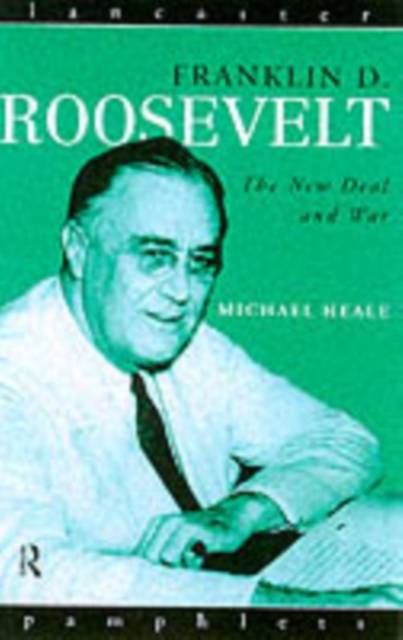
The Eleanor Roosevelt Oral History Collection of the Franklin D. Roosevelt Library.: (Part 2.)
This compact study assesses the personality, political and economic policies in war and peace, of America's longest-serving president and one of the most important political figures of the twentieth century, Franklin. D. Roosevelt. Also providing an overview of the America over which Roosevelt presided, the book offers a concise survey of both domestic and foreign affairs.
eBook

The Sixties in America
Focusing on the public affairs of America, Michael Heale introduces the reader to the major changes which governed life in the sixties.
eBook

You the People: Introduction
The Roundtable, \"You the People,\" is a rather unusual project for this journal. Normally the American Historical Review does not publish articles that address professional or pedagogical concerns--those more generally related to the practical side of history as opposed to historical scholarship itself. The essays, however, produced by a group of historians working in the UK, Poland, France, Italy, Germany, the Republic of Ireland, the Netherlands, and Australia, offer what they imagine to be a novel perspective for most readers: reflections on what it means to be an American historian living and working in Europe. Here, Barreyre et al set out that the writing of history is influenced as much by the place in which it is written as by when it is written.
Journal Article
Characteristics and Contours: Mapping American History in Europe
Here, Grant et al focus on the principal characteristics of the writing of American history in Europe. Before World War II it had virtually no practitioners; afterward, as the authors document, its expansion was significant. And it was shaped by competing influences: the new US presence in postwar Europe, the different political agendas across Europe, the growth and decline of Marxist ideology, and the appeal of American-style liberalism, tempered by a skepticism toward US \"exceptionalism,\" among other factors. Increasingly, historians in Europe found themselves addressing both their fellow Europeans and also readers, especially historians, in the US. In short, the changing conditions in postwar Europe--the Cold War and its end, the move toward EU, the impact of \"globalization\"--had a profound impact on how European historians of the US viewed their subject.
Journal Article
The British Discovery of American History: War, Liberalism and the Atlantic Connection
The years following the Second World War, according to the Norwegian scholar Sigmund Skard, witnessed the “Rediscovery of America,” as European academics belatedly turned their attention to the United States at a time when its pre-eminent global role could not be ignored. In Britain some believed that the awakening was already under way, the Principal of what became Exeter University having described 1941 as the year of the British “discovery of America.” The jarring realization that the very survival of Britain depended on a close alliance with the American giant had precipitated not only frenetic governmental activity but also intense interest in the United States throughout the media. Perhaps the “discovery” or “rediscovery” of America in British consciousness cannot be dated with exact precision, but the years from the war to the mid-1960s may fairly be called the “take-off period” for the academic study of American history in Britain. This essay briefly considers the role of some of the participants in this endeavour.
Journal Article