
Catalogue Search | MBRL


Are you sure you want to remove the book from the shelf?

{{itemTitle}}
335
result(s) for
"Heath, Jennifer"
Sort by:

Exploring the addictive processes in repetitive self-harm through a grounded theory approach: “It always felt like a choice until it didn’t”
There is limited empirical research to suggest repetitive self-harm can be understood or conceptualised as an addictive behaviour. However, few empirical studies have investigated this and yielded conflicting results. This study aims to explore to what extent can repetitive self-harm be conceptualized as an addictive behaviour.
The study employed the principles of Constructivist Grounded Theory to guide the collection and analysis of data from 15 adults with current or past experience of repetitive self-harm.
Thirteen categories were identified within the data that depicted participants journeys with self-harm over time. 'Starting' to self-harm (category 1) and participants' description of 'needing to punish myself' (category 2) led to self-harm 'feeling addictive' (category 3). Once self-harm had become repetitive, 'having the urge to self-harm' (category 4) and experiencing a 'conflicting relationship with self-harm and self' was ongoing for participants (category 5). Throughout each incidence of self-harm, participants described a \"cycle of self-harm\", in which self-harm had different functions and consequences: 'managing emotions' (category 6), 'allowing me to function' (category 7), 'caring for myself' (category 8), 'controlling' (category 9) and 'feeling guilt and shame after self-harm' (category 10). All participants described 'responding to other's reactions' to their self-harm (category 11), six discussed 'breaking the self-harm cycle' (category 12) and six participants described 'relapsing' (category 13) and returning to self-harm following a period of abstinence.
This study has provided a conceptual model of processes that maintain engagement in repetitive self-harm, discussed in relation to addiction literature. Clinical practice could consider working alongside the client to identify where they feel they are within the self-harm cycle in relation to changing their self-harm behaviours.
Journal Article


Identification of a common immune signature in murine and human systemic Salmonellosis
Despite the importance of Salmonella infections in human and animal health, the target antigens of Salmonella-specific immunity remain poorly defined. We have previously shown evidence for antibody-mediating protection against invasive Salmonellosis in mice and African children. To generate an overview of antibody targeting in systemic Salmonellosis, a Salmonella proteomic array containing over 2,700 proteins was constructed and probed with immune sera from Salmonella-infected mice and humans. Analysis of multiple inbred mouse strains identified 117 antigens recognized by systemic antibody responses in murine Salmonellosis. Importantly, many of these antigens were independently identified as target antigens using sera from Malawian children with Salmonella bacteremia, validating the study of the murine model. Furthermore, vaccination with SseB, the most prominent antigenic target in Malawian children, provided mice with significant protection against Salmonella infection. Together, these data uncover an overlapping immune signature of disseminated Salmonellosis in mice and humans and provide a foundation for the generation of a protective subunit vaccine.
Journal Article

Disseminating a Parenting Intervention in the Community: Experiences from a Multi-Site Evaluation
Circle of Security-Parenting (COS-P) is a widely used parenting intervention that is gaining popularity globally as it is currently being delivered across several continents. Despite the global uptake of COS-P, there is limited research on its effectiveness with considerable variability in its delivery. Here we present a multi-site evaluation of the group delivery of COS-P to under-resourced mothers (
n
= 131 enrolled) in an urban community as facilitated by community-based providers (
n
= 12) from community sites (
n
= 6) that provide maternal and child services. The feasibility and acceptability of delivering COS-P in the community are highlighted as well as characteristics of sites and providers as they relate to implementation efforts, and pre and post-intervention data examining COS-P and maternal caregiving functioning (i.e., depressive symptoms, reflective functioning) are also included. Several service delivery barriers were encountered at agency, provider and participant levels that created obstacles for program dissemination, participant retention and evaluation. Nonetheless, COS-P was successfully delivered in the community when sites embedded the program within their existing infrastructure and had the internal capacity for delivery, participant recruitment, supervision, and community presence. Mothers who participated in COS-P also reported fewer depressive symptoms following the intervention (
n
= 25). This multi-site implementation and evaluation study has important implications for the delivery of parenting services to under-resourced communities globally. Implications for future research and service delivery are discussed.
Journal Article
Emergence of host-adapted Salmonella Enteritidis through rapid evolution in an immunocompromised host
Host adaptation is a key factor contributing to the emergence of new bacterial, viral and parasitic pathogens. Many pathogens are considered promiscuous because they cause disease across a range of host species, while others are host-adapted, infecting particular hosts(1). Host adaptation can potentially progress to host restriction, where the pathogen is strictly limited to a single host species and is frequently associated with more severe symptoms. Host-adapted and host-restricted bacterial clades evolve from within a broader host-promiscuous species and sometimes target different niches within their specialist hosts, such as adapting from a mucosal to a systemic lifestyle. Genome degradation, marked by gene inactivation and deletion, is a key feature of host adaptation, although the triggers initiating genome degradation are not well understood. Here, we show that a chronic systemic non-typhoidal Salmonella infection in an immunocompromised human patient resulted in genome degradation targeting genes that are expendable for a systemic lifestyle. We present a genome-based investigation of a recurrent blood-borne Salmonella enterica serotype Enteritidis (S. Enteritidis) infection covering 15 years in an interleukin-12 β1 receptor-deficient individual that developed into an asymptomatic chronic infection. The infecting S. Enteritidis harboured a mutation in the mismatch repair gene mutS that accelerated the genomic mutation rate. Phylogenetic analysis and phenotyping of multiple patient isolates provides evidence for a remarkable level of within-host evolution that parallels genome changes present in successful host-restricted bacterial pathogens but never before observed on this timescale. Our analysis identifies common pathways of host adaptation and demonstrates the role that immunocompromised individuals can play in this process.
Journal Article

Emergence of host-adapted Salmonella Enteritidis through rapid evolution in an immunocompromised host
Host adaptation is a key factor contributing to the emergence of new bacterial, viral and parasitic pathogens. Many pathogens are considered promiscuous because they cause disease across a range of host species, while others are host-adapted, infecting particular hosts
1
. Host adaptation can potentially progress to host restriction, where the pathogen is strictly limited to a single host species and is frequently associated with more severe symptoms. Host-adapted and host-restricted bacterial clades evolve from within a broader host-promiscuous species and sometimes target different niches within their specialist hosts, such as adapting from a mucosal to a systemic lifestyle. Genome degradation, marked by gene inactivation and deletion, is a key feature of host adaptation, although the triggers initiating genome degradation are not well understood. Here, we show that a chronic systemic non-typhoidal
Salmonella
infection in an immunocompromised human patient resulted in genome degradation targeting genes that are expendable for a systemic lifestyle. We present a genome-based investigation of a recurrent blood-borne
Salmonella enterica
serotype Enteritidis (
S
. Enteritidis) infection covering 15 years in an interleukin-12 β1 receptor-deficient individual that developed into an asymptomatic chronic infection. The infecting
S.
Enteritidis harboured a mutation in the mismatch repair gene
mutS
that accelerated the genomic mutation rate. Phylogenetic analysis and phenotyping of multiple patient isolates provides evidence for a remarkable level of within-host evolution that parallels genome changes present in successful host-restricted bacterial pathogens but never before observed on this timescale. Our analysis identifies common pathways of host adaptation and demonstrates the role that immunocompromised individuals can play in this process.
Mutation of a mismatch repair gene accelerated the genomic mutation rate of
Salmonella
Enteritidis infecting an immunocompromized individual, leading to levels of evolution that parallel those found in successful host-restricted bacterial pathogens.
Journal Article

Rapid transcriptional responses to serum exposure are associated with sensitivity and resistance to antibody-mediated complement killing in invasive Salmonella Typhimurium ST313
Background : Salmonella Typhimurium ST313 exhibits signatures of adaptation to invasive human infection, including higher resistance to humoral immune responses than gastrointestinal isolates. Full resistance to antibody-mediated complement killing (serum resistance) among nontyphoidal Salmonellae is uncommon, but selection of highly resistant strains could compromise vaccine-induced antibody immunity. Here, we address the hypothesis that serum resistance is due to a distinct genotype or transcriptome response in S . Typhimurium ST313. Methods : Six S . Typhimurium ST313 bloodstream isolates, three of which were antibody resistant, were studied. Genomic content (single nucleotide polymorphisms and larger chromosomal modifications) of the strains was determined by Illumina and PACBIO sequencing, and functionally characterized using RNA-seq, transposon directed insertion site sequencing (TraDIS), targeted gene deletion and transfer of selected point mutations in an attempt to identify features associated with serum resistance. Results : Sequence polymorphisms in genes from strains with atypical serum susceptibility when transferred from strains that were highly resistant or susceptible to a strain that exhibited intermediate susceptibility did not significantly alter serum killing phenotype. No large chromosomal modifications typified serum resistance or susceptibility. Genes required for resistance to serum identified by TraDIS and RNA-seq included those involved in exopolysaccharide synthesis, iron scavenging and metabolism. Most of the down-regulated genes were associated with membrane proteins. Resistant and susceptible strains had distinct transcriptional responses to serum, particularly related to genes responsible for polysaccharide biosynthesis. There was higher upregulation of wca locus genes, involved in the biosynthesis of colanic acid exopolysaccharide, in susceptible strains and increased expression of fepE , a regulator of very long-chain lipopolysaccharide in resistant strains. Conclusion : Clinical isolates of S . Typhimurium ST313 exhibit distinct antibody susceptibility phenotypes that may be associated with changes in gene expression on exposure to serum.
Journal Article

The veil
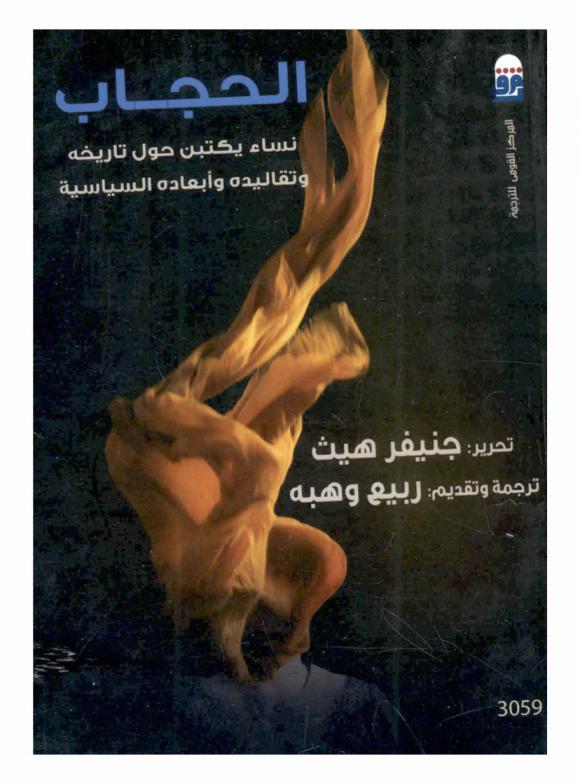
This groundbreaking volume, written entirely by women, examines the vastly misunderstood and multilayered world of the veil. Veiling— of women, of men, and of sacred places and objects—has existed in countless cultures and religions from time immemorial. Today, veiling is a globally polarizing issue, a locus for the struggle between Islam and the West and between contemporary and traditional interpretations of Islam. But veiling was a practice long before Islam and still extends far beyond the Middle East. This book explores and examines the cultures, politics, and histories of veiling. Twenty-one gifted writers and scholars, representing a wide range of societies, religions, ages, locations, races, and accomplishments, here elucidate, challenge, and/or praise the practice. Expertly organized and introduced by Jennifer Heath, who also writes on male veiling, the essays are arranged in three parts: the veil as an expression of the sacred; the veil as it relates to the emotional and the sensual; and the veil in its sociopolitical aspects. This unique, dynamic, and insightful volume is illustrated throughout. It brings together a multiplicity of thought and experience, much of it personal, to make readily accessible a difficult and controversial subject.
eBook