
Catalogue Search | MBRL


Are you sure you want to remove the book from the shelf?

{{itemTitle}}
39
result(s) for
"Heidemann, Frank"
Sort by:


Stimmungslagen und mobile Akteure. Ein Konflikt in einer südindischen Kleinstadt 2008 bis 2012
Zusammenfassung
Die Tageszeitung The Hindu\" titelte am 21. 8. 2009 ihre Reportage über einen Boykott von Schulen, Geschäften und staatlichen Einrichtungen in der südindischen Kleinstadt Kotagiri mit Property dispute snowballs into tension\". Die folgende Ethnographie soll den Konfliktverlauf vor und nach diesem Datum zusammenfassen. Dabei geht es auch um die Frage, wie eine allgemeine Konfliktstimmung zu einem Quasi-Objekt wurde, das sich schnell und nachhaltig im Raum verbreitete. Auf Ratsversammlungen und auf öffentlichen Plätzen wurden Reden gehalten und Forderungen gestellt, auf Marktplätzen und an Teeständen debattierten Betroffene, und Nachrichten wurden durch Telefonate und SMS sowie in Tageszeitungen und Fernsehprogrammen verbreitet. Ein nur wenig beachtetes Medium ist jedoch der menschliche Körper als Speicher von Erfahrung, Erinnerung und Emotionen, der bei der Verbreitung der Konfliktstimmung eine wesentliche Rolle gespielt hat. Der gestimmte Umgebungsraum und die leiblich Anwesenden bilden eine interaktive Gesamtheit, die sich durch die Mobilität von Menschen rhizomatisch verbreitet. Stimmungslagen entstehen über lange Zeiträume und wirken auf aktuelle Lebenswelten ein.
Abstract
Larger Atmospheres and Mobile Actors: A Conflict in a South Indian Small Town 2008-2012
On 21 September 2009, the Hindu published an article titled, \"Property dispute snowballs into tension\". In the previous year a dispute over a funeral and the inheritance of a family property marked the beginning of a larger conflict in Kotagiri town and the surrounding Badaga villages. The local councils decided that the disputed land should be given to the family's only son, but his sisters were the legal owners and rejected this decision. This led to the excommunication of the sisters, and broader disputes about the status of traditional legal institutions and the autonomy of ethnic-based jurisdiction. The state interfered and traditional leaders were arrested. Within a few hours supporters of those leaders blocked roads and boycotted shops and schools. After intense negotiation and posting bail they were released. These events raised questions about tradition, gender, party politics, ethnic autonomy and the relationship to the state. In the years that followed, the conflict continued to influence other areas of social, economic, and ritual life. I argue that atmospheres, as the felt quality of the surrounding space, fanned the flames of the larger conflict. People who participated or witnessed public tension were emotionally affected. Fear, anger, anxiety, uncertainty and disappointment became dominant emotions. News transmitted electronically and in daily papers and TV spread tension. But the human body appeared as the most effective medium for the continuity of the larger conflict. Emotive states were stored in human bodies and carried to local bazaars and into the villages. Local atmospheres were interconnected and formed larger atmospheres.
Journal Article

Guest Editors' Introduction: Indigeneity, Performance, and the State in South Asia and Beyond
The articles included here are based on a conference held in Upper Bavaria in 2011, convened with the purpose of fleshing out how Indian \"tribal\" populations use expressive culture to bolster claims of indigeneity. Within India, the focus is narrowed to Middle India and the Nilgiri Hills of South India, despite the fact that the issues collectively addressed here transcend local and regional issues. After providing a survey of the literature on \"tribes\" in India, the authors pinpoint areas of intersection that weave the enclosed articles together thematically. Further reflections on the concept of indigeneity as a global phenomenon conclude this introduction.
Journal Article
Between Devotee and God
Badagas, peasants in the South Indian Nilgiri region, take great care to prepare for the annual festival of the god Jedayasamy. In the festival week all activities are monitored to achieve a perfect performance. This article argues that devotees and visitors are affected by the special atmosphere of the place. According to the philosopher Gernot Böhme an atmosphere is a semi-object; it exists between individuals and the surrounding environment, and those who are affected by the particular atmosphere are its co-creators. Based on the concept of social aesthetics, this article examines several contexts. Devotees walk in a procession from village to village, dance in public places, and on the final day firewalking takes place. The festival atmosphere is planned, performed, and evaluated. The impact of the festival atmosphere is created by sensuous perceptions, symbolic public performances, and metaphorical references to social categories, here called reduplication.
Journal Article
Objectification and Social Aesthetics: Memoranda and the Celebration of \Badaga Day\
On 15 May 1989, the Badaga, the dominant peasant community in the Nilgiri Hills, organized a huge rally and handed over a memorandum to the government. On the basis of their culture they demanded tribal status, a guaranteed price for their agricultural products, and other privileges. I shall argue that the medium of a memorandum with its textual and material form requires and fosters the process of cultural objectification. \"Culture\" is turned into an object and becomes a form of currency in the political process. Later, 15 May was named \"Badaga Day,\" an annual context for self-representation. Performative acts like hoisting the Badaga flag, singing the Badaga hymn, and worshipping the bust of H. B. Ari Gowder contribute to an overall social aesthetics. Sounds, colors, proximity, and other \"culturally patterned sensory experience[s]\" (MacDougall 2006, 98) contribute to the feeling of \"oneness\" and underline the demand for cultural autonomy.
Journal Article
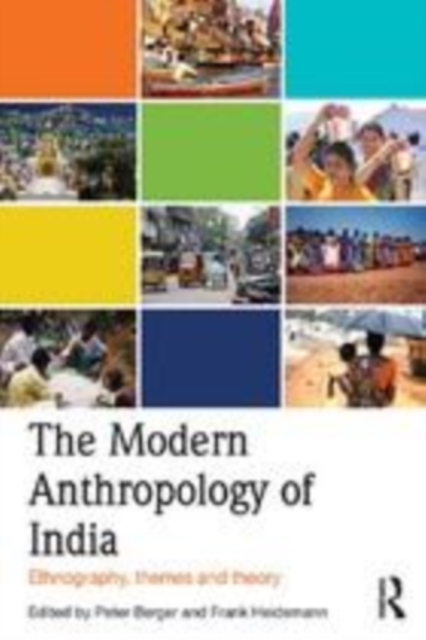
The Modern Anthropology of India
The Modern Anthropology of India is an accessible textbook providing a critical overview of the ethnographic work done in India since 1947. It assesses the history of research in each region and serves as a practical and comprehensive guide to the main themes dealt with by ethnographers. It highlights key analytical concepts and paradigms that came to be of relevance in particular regions in the recent history of research in India, and which possibly gained a pan-Indian or even trans-Indian significance.
Structured according to the states of the Indian union, contributors raise several key questions, including:
What themes were ethnographers interested in?
What are the significant ethnographic contributions?
How are peoples, communities and cultural areas represented?
How has the ethnographic research in the area developed?
Filling a significant gap in the literature, the book is an invaluable resource to students and researchers in the field of Indian anthropology/ethnography, regional anthropology and postcolonial studies. It is also of interest to students of South Asian studies in general as it provides an extensive and critical overview of regionally based ethnographic activity undertaken in India.
eBook
Between Devotee and God: The Study of Atmosphere in a South Indian Temple Festival
Badagas, peasants in the South Indian Nilgiri region, take great care to prepare for the annual festival of the godJedayasamy. In the festival week all activities are monitored to achieve a perfect performance. This article argues that devotees and visitors are affected by the special atmosphere of the place. According to the philosopher Gernot Böhme an atmosphere is a semi-object; it exists between individuals and the surrounding environment, and those who are affected by the particular atmosphere are its co-creators. Based on the concept of social aesthetics, this article examines several contexts. Devotees walk in a procession from village to village, dance in public places, and on the final day firewalking takes place. The festival atmosphere is planned, performed, and evaluated. The impact of the festival atmosphere is created by sensuous perceptions, symbolic public performances, and metaphorical references to social categories, here called reduplication.
Journal Article


Learning to Live in the Colonies and Camps: Repatriates and Refugees in Tamil Nadu
Involuntary migration of Tamil repatriates and refugees from Sri Lanka to Tamil Nadu began in the late 1960s and continued for several decades. The relief and rehabilitation offered to them by the Government of India was far from adequate, and life in the camps and colonies was hard and often unbearable. The unsuitable living conditions forced the migrants to learn how to deal with adversity and to assert agency in the midst of despair and hopelessness. Although life in the camps and colonies was difficult, migrants managed to carve out a space for themselves.
Journal Article