
Catalogue Search | MBRL


Are you sure you want to remove the book from the shelf?

{{itemTitle}}
417
result(s) for
"Heil, John"
Sort by:


Patients undergoing recurrent CT scans: assessing the magnitude
ObjectivesTo assess percent of patients undergoing multiple CT exams that leads to cumulative effective dose (CED) of ≥ 100 mSv and determine their age distribution.MethodsData was retrieved retrospectively from established radiation dose monitoring systems by setting the threshold value of 100 mSv at four institutions covering 324 hospitals. The number of patients with CED ≥ 100 mSv only from recurrent CT exams during a feasible time period between 1 and 5 years was identified. Age and gender distribution of these patients were assessed to identify the magnitude of patients in the relatively lower age group of ≤ 50 years.ResultsOf the 2.5 million (2,504,585) patients who underwent 4.8 million (4,819,661) CT exams during the period of between 1 and 5 years, a total of 33,407 (1.33%) patients received a CED of ≥ 100 mSv with an overall median CED of 130.3 mSv and maximum of 1185 mSv. Although the vast majority (72–86%) of patients are > 50 years of age, nearly 20% (13.4 to 28%) are ≤ 50 years. The minimum time to accrue 100 mSv was a single day at all four institutions, an unreported finding to date.ConclusionsWe are in an unprecedented era, where patients undergoing multiple CT exams and receiving CED ≥ 100 mSv are not uncommon. While underscoring the need for imaging appropriateness, the consideration of the number and percent of patients with high exposures and related clinical necessities creates an urgent need for the industry to develop CT scanners and protocols with sub-mSv radiation dose, a goal that has been lingering.Key Points• We are in an era where patients undergoing multiple CT exams during a short span of 1 to 5 years are not uncommon and a sizable fraction among them are below 50 years of age.• This leads to cumulative radiation dose to individual patients at which radiation effects are of real concern.• There is an urgent need for the industry to develop CT scanners with sub-mSv radiation dose, a goal that has been lingering.
Journal Article


Assassinations, Mercenaries, and Alfonso V of Aragon as Crusader King in the Thought of Aeneas Silvius Piccolomini
Aeneas Silvius Piccolomini, the future Pope Pius II, was the most outspoken humanist supporter of a fifteenth-century crusade after the fall of Constantinople. In his crusade writings from 1456–58, Piccolomini argued that that King Alfonso V of Aragon and Naples was the ideal figure to lead the crusade, portraying Alfonso as a Spanish imperator whose qualities matched or exceeded even the Pope and the Emperor, using classical rhetoric popular with Neapolitan humanists like Bartolomeo Facio. Even after Alfonso's death, Piccolomini celebrated the king as an exemplary ruler whose Spanish virtues brought peace to Italy and Spain and which could have restored Constantinople and healed a politically divided respublica Christiana.
Journal Article

An engineered GFP fluorescent bacterial biosensor for detecting and quantifying silver and copper ions
Presented here are two engineered bacterial biosensors for detecting and quantifying silver and copper ions. The biosensors contain a silver/copper resistance operon and a Green Fluorescent Protein gene that is strictly regulated through silver activated promoter regions normally found on a silver resistance gene (sil operon). The two biosensors efficiently detected silver and copper concentrations of 40 µM–300 µM and 20 µM–600 µM respectively. A strong correlation (R2 = 0.90 or above) between silver/copper and GFP signal makes it possible to quantify the ions using a linear regression. At room temperature incubation, the GFP signal of the biosensors in Ag+ saturated after 13 h. However, a detectable GFP signal was seen in 4 h.
Journal Article

Truthmaking and fundamentality
Consider the idea that some entities are more fundamental than others, some entities ‘ground’ other, less fundamental, entities. What is it for something to be more fundamental than another, or for something to ‘ground’ something else? This paper urges the rejection of conceptions of grounding and fundamentality according to which reality has a hierarchical structure in which higher-level entities are taken to be distinct from but metaphysically dependent on more fundamental lower-level entities. Truthmaking is offered as an apt replacement for at least some of the many applications of grounding.
Journal Article
Hylomorphism
The paper comprises an attempt on the part of the author to understand what hylomorphism is, both in its original Aristotelian guise, and in recent work by philosophers who defend what they call hylomorphism. Two species or strands of hylomorphism are identified and discussed. Universals, essences, and substantial and accidental forms make cameo appearances, and the implications of an Aristotelian ontology of stuffs are explored.
Journal Article
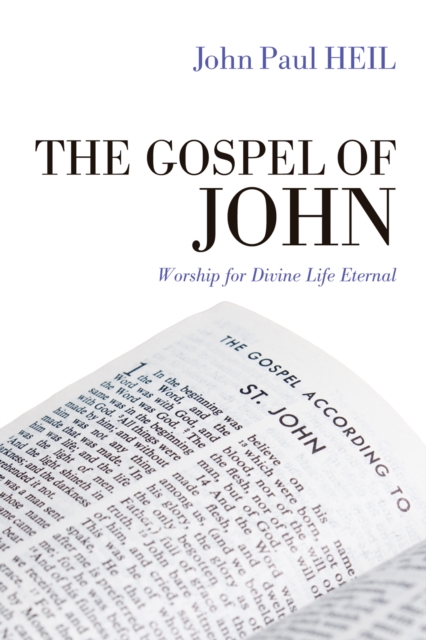
The Gospel of John
The Gospel of John has been examined from many different perspectives, but a comprehensive treatment of the theme of worship in this Gospel has not yet appeared.John Paul Heil offers a contribution toward a remedy of this deficiency by analyzing the entire Gospel of John from the perspective of its various dimensions of worship.
eBook

Being of one substance
An attempt is made to provide a consistent, independently motivated metaphysics of the Trinity by invoking an ontology of substances, attributes, and modes in the spirit of Descartes and Spinoza. The Trinity comprises one substance, triply attributed, where distinctions among attributes are ‘of reasoned reason’ only, but ‘founded’ in the nature of the substance.
Journal Article

ACCIDENTS UNMOORED
The essence of an accident consists in its relationship (dispositione) to a substance. For we should not imagine that an accident is a thing in its own right to which gets attached a relationship or a link (respectus) to a substance in which that accident exists. For if so, an accident would be something in its own right, dependent on substance only as extrinsic, and on this view, an accident could be cognized apart from the substance. These outcomes are impossible, however. Hence, what an accident is to something of the substance: either a measure (as a quantity is), or a state (as a quality is), and so on. Thus, the Philosopher says that an accident has being only because it belongs to something that has being (Oriel ms. 33 in Donati, Utram Accidens, 600 quoted in Pasnau 2011, p. 185).
Journal Article