
Catalogue Search | MBRL


Are you sure you want to remove the book from the shelf?

{{itemTitle}}
58
result(s) for
"Heinisch, Reinhard"
Sort by:

The people and the nation : populism and ethno-territorial politics in Europe
\"The edited book brings together country experts on populism, ethno-territorial politics and party competition. The book consists of twelve empirical chapters, covering seven Western European states (Austria, Belgium, France, Italy, Spain, Switzerland, and the UK) as well as four Central-European states (Croatia, Hungary, Serbia and Poland). It is a collaboration by scholars from across Europe which contributes to the growing literature on populism by focusing on a relatively unexplored research agenda; the intersection on territoriality, ethno-politics and populism. Presenting an original perspective contributing experts use case studies to highlight the territorial dimension of populism in different ways and identify that a deeper understanding of the interactions between populist actors and ethno-territorial ideologies is required. This book will be of interest to academics, researchers and students of European politics, populism and ethno-territorial politics\"-- Provided by publisher.
Book
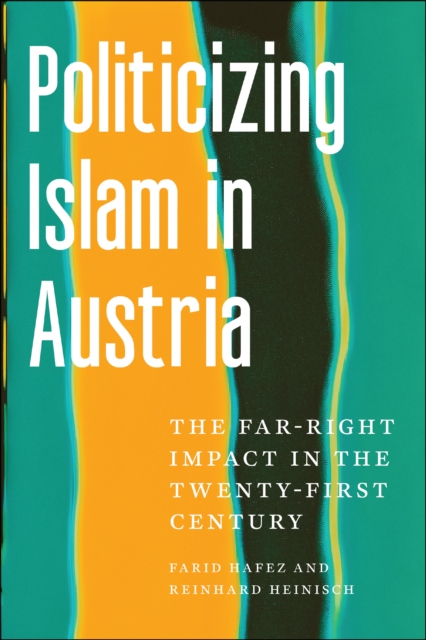
Politicizing Islam in Austria : the far-right impact in the twenty-first century
Among its Continental peers, Austria has stood out for its longstanding state recognition of the Muslim community as early as 1912. A shift has occurred more recently, however, as populist far-right voices within the Austrian government have redirected public discourse and put into question Islam's previously accepted autonomous status within the country. Politicizing Islam in Austria examines this anti-Muslim swerve in Austrian politics through a comprehensive analysis of government policies and regulations, as well as party and public discourses. In their innovative study, Hafez and Heinisch show how the far-right Austrian Freedom Party (FPÖ) adapted anti-Muslim discourse to their political purposes and how that discourse was then appropriated by the conservative center-right Austrian People's Party (ÖVP). This reconfiguration of the political landscape prepared the way for a right-wing coalition government between conservatives and far-right actors that would subsequently institutionalize anti-Muslim political demands and change the shape of the civic conditions and public perceptions of Islam and the Muslim community in the republic.
eBook

Disentangling How Populism and Radical Host Ideologies Shape Citizens’ Conceptions of Democratic Decision-Making
In this article, we aim to disentangle the extent to which citizens’ conceptions of democratic decision-making are shaped by populist attitudes or rather by radical left and right host ideologies. Following recent work by Landwehr and Steiner (2017), we distinguish four modes of decision-making embedded in different conceptions of democracy: trusteeship democracy, anti-pluralism, deliberative proceduralism, and majoritarianism. Drawing on data from Austria and Germany, we show that populism and radical host ideologies tap into different dimensions of democracy. While populism is primarily directed against representative forms of democratic decision-making, preferences for deliberative procedures and majority decisions appear entirely shaped by radical left and right host ideologies. Populism thus views decision-making based on the general will of the people as the only legitimate democratic procedure, whereas radical left and right host ideologies aim at involving the relevant group(s) of citizens. Further analyses of the interactions between populist attitudes and radical host ideologies confirm that the effects of populism remain robust and thus independent of the specific manifestations of radical host ideologies. These findings help to disentangle the causes of democratic discontent and to develop possible responses through democratic reforms that specifically and separately aim to mitigate populism and radical host ideologies.
Journal Article

Infected Politics in the Pandemic: How Medical Populism Shapes Politics on Two Continents
This article investigates how populist leaders in power across Europe and the Americas responded to the COVID-19 pandemic, with a focus on the extent and form of medical populism—the calculated use of health crises to challenge establishment authority, mobilize support, and promote alternative governance. Drawing on speeches and public statements from a select group of populist heads of government—including Orbán, Matovič, Maduro, López Obrador, Bukele, Bolsonaro, and Trump—we compare cross-regional discursive patterns using a framework developed. Contrary to expectations of ideological or regional uniformity, we find that medical populism is a transnational and trans-ideological phenomenon. While expressions vary, all leaders engaged in anti-elitist, conspiratorial, or anti-scientific rhetoric. Centralized political authority and weak healthcare systems, rather than ideology, more reliably explain the intensity of medical populist discourse. These findings challenge the common belief in the literature that populist misinformation is mainly connected to the radical right or low institutional trust, and highlight instead the structural incentives that drive medical populism in times of crisis.
Journal Article
Challenging Democracy: Understanding How the Ideas of Populists and Disenchanted Citizens Align
This thematic issue proceeds from the idea that, despite extensive research, we do not know enough about the alternatives to representative party democracy that people disenchanted with democracy and populists envision apart from greater citizen involvement. Citizens’ potential preferences seem to range from stealth democracy and decision-making by apolitical experts to deliberative mechanisms and referenda. The picture is equally blurred when it comes to the views of populist actors themselves. Research suggests that their calls for referendums diminish over time and that they reject deliberative bodies outright. This thematic issue reassesses our understanding of the extent to which populists’ and citizens’ ideas and the alternatives they propose coincide and argues for a wider dissemination of relevant research that explores these shortcomings. The articles presented explore these points by featuring conceptually and/or methodologically innovative contributions that address issues such as the mismatch between populists and citizens in terms of democratic alternatives, (dis)satisfaction with populist parties in public office, the preferences of distinct subgroups as well as the role of political emotions among populist party supporters.
Journal Article
Democracy Amid Pandemic: A Survey Experiment on How Covid‐19 Affectedness Influences Support for Anti‐Liberal Policies
Do people support ostensibly effective policy measures that curtail liberal rights and civil liberties or instead stick to liberal principles when confronted with an unprecedented crisis? This article examines the relationship between individuals’ perceptions of the Covid-19 pandemic and their attitudes toward democracy as they consider effective countermeasures. It asks (a) whether individuals’ sense of being affected by the pandemic shapes their attitudes toward democratic policymaking and (b) whether this relationship is moderated by trust and authoritarianism. The analysis builds on a customized survey in Austria that includes a conjoint experiment to test the acceptability of various illiberal policies. It shows that while feeling affected by Covid-19 does not have the hypothesized effect, there are strong interactions with respondents’ political attitudes. Citizens’ willingness to sacrifice democracy for more effective policies depends both on whether they perceive the pandemic as a personal problem and on their attitudes toward government and democracy.
Journal Article
Libertarian Populism? Making Sense of Javier Milei’s Political Discourse
This study seeks to understand the political discourse of Javier Milei and to determine which concept of populism best captures his approach. Although perceived by many as a populist, Milei is unusual in that he sees himself as a liberal libertarian and defender of the West against collectivist policies. To this end, this study analyzes selected speeches by Milei from three different periods during and after the 2024 presidential election campaign and applies a deductive coding scheme designed to identify ideational populism, populist discursive framing, populism as strategy, and populism as crisis performance. The analysis confirms that Milei is at best a partial populist, as he fails to define the core populist concept of “the people”. It concludes that the concept of crisis performance emerges as the most apt theoretical framework to classify Milei’s type of populism. By rhetorically transforming the crisis not only into an existential economic issue but also into a moral tale of corruption and failure at the highest levels, he can appeal for radical change and offer himself as the national political savior. Milei’s discourse also illustrates that, unlike ideological populism or discursive populist framing, in the performative turn, the victims of the crisis, the people, often remain a vague signifier defined by their suffering at the hands of elites.
Journal Article

The strange bedfellows of populism and liberalism: the effect of populist attitudes on the perception of the COVID-19 pandemic and policies to contain it
The COVID-19 pandemic has had a significant impact on everyday life, where people feel affected both economically and health-wise by the spread of the novel virus, regardless of whether they have contracted it or not. At the same time, we know that populist attitudes influence how people perceive their individual situation, the political environment, and available policy solutions. Are these two factors interrelated? This article examines the role that populist attitudes play (a) in subjective feelings of being affected by the COVID-19 pandemic and (b) in choosing policies to counteract its spread. Populist attitudes may lead people to reject the policy-making process during the COVID-19 pandemic, shaped primarily by experts. The article argues that this should increase the sense of concern among people with populist orientations and lead to a rejection of commonly discussed policies to contain the virus. To test this connection empirically, we conducted a representative survey in Austria in September 2020. Our analysis shows a significant and substantive correlation between populist attitudes and the subjective feeling of being affected by the crisis in the areas of health and the economy. Similarly, we find evidence that populist attitudes affect the acceptability of policies to combat the spread of COVID-19. These findings indicate that populist attitudes have such strong effects on individuals’ perception of the world that they even influence the perception of the globally shared challenge of a pandemic.
Journal Article

Breaking with Austrian Consociationalism: How the Rise of Rightwing Populism and Party Competition Have Changed Austria's Islam Politics
This paper seeks to explain Austria's Islam-related politics by first suggesting that it can be best understood in terms of neo-institutionalist path-dependency and consociationalist policy-making. This is due to the fact that Austria gave Islam full legal recognition in 1912. Important institutional patterns and policies grew out of this law in the Second Republic, whose persistence we want to examine. The Islamic Religious Community constituted itself under public law as a neo-corporatist interest group for Muslims in Austria in 1979. More recently, the government's approach toward Islam has shifted. This change can be best accounted for by party competition in which the far-right Freedom Party of Austria has sought to monopolize this issue. Consequently, this paper explores the contradictions between, on the one hand, the long-established principle of state neutrality and evenhandedness when dealing with various legally recognized religious communities and, on the other hand, discriminatory Islam-related politics.
Journal Article

Struggling to Address the ‘Big and Burning’ Questions: The Opportunities and Perils of (Austrian) Political Science Going Mainstream
This essay raises the question of whether mainstream political science fails to address adequately the important questions about the state of democracy that are dominating the current public discourse. Increasingly common research practices in mainstream political science focus on technical questions and puzzle-solving while incentivizing conventional approaches and narrow risk-averse scholarship. This threatens political science's ability to contribute meaningfully to the public discourse. Under these circumstances, the Austrian branch of the discipline is joining mainstream international political science in a quest for greater relevance after decades of marginalization. The article traces the evolution of postwar international and Austrian political science, suggesting that the current focus on puzzle-solving is a reaction to previously dominant paradigms in the discipline that made grand claims on the basis of few data. The essay also shows that the delayed establishment of Austrian political science as an academic discipline and its long disconnect from international developments in the field long undermined its recognition. Now that it is becoming more mainstream and international, there are unprecedented opportunities for greater prestige but also new perils to be avoided.
Journal Article