
Catalogue Search | MBRL


Are you sure you want to remove the book from the shelf?

{{itemTitle}}
24
result(s) for
"Helm, Matthew D."
Sort by:

Discovery and characterization of highly potent and selective allosteric USP7 inhibitors
Given the importance of ubiquitin-specific protease 7 (USP7) in oncogenic pathways, identification of USP7 inhibitors has attracted considerable interest. Despite substantial efforts, however, the development of validated deubiquitinase (DUB) inhibitors that exhibit drug-like properties and a well-defined mechanism of action has proven particularly challenging. In this article, we describe the identification, optimization and detailed characterization of highly potent (IC50 < 10 nM), selective USP7 inhibitors together with their less active, enantiomeric counterparts. We also disclose, for the first time, co-crystal structures of a human DUB enzyme complexed with small-molecule inhibitors, which reveal a previously undisclosed allosteric binding site. Finally, we report the identification of cancer cell lines hypersensitive to USP7 inhibition (EC50 < 30 nM) and demonstrate equal or superior activity in these cell models compared to clinically relevant MDM2 antagonists. Overall, these findings demonstrate the tractability and druggability of DUBs, and provide important tools for additional target validation studies.
Journal Article

USP7 inhibitors suppress tumour neoangiogenesis and promote synergy with immune checkpoint inhibitors by downregulating fibroblast VEGF
Background Understanding how to modulate the microenvironment of tumors that are resistant to immune checkpoint inhibitors represents a major challenge in oncology.Here we investigate the ability of USP7 inhibitors to reprogram the tumor microenvironment (TME) by inhibiting secretion of vascular endothelial growth factor (VEGF) from fibroblasts. Methods To understand the role played by USP7 in the TME, we systematically evaluated the effects of potent, selective USP7 inhibitors on co‐cultures comprising components of the TME, using human primary cells. We also evaluated the effects of USP7 inhibition on tumor growth inhibition in syngeneic models when dosed in combination with immune checkpoint inhibitors (ICIs). Results Abrogation of VEGF secretion from fibroblasts in response to USP7 inhibition resulted in inhibition of tumor neoangiogenesis and increased tumor recruitment of CD8‐positive T‐lymphocytes, leading to significantly improved sensitivity to immune checkpoint inhibitors. In syngeneic models, treatment with USP7 inhibitors led to striking tumor responses resulting in significantly improved survival. Conclusions USP7‐mediated reprograming of the TME is not linked to its previously characterized role in modulating MDM2 but does require p53 and UHRF1 in addition to the well‐characterized VEGF transcription factor, HIF‐1α. This represents a function of USP7 that is unique to fibroblasts, and which is not observed in cancer cells or other components of the TME. Given the potential for USP7 inhibitors to transform “immune desert” tumors into “immune responsive” tumors, this paves the way for a novel therapeutic strategy combining USP7 inhibitors with immune checkpoint inhibitors (ICIs). The oral USP7 inhibitor, ADC‐159, reduces sVEGF from CAFs and impacts tumor vasculature. USP7 inhibition affects HIF‐1α transcriptional modulation, tumor hypoxia and remodeling of the tumor microenvironment creating a permissive immune micro‐climate for infiltrating lymphocytes turning immunologically ‘cold’ tumors, ‘hot’. In preclinical models, combination treatment of ADC‐159 with immunotherapy agents delivers improved anti‐tumor efficacy and survival.
Journal Article
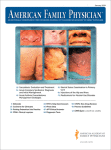
Sarcoidosis: Evaluation and Treatment
Sarcoidosis is a multisystem granulomatous inflammatory disease of unknown etiology that can involve any organ. Ongoing dyspnea and dry cough in a young to middle-aged adult should increase the suspicion for sarcoidosis. Symptoms can present at any age and affect any organ system; however, pulmonary sarcoidosis is the most common. Extrapulmonary manifestations often involve cardiac, neurologic, ocular, and cutaneous systems. Patients with sarcoidosis can exhibit constitutional symptoms such as fever, unintentional weight loss, and fatigue. The early recognition and diagnosis of sarcoidosis are challenging because there is no diagnostic standard for testing, initial symptoms vary, and patients may be asymptomatic. Consensus guidelines recommend a holistic approach when diagnosing sarcoidosis that focuses on clinical presentation and radiographic findings, biopsy with evidence of noncaseating granulomas, involvement of more than one organ system, and elimination of other etiologies of granulomatous disease. Corticosteroids are the initial treatment for active disease, with refractory cases often requiring immunosuppressive or biologic therapies. Transplantation can be considered for advanced and end-stage disease depending on organ involvement.
Journal Article

Violaceous Facial Nodules and Dermal Vascular Plaques on the Extremities
A 58-year-old woman with no significant medical history presented with well-demarcated, violaceous nodules on her face (Figure 1) and dusky, erythematous plaques on her legs (Figure 2). The lesions appeared five months earlier. They were asymptomatic but rapidly growing. The patient reported fatigue and malaise.
Journal Article

Firm Nodule on the Ear
The diagnosis can be confirmed by aspiration or biopsy of the nodule, which can show needle-shaped, negatively birefringent uric acid crystals under polarized light.1 Removal is not required for small tophi that are not painful and do not affect movement or range of motion. The pathophysiology is unknown but is believed to involve prolonged and excessive pressure on the affected area.3 Squamous cell carcinoma is the second most common skin cancer, with a male to female ratio of 2:1. Weathering nodules may coexist with chondrodermatitis nodularis helices.5 SUMMARY TABLE Condition Characteristics Basal cell carcinoma Enlarging crusted nodule, pearly papule, reddish-pink patch, ulceration, or scar-like area Chondrodermatitis nodularis helices Benign and painful condition affecting the helix or antihelix of the ear; possibly caused by prolonged and excessive pressure on affected area Gouty tophi Associated with chronic hyperuricemia; hard deposits underneath the skin in and around joints, in olecranon bursa, or on pinnae; may break through skin, appearing as chalky white nodules Squamous cell carcinoma Nonhealing, bleeding hyperkeratotic nodule or ulcerated plaque; surrounding skin inflamed and indurated Weathering nodules May present in the helix and antihelix of the ear; usually bilateral and multiple; biopsy shows cartilage and elastic tissue degeneration and marked absence of inflammatory cells Address correspondence to Matthew Helm, MD, at mhelm2@pennstatehealth.psu.edu.
Journal Article

Incidence of Heterotopic Ossification Without Additional Long-Term NSAID Prophylaxis After Periacetabular Osteotomy and Concomitant Hip Arthroscopy
Background:
Periacetabular osteotomy (PAO) is an established treatment for hip dysplasia and has been increasingly combined with concomitant hip arthroscopy to address additional intra-articular hip pathology. Heterotopic ossification (HO) is a complication of arthroscopic and open hip procedures. Nonsteroidal anti-inflammatory drugs (NSAIDs) have become an established form of HO prophylaxis, but their use may delay bone healing.
Purpose:
To examine the incidence of HO without NSAID prophylaxis in patients after PAO with concomitant hip arthroscopy and to evaluate the impact of other variables on the development of HO in these patients.
Study Design:
Case series; Level of evidence, 4.
Methods:
Of 243 hips that underwent PAO with concomitant hip arthroscopy by a single surgeon over 11 years, 182 met the study inclusion criteria. No patients were discharged on NSAIDs for HO prophylaxis, although most took up to 6 weeks of aspirin 81 mg as part of the prophylaxis protocol for deep venous thrombosis. Radiographic images at 2 weeks, 6 weeks, and 3 months postoperatively were reviewed and graded for HO using the Brooker classification. Patient characteristics and surgical variables were recorded. The chi-square and t tests were used to determine HO incidence rates, compare groups, and identify variables associated with the presence of HO.
Results:
The incidence of radiographic HO was 6.6% (12/182 hips). Nine hips were Brooker grade 1, 2 were grade 2, and 1 was grade 3. Four patients experienced clinical symptoms of HO— including pain and restricted motion. Only 1 patient required a return trip to the operating room for surgical excision. Male patients were significantly more likely to develop HO than female patients (P = .01). No other demographic or surgical factor influenced the development of HO. There were no cases of nonunion.
Conclusion:
There was a low incidence of HO and symptomatic HO in patients who underwent PAO with concomitant hip arthroscopy without using NSAIDs for HO prophylaxis. HO was significantly more likely to develop in male patients. Given the potential risk of NSAID use on bony union, the low incidence found in this study may obviate the need for postoperative HO prophylaxis.
Journal Article
Evaluating the Need for Preoperative MRI Before Primary Hip Arthroscopy in Patients 40 Years and Younger With Femoroacetabular Impingement Syndrome: A Multicenter Comparative Analysis
Background:
Routine hip magnetic resonance imaging (MRI) before arthroscopy for patients with femoroacetabular impingement syndrome (FAIS) offers questionable clinical benefit, delays surgery, and wastes resources.
Purpose:
To assess the clinical utility of preoperative hip MRI for patients aged ≤40 years who were undergoing primary hip arthroscopy and who had a history, physical examination findings, and radiographs concordant with FAIS.
Study Design:
Cohort study; Level of evidence, 3.
Methods:
Included were 1391 patients (mean age, 25.8 years; 63% female; mean body mass index, 25.6) who underwent hip arthroscopy between August 2015 and December 2021 by 1 of 4 fellowship-trained hip surgeons from 4 referral centers. Inclusion criteria were FAIS, primary surgery, and age ≤40 years. Exclusion criteria were MRI contraindication, reattempt of nonoperative management, and concomitant periacetabular osteotomy. Patients were stratified into those who were evaluated with preoperative MRI versus those without MRI. Those without MRI received an MRI before surgery without deviation from the established surgical plan. All preoperative MRI scans were compared with the office evaluation and intraoperative findings to assess agreement. Time from office to arthroscopy and/or MRI was recorded. MRI costs were calculated.
Results:
Of the study patients, 322 were not evaluated with MRI and 1069 were. MRI did not alter surgical or interoperative plans. Both groups had MRI findings demonstrating anterosuperior labral tears treated intraoperatively (99.8% repair, 0.2% debridement, and 0% reconstruction). Compared with patients who were evaluated with MRI and waited 63.0 ± 34.6 days, patients who were not evaluated with MRI underwent surgery 6.5 ± 18.7 days after preoperative MRI. MRI delayed surgery by 24.0 ± 5.3 days and cost a mean $2262 per patient.
Conclusion:
Preoperative MRI did not alter indications for primary hip arthroscopy in patients aged ≤40 years with a history, physical examination findings, and radiographs concordant with FAIS. Rather, MRI delayed surgery and wasted resources. Routine hip MRI acquisition for the younger population with primary FAIS with a typical presentation should be challenged.
Journal Article
The Effect of Anterior Closing Wedge Slope-Reducing Osteotomy on Coronal Alignment—Effect of Osteotomy Technique, Starting Point, and Degree of Correction
Background:
Techniques for anterior closing wedge slope-reducing osteotomy (ACW-SRO) remain variable regarding management of the tibial tubercle and osteotomy starting point. Moreover, the potential unintended effect on coronal alignment has not yet been determined.
Purpose:
To determine the effect of the ACW-SRO technique and starting point on coronal alignment in knees with an elevated posterior tibial slope (PTS).
Study Design:
Descriptive laboratory study.
Methods:
Full-length lower extremity computed tomography scans were retrospectively reviewed in patients presenting to our level 1 trauma center to identify patients with an elevated PTS of ≥12° without secondary trauma to the lower extremity. Materialise software was used to generate 3-dimensional models and simulate supratubercle, transtubercle, and infratubercle ACW-SROs. Six osteotomies per tibia were simulated, with 3 using an anterior start point centered at the tibial tubercle, and 3 using a start point at the perfect anterior-posterior mid-axis point of the tibia (-AP). The PTS was corrected to 6° universally. Coronal alignment was measured using the medial proximal tibial angle (MPTA) before and after osteotomy.
Results:
Eleven tibias were included, with a mean native PTS of 14.5° (range 12°-18°). Transtubercle-AP and infratubercle-AP osteotomies had the largest mean ΔMPTA of 1.72° of varus (range, 0°-3°; P = .03) and 1.82° of varus (range 0°-3.5°; P = .03), respectively. There was a strong positive correlation between the degree of PTS correction and ΔMPTA. Supratubercle-AP, transtubercle-AP, and infratubercle-AP had the strongest correlations (0.77, P = .005; 0.66, P = .03; 0.68, P = .02, respectively). The mean ΔMPTA increased varus in all 6 osteotomies in tibias with PTS corrections of ≥9°.
Conclusion:
Isolated ACW-SRO can affect coronal alignment of the knee by introducing additional varus, particularly in transtubercle and infratubercle osteotomies utilizing the AP starting point. This is especially apparent in tibias requiring larger PTS correction. The tibial tubercle-referenced starting point may minimize coronal changes.
Clinical Relevance:
This simulated study showed that coronal alignment is affected by the ACW-SRO technique and starting point in patients with elevated PTS. All osteotomies created additional varus, which must be considered when planning PTS correction.
Journal Article
