
Catalogue Search | MBRL


Are you sure you want to remove the book from the shelf?

{{itemTitle}}
95
result(s) for
"Hendrickson, Brett"
Sort by:

Border medicine : a transcultural history of Mexican American curanderismo
\"Mexican American folk and religious healing, often referred to as curanderismo, has been a vital part of life in the Mexico-U.S. border region for centuries. A hybrid tradition made up primarily of indigenous and Iberian Catholic pharmacopeias, rituals, and notions of the self, curanderismo treats the sick person with a variety of healing modalities including herbal remedies, intercessory prayer, body massage, and energy manipulation. Curanderos, \"healers,\" embrace a holistic understanding of the patient, including body, soul, and community. Border Medicine examines the ongoing evolution of Mexican American religious healing from the end of the nineteenth century to the present. Illuminating the ways in which curanderismo has had an impact not only on the health and culture of the borderlands but also far beyond, the book tracks its expansion from Mexican American communities to Anglo and multiethnic contexts. While many healers treat Mexican and Mexican American clientele, a significant number of curanderos have worked with patients from other ethnic groups as well, especially those involved in North American metaphysical religions like spiritualism, mesmerism, New Thought, New Age, and energy-based alternative medicines. Hendrickson explores this point of contact as an experience of transcultural exchange. Drawing on historical archives, colonial-era medical texts and accounts, early ethnographies of the region, newspaper articles, memoirs, and contemporary healing guidebooks as well as interviews with contemporary healers, Border Medicine demonstrates the notable and ongoing influence of Mexican Americans on cultural and religious practices in the United States, especially in the American West\"-- Provided by publisher.
Book


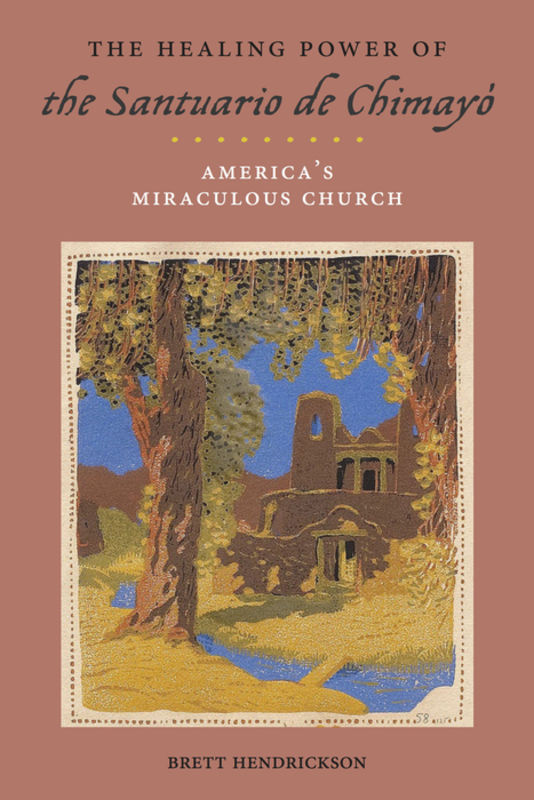
The Healing Power of the Santuario de Chimayó
The remarkable history of the Santuario de Chimayó, the church whose world-renowned healing powers have drawn visitors to its steps for centuries. Nestled in a valley at the feet of the Sangre de Cristo Mountains of New Mexico, the Santuario de Chimayó has been called the most important Catholic pilgrimage site in America. To experience the Santuario's miraculous healing dirt, pilgrims and visitors first walk into the cool, adobe church, proceeding up an aisle to the altar with its magnificent crucifix. They then turn left to enter a low-slung room filled with cast-off crutches, a statue of the Santo Niño de Atocha, and photos of thousands of people who have been prayed for in the exact spot they are standing. An adjacent room, stark by contrast, contains little but a hole in the floor, known as thepocito. From this well in the earth, the Santuario's half a million annual visitors gather handfuls of holy dirt, celebrated for two hundred years for its purported healing properties.
The book tells the fascinating stories of the Pueblo and Nuevomexicano Catholic origins of the site and the building of the church, the eventual transfer of the property to the Catholic Archdiocese of Santa Fe, and the modern pilgrimage of believers alongside thousands of tourists.
Drawing on extensive archival research as well as fieldwork in Chimayó, Brett Hendrickson examines the claims that various constituencies have made on the Santuario, its stories, dirt, ritual life, commercial value, and aesthetic character. The importance of the story of the Santuario de Chimayó goes well beyond its sacred dirt, to illuminate the role of Southwestern Hispanics and Catholics in American religious history and identity. The healing powers and marvel of the Santuario shine through the pages of Hendrickson's book, allowing readers of all kinds to feel like they have stepped inside an institution in American and religious history.
eBook

VEGF Blockade Enables Oncolytic Cancer Virotherapy in Part by Modulating Intratumoral Myeloid Cells
Understanding the host response to oncolytic viruses is important to maximize their antitumor efficacy. Despite robust cytotoxicity and high virus production of an oncolytic herpes simplex virus (oHSV) in cultured human sarcoma cells, intratumoral (ITu) virus injection resulted in only mild antitumor effects in some xenograft models, prompting us to characterize the host inflammatory response. Virotherapy induced an acute neutrophilic infiltrate, a relative decrease of ITu macrophages, and a myeloid cell-dependent upregulation of host-derived vascular endothelial growth factor (VEGF). Anti-VEGF antibodies, bevacizumab and r84, the latter of which binds VEGF and selectively inhibits binding to VEGF receptor-2 (VEGFR2) but not VEGFR1, enhanced the antitumor effects of virotherapy, in part due to decreased angiogenesis but not increased virus production. Neither antibody affected neutrophilic infiltration but both partially mitigated virus-induced depletion of macrophages. Enhancement of virotherapy-mediated antitumor effects by anti-VEGF antibodies could largely be recapitulated by systemic depletion of CD11b+ cells. These data suggest the combined effect of oHSV virotherapy and anti-VEGF antibodies is in part due to modulation of a host inflammatory reaction to virus. Our data provide strong preclinical support for combined oHSV and anti-VEGF antibody therapy and suggest that understanding and counteracting the innate host response may help enable the full antitumor potential of oncolytic virotherapy.
Journal Article

The College of American Pathologists Guidelines for Whole Slide Imaging Validation are Feasible for Pediatric Pathology: A Pediatric Pathology Practice Experience
Whole slide imaging (WSI) is rapidly transforming educational and diagnostic pathology services. Recently, the College of American Pathologists Pathology and Laboratory Quality Center (CAP-PLQC) published recommended guidelines for validating diagnostic WSI. We prospectively evaluated the guidelines to determine their utility in validating pediatric surgical pathology and cytopathology specimens. Our validation included varied pediatric specimen types, including complex or less common diagnoses, in accordance with the guidelines. We completed WSI review of 60 surgical pathology cases and attempted WSI review of 21 cytopathology cases. For surgical pathology cases, WSI diagnoses were highly concordant with glass slide diagnoses; a discordant diagnosis was observed in 1 of 60 cases (98.3% concordance). We found that nucleated red blood cells and eosinophilic granular bodies represented specific challenges to WSI review of pediatric specimens. Cytology specimens were more frequently discordant or failed for technical reasons, with overall concordance of 66.7%. Review of pediatric cytopathology specimens will likely require image capture in multiple focal planes. This study is the first to specifically evaluate WSI review for pediatric specimens and demonstrates that specimens representing the spectrum of pediatric surgical pathology practice can be reviewed using WSI. Our application of the proposed CAP-PLQC guidelines to pediatric surgical pathology specimens is, to our knowledge, the first prospective implementation of the CAP-PLQC guidelines.
Journal Article

The Shifting Catholicism of the St. Patrick’s Battalion
During the U.S.-Mexican War (1846–1848), several dozen immigrant soldiers in the U.S. Army deserted and joined Mexican forces against the United States. Made up largely of Irish Catholics, their unit was called the St. Patrick’s Battalion. Since the war, historians and others have made various attempts to explain what role the men’s Catholicism played in their decision to desert. This article does not join that discussion but instead analyzes how and why historical memory of the Catholicism of the St. Patrick’s Battalion has shifted widely, depending on the historical moment in which the soldiers’ story is retold. The article shows that, over time, the men of the battalion are deemed traitors, drunkards, pawns, bad Catholics, good Catholics, and religious freedom fighters. I argue that the historiography related to the battalion forms an ideal case study to examine and understand how Catholicism has intersected with other aspects of national identity in U.S. Catholic history.
Journal Article


Owning the Church
The 1929 sale of the Santuario de Chimayó in New Mexico from private Hispano owners to the Catholic Archdiocese of Santa Fe highlights the various and contentious claims of ownership and control not only on the Santuario itself but on the religious lives and ritual expressions of Hispano Catholics.
La venta del Santuario de Chimayó en Nuevo México en 1929, de manos nuevomexicanas privadas a la Arquidiandócesis Católica de Santa Fe, destaca las varias y conflictivas reclamaciones de propiedad y control sobre, no solo el Santuario mismo, sino también sobre la vida religiosa y expresiones rituales de los hispanos Católica de Nuevo México.
Journal Article
