
Catalogue Search | MBRL


Are you sure you want to remove the book from the shelf?

{{itemTitle}}
11
result(s) for
"Henneberg, Sylvia"
Sort by:


Of Creative Crones and Poetry: Developing Age Studies through Literature
As a comparative look at the works of May Sarton and Adrienne Rich shows, literature can contribute to the development of age studies in a variety of ways, some of which may not be obvious. Sarton's direct treatment of aging provides a key to the less apparent approaches Rich takes in her later career to further our understanding of age. Employing radically different strategies, the two writers constitute an odd couple of \"creative crones\" whose combined efforts have begun to generate a critique of aging that we as feminists and human beings desperately need as we confront the future.
Journal Article

Granny at Seventeen: May Sarton's Early Encounters with the Land of Old Age
To those familiar with her most popular works, the journals she began to publish in the second half of her life, May Sarton's concern with old age is well known. That she dealt with issues of aging and senescence from an early age on, is less commonly acknowledged.
Journal Article

Elizabeth Bishop's \Brazil, January 1, 1502\ and Max Jacob's \Etablissement d'une communauté au Brésil\: A Study of Transformative Interpretation and Influence
Henneberg explores the relation between Max Jacob's poem Etablissement d'une communaute au Brazil and Elizabeth Bishop's more politically positive response to it in her poem Brazil, January 1, 1502 (1960). A study of Bishop's reconfiguration of Jacob's poem calls the attention to the frequently overlooked influence of Bishop's poetry and broadens the understanding of the latter's strategies of transformative interpretation.
Journal Article
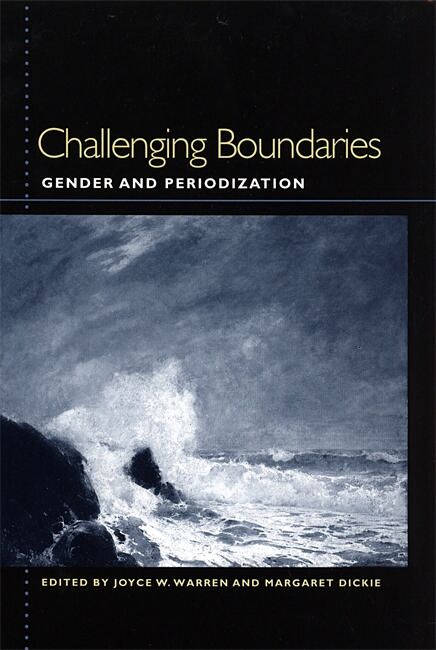
Challenging Boundaries
What if the American literary canon were expanded to consistently represent women writers, who do not always fit easily into genres and periods established on the basis of men's writings? How would the study of American literature benefit from this long-needed revision? This timely collection of essays by fourteen women writers breaks new ground in American literary study. Not content to rediscover and awkwardly \"fit\" female writers into the \"white male\" scheme of anthologies and college courses, editors Margaret Dickie and Joyce W. Warren question the current boundaries of literary periods, advocating a revised literary canon. The essays consider a wide range of American women writers, including Mary Rowlandson, Margaret Fuller, Harriet Beecher Stowe, Emily Dickinson, Frances Harper, Edith Wharton, Gertrude Stein, Amy Lowell and Adrienne Rich, discussing how the present classification of these writers by periods affects our reading of their work. Beyond the focus of feminist challenges to American literary periodization, this volume also studies issues of a need for literary reforms considering differences in race, ethnicity, class, and sexuality. The essays are valuable and informative as individual critical studies of specific writers and their works. Challenging Boundaries presents intelligent, original, well-written, and practical arguments in support of long-awaited changes in American literary scholarship and is a milestone of feminist literary study.
eBook

THE SELF-CATEGORIZATION, SELF-CANONIZATION, AND SELF-PERIODIZATION OF ADRIENNE RICH
Since 1951, when her first collection of poetry, A Change of World, appeared, Adrienne Rich has been a constant and influential presence in the literary world. Only twice has she taken more than three years to publish a major collection of poetry or prose; more often than not, a new book has appeared within two or three years, and sometimes, as in 1976 and in 1986, two works came out in a single year. Rich has sustained this pace for almost fifty years.
Critics unanimously agree that Rich’s style and subject matter have undergone significant changes since 1951, when, in
Book Chapter


Of Creative Crones and Poetry: Developing Age Studies Through Literature
As a comparative look at the works of May Sarton and Adrienne Rich shows, literature can contribute to the development of age studies in a variety of ways, some of which may not be obvious. Sarton's direct treatment of aging provides a key to the less apparent approaches Rich takes in her later career to further our understanding of age. Employing radically different strategies, the two writers constitute an odd couple of \"creative crones\" whose combined efforts have begun to generate a critique of aging that we as feminists and human beings desperately need as we confront the future. [PUBLICATION ABSTRACT]
Journal Article

\A politics of asking women's questions\? Adrienne Rich's later career
In her later work, Adrienne Rich expands and challenges the women's politics that brought her to the forefront of the women's movement in the seventies. Her politics and poetics have shifted so radically that they can no longer be called feminist unless we thoroughly revise the whole concept of feminism(s). Rich no longer concentrates on gender division as a cause of or remedy for the conflicts surrounding her. Nor does she focus on making the world a better place for women only. Instead, she attempts to reach out and address all kinds of marginalization and oppression and to incorporate both intensely private and global matters. Either rejecting or admiring Rich's poetry on the grounds that it revolves around a radical feminist politics, as many readers do, is therefore highly problematic.
Dissertation

Rich's Autumn Equinox
Adrienne Rich's \"Autumn Equinox\" anticipates the central concerns of her later poetry: the dream and the limitations of a common langauge.
Magazine Article