
Catalogue Search | MBRL


Are you sure you want to remove the book from the shelf?

{{itemTitle}}
1,389
result(s) for
"Henry, Anna"
Sort by:

The poisoned city : Flint's water and the American urban tragedy /
\"Recounts the gripping story of Flint's poisoned water through the people who caused it, suffered from it, and exposed it. It is a chronicle of one town, but could also be about any American city, all made precarious by the neglect of infrastructure\"-- Provided by publisher.
Book

A great way to bring up health behaviour topics at playgroup: a qualitative evaluation of the Healthy Conversations @ Playgroup program
Background
The early years is a critical stage to establish optimal nutrition and movement behaviours. Community playgroups are a relaxed environment for parents with a focus on social connection and supporting parents in their role as ‘First Teachers’. Playgroups are therefore an opportunistic setting to promote health behaviours in the early years. To support parents with young children around healthy lifestyle behaviours, the
Healthy Conversations @ Playgroup
program was delivered in urban and regional areas, across three Australian jurisdictions between 2021–2023.
Objective
This qualitative evaluation aimed to understand how the
Healthy Conversations @ Playgroup
program was experienced by parents, playgroup coordinators and peer facilitators.
Design
Semi-structured virtual interviews and focus groups were conducted with parents, playgroup coordinators (i.e., person responsible for coordinating the playgroup) and peer facilitators (i.e., trained facilitator for the program) that participated in the
Healthy Conversations @ Playgroup
study. Transcripts were analysed following a thematic analysis approach.
Results
Twenty-eight playgroup parents, coordinators or peer facilitators participated in one of 8 focus groups or 5 interviews. Four themes were developed: Program strengths and challenges; Setting strengths and challenges; Factors that impact program delivery; Participant’s suggestions for future program delivery.
Conclusions
The
Healthy Conversations @ Playgroup
program was valued by parents, providing validation and normalisation of parenting practices, and fostering a shared experience of parenting. Playgroups are a convenient setting for families to attend. The dynamic and distracting nature of the playgroup setting were carefully considered when designing the program. Strategies to further enhance program engagement could include use of coordinator or parent champions, tailored delivery, and extending the reach to other family members.
Trial registration
Australian New Zealand Clinical Trials Registry ACTRN12621000055808, registered 22 January 2021,
https://www.anzctr.org.au/Trial/Registration/TrialReview.aspx?id=380890
Journal Article


Qualitative Indicators of Social Resilience in Small-Scale Fishing Communities: An Emphasis on Perceptions and Practice
This paper reports on ethnographic research aimed at understanding what resilience means to those living within fishery-dependent communities. We draw on semi-structured and oral history interviews, focus groups, and household and business interviews in four Maine fishing communities to examine the reflections of fishermen and other community members on the past, present, and future of their communities, including the threats they face and how they are able to respond to them. Based on our analysis, we identify broad qualitative indicators of resilience: survival, social identity, diversification, getting by, and optimism. The indicators of resilience that we identify are difficult to fully understand using secondary data and, therefore, we argue that understanding them also requires an ethnographic research approach that focuses on the practices of fishermen and the context in which those fishermen live.
Journal Article
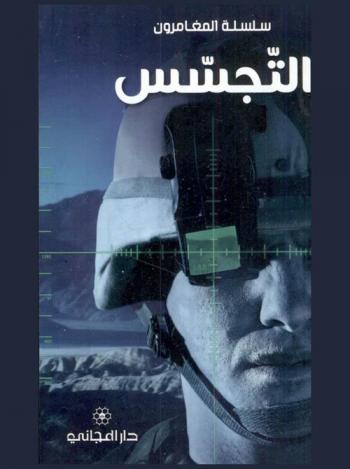
التجسس
يتحدث هذا الكتاب عن التجسس حيث يتناول ما هي المهارات التي يحتاج إليها الجاسوس؟ كيف يبتكر الجواسيس شيفرة؟ وما هي أنواع الأغراض التي يستخدمها العملاء السريون؟ وما هو الفرق بين الـ «سي أي أي» والـ «أف بي أي» ويعمل الجواسيس في عالم غامض من المهام الخطرة والهويات السرية يعمل الجواسيس اكتشف عن ضباط المراقبة والعملاء الميدانيين ومحللي المعلومات الاستخباراتية الذين يخوضون حربا سرية لحماية بلدانهم من التهديدات حول العالم.
BOOK

Understanding Social Resilience in the Maine Lobster Industry
The Maine lobster Homarus americanus fishery is considered one of the most successful fisheries in the world due in part to its unique comanagement system, the conservation ethic of the harvesters, and the ability of the industry to respond to crises and solve collective-action problems. However, recent threats raise the question whether the industry will be able to respond to future threats as successfully as it has to ones in the past or whether it is now less resilient and can no longer adequately respond to threats. Through ethnographic research and oral histories with fishermen, we examined the current level of social resilience in the lobster fishery. We concentrated on recent threats to the industry and the ways in which it has responded to them, focusing on three situations: a price drop beginning in 2008, a recovery in 2010–2011, and a second collapse of prices in 2012. In addition, we considered other environmental and regulatory concerns identified by fishermen. We found that the industry is not responding effectively to recent threats and identified factors that might explain the level of social resilience in the fishery.
Journal Article


Behaviour Change Process in the Healthy Conversations @ Playgroup Program
Background: Parents/caregivers play a crucial role in supporting positive development of nutrition and movement behaviours in young children. Many programs have been designed to equip parents with strategies to change their children's behaviours. The behaviour change process underpinning such programs is complex. Mapping behaviour change techniques (BCTs) used in interventions is one approach to unpacking this complexity. Research Objective: To explore the use of BCTs by actors in 'Healthy Conversations @ Playgroup', a parent-focussed behaviour change intervention. Methods: A novel mapping design was used to identify, map and compare BCTs across 4 actors in an intervention behaviour change process. Specifically, 1) researcher intended techniques, 2) techniques delivered by facilitators, 3) techniques received by parents, and 4) techniques enacted by parents to their children. Data sources included intervention materials, and interview and focus group transcripts conducted with facilitators (n=5) and parents (n=17) who participated in 'Healthy Conversations @ Playgroup'. Data were coded using the BCT Taxonomy vl. Results: A total of 28 out of 93 BCTs were identified by one or more actor. The intervention intended to implement 8 unique BCTs targeting parents. Of BCTs targeting parents, 3 BCTs (1.5, 3.1, 4.1) were described by three actors (researchers, facilitators, parents). A further 11 BCTs were described by 2 of 3 actors, most frequently by facilitators and parents. Key differences in BCTs received versus intended were monitoring BCTs related to data collection evaluating the intervention. Parents described enacting 10 BCTs targeting their child. Discussion: Identifying consistent usc/rcceipt of several BCTs throughout the 'Healthy Conversations @ Playgroup' intervention process provides insight into why the intervention may or may not change behaviour. This study and future examination of BCT fidelity and dose, will help inform the design of effective interventions and targeted training of facilitators.
Journal Article


Profile of the PLAY spaces & environments for children’s physical activity, sedentary behaviour and sleep (PLAYCE) cohort study, Western Australia
Background
Childhood is a critical period for the development of movement behaviours such as physical activity, sleep and sedentary behaviour. The PLAYCE Cohort was established to investigate how movement behaviours change over early to middle childhood, across key behaviour settings and relationships with health and development. An overview of the PLAYCE cohort, summary of key findings to date, and future research opportunities are presented.
Methods
Children were recruited at 2–5 years of age (preschool; Wave 1) via early childhood education and care (ECEC) services and were followed up in junior primary school (5–7 years; Wave 2) at 8–10 years (Wave 3) and again at 11–13 years (Wave 4; in progress). Children’s movement behaviours were measured via parent-report and accelerometry. Social-emotional development, motor development, weight status, diet, and child and family socio-demographics were parent-reported. Physical environmental features of children’s key behaviour settings (home, neighbourhood, ECEC and school) were collected using geo-spatial and audit data.
Results to date
At wave 1 (2–5 years), only 8% of children met all three recommendations of the Australian 24-hour Movement Guidelines for the Early Years. Meeting all recommendations (8%) was positively associated with boys social-emotional development. Physical environment features of the home yard (size, play equipment, natural features) were positively associated with preschool children’s physical activity. Tree canopy and more portable play equipment in ECEC outdoor areas was also positively associated with children’s outdoor time and physical activity.
Conclusions
Wave 4 (11–13 years) data collection will be completed in early 2026. Traditional longitudinal and compositional data analysis of the PLAYCE cohort will be undertaken. Four waves of data will provide detailed patterns of movement behaviours and their effect on child health and development as well as the environmental influences on children’s movement behaviours across early to middle childhood. The findings can be used to inform national and international 24-Hour Movement Guidelines and behaviour setting-specific as well as population-level interventions to benefit child health and wellbeing across early to middle childhood.
Journal Article