
Catalogue Search | MBRL


Are you sure you want to remove the book from the shelf?

{{itemTitle}}
672
result(s) for
"Herman, Jane"
Sort by:
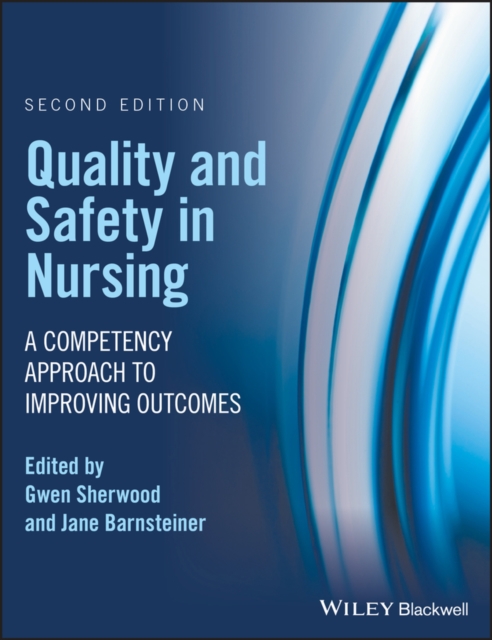
Quality and safety in nursing : a competency approach to improving outcomes
Drawing on the universal values in health care, the second edition of Quality and Safety in Nursing continues to devote itself to the nursing community and explores their role in improving quality of care and patient safety. Edited by key members of the Quality and Safety Education for Nursing (QSEN) steering team, Quality and Safety in Nursing is divided into three sections. Itfirst looks at the national initiative for quality and safety and links it to its origins in the IOM report. The second section defines each of the six QSEN competencies as well as providing teaching and clinical application strategies, resources and current references. The final section now features redesigned chapters on implementing quality and safety across settings.
eBook

Conceptual Framework of the Controlling Asthma in American Cities Project
The Controlling Asthma in American Cities Project (CAACP) was designed to improve the control of asthma in inner-city populations of children with a disparate burden of symptoms and adverse outcomes. As with many chronic diseases, asthma is the manifestation of multiple biologic, environmental, and social determinants. In addition to appropriate medical management, individuals with asthma must have logistical, financial, and cultural access to environments that allow avoidance of asthma triggers and encourage good asthma management practices. In recognition of this complexity, the CAACP required the seven project sites to coordinate and synchronize multiple interventions (education, healthcare access, medical management, trigger reduction) at multiple levels (individual, home, school, community, and policy) through the collaboration of relevant groups, institutions, and individuals. This paper describes the “program theory” of the CAACP project—the assumptions about how the project worked, how the components were linked, and what outcomes were anticipated. It relates the subsequent papers in the supplement to the program theory and describes how the papers can inform and guide other community-based interventions, and advance the translation of scientific knowledge to effective interventions in communities of need.
Journal Article

A Model-Driven Approach to Qualitatively Assessing the Added Value of Community Coalitions
Community-based coalitions are commonly formed to plan and to carry out public health interventions. The literature includes evaluations of coalition structure, composition, and functioning; evaluations of community-level changes achieved through coalition activities; and the association between coalition characteristics and various indicators of success. Little information is available on the comparative advantage or “added value” of conducting public health interventions through coalitions as opposed to less structured collaborative mechanisms. This paper describes a qualitative, iterative process carried out with site representatives of the Controlling Asthma in American Cities Project (CAACP) to identify outcomes directly attributable to coalitions. The process yielded 2 complementary sets of results. The first were criteria that articulated and limited the concept of “added value of coalitions”. The criteria included consensus definitions, an organizing figure, a logic model, and inclusion/exclusion criteria. The second set of results identified site-specific activities that met the definitional criteria and were, by agreement, examples of CAACP coalitions’ added value. Beyond the specific findings relevant to the added value of coalitions in this project, the use of a social ecological model to identify the components of added value and the placement of those components within a logic model specific to coalitions should provide useful tools for those planning and assessing coalition-based projects.
Journal Article

Site We Love: Peach And Lily
Whenever Harvard business school graduate Alicia Yoon and former investment banker Cindy Kim would book a trip to Korea or Japan, friends would send lists of beauty products they wanted Yoon and Kim to bring back. Faster than the two New York entrepreneurs could say \"Peach and Lily,\" a new, expertly curated website was born.
Magazine Article
Creature Of Comfort
The guiding principle behind [Ariane Goldman]'s style, from her decor to her clothing line to her entertaining approach, is versatility. \"We love to have impromptu dinner parties,\" says Goldman, who in the summertime has Max man the grill while she prepares the side dishes, often using fresh ingredients straight from her friends' gardens. Thoughtful, easy-to-alter accents, like freshly cut flowers and candle votives, are always at the ready to set a mood that perfectly matches the occasion. \"When the bones are beautiful,\" she says, summing up her philosophy, \"it doesn't take much to make things shine.\"Charlie's bedroom: \"Pink is her favorite color,\" says Goldman. \"I used to be opposed to pink, and then I had a girl and it all made sense.\"
Magazine Article

Positive Spin
Lorenzo Martone's new line of fashion-driven bicycles is discussed. The bicycles are both striking and contemporary, featuring red, white, black, silver or gold bikes, and are meant to be ridden as well as gazed upon.
Magazine Article
The New Girl
Edie Campbell, a 22-year-old model from the UK, is briefly featured. Campbell's mom Sophie Hicks is an architect and former editor and her grandmother modeled in the 1950s.
Magazine Article
