
Catalogue Search | MBRL


Are you sure you want to remove the book from the shelf?

{{itemTitle}}
31
result(s) for
"Hermann, Elfriede"
Sort by:

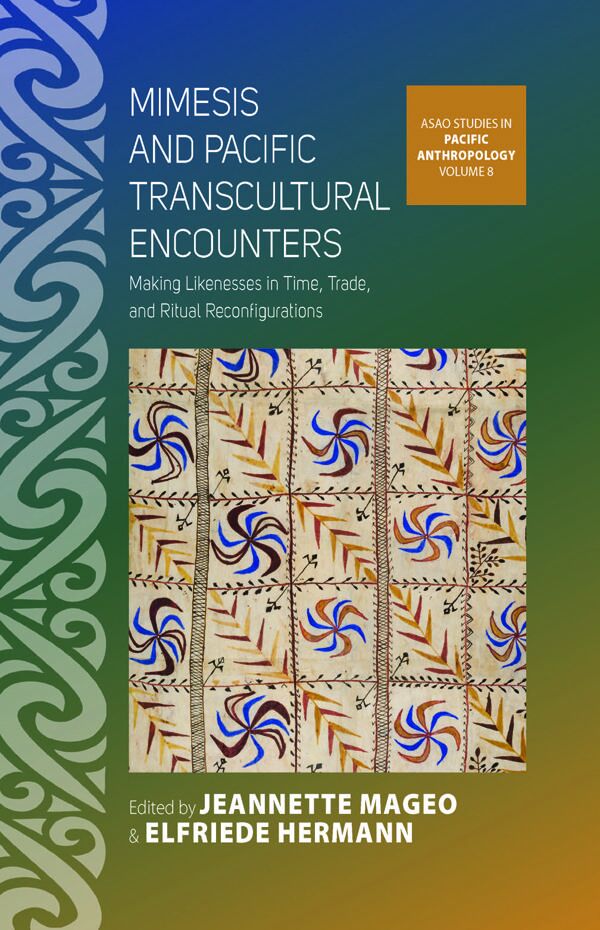
Mimesis and Pacific Transcultural Encounters
How do images circulating in Pacific cultures and exchanged between them and their many visitors transform meanings for all involved? This fascinating collection explores how through mimesis, wayfarers and locales alike borrow images from one another to expand their cultural repertoire of meanings or borrow images from their own past to validate their identities.
eBook

Belonging in Oceania
Ethnographic case studies explore what it means to \"belong\" in Oceania, as contributors consider ongoing formations of place, self and community in connection with travelling, internal and international migration. The chapters apply the multi-dimensional concepts of movement, place-making and cultural identifications to explain contemporary life in Oceanic societies. The volume closes by suggesting that constructions of multiple belongings-and, with these, the relevant forms of mobility, place-making and identifications-are being recontextualized and modified by emerging discourses of climate change and sea-level rise.
eBook

Climate Change and the Imagining of Migration: Emerging Discourses on Kiribati's Land Purchase in Fiji
In this article we concentrate on the discursive links between climate change, migration, land, and imagined futures. We argue that the large tract of freehold land purchased by Kiribati's government in Fiji has led citizens in both countries to develop imaginings of migration, which we interpret as building blocks for a cultural construct of the future, in anticipation of projected hazards resulting from climate change and sea level rise. We show that, contrary to official pronouncements that the land had been acquired for reasons of food security, many citizens of Kiribati and Fiji associated the purchase with the option of a future relocation. Thus I-Kiribati have taken to perceiving this property in terms of their concept of land, hoping that, in the event of an existential threat, this new land will allow them to preserve culture, nation, and identity over the long term. Citizens of Fiji, too, rely on their concept of land, as when they see that survival for I-Kiribati will only be possible if they can ground it in a territory of their own. Moreover, the governments of Kiribati and Fiji both engage in a politics of hope that contributed to imaginings of migration. We conclude that the emerging discourses on migration related to the land purchase were fostered by cultural conceptions of land as well as the climate policies of the two Pacific Island states.
Journal Article

Mimesis, Ethnopsychology, and Transculturation
In this chapter I shall consider mimesis as an integral component of transculturation. The term “transculturation,” which Fernando Ortiz ([1947] 1995) was the first to use, describes the processes of adoption, recontextualization, and reconceptualization of practices from another culture. These processes go hand in hand with social interactions and involve all interactive partners as well as the power relationships that are at play (Hermann 2011: 4). As Fernando Coronil (1995: XLI–XLIII) stresses, the concept of transculturation shines a novel light on transcultural exchange under conditions in which power is unequally shared. The concept of mimesis, as I see it,
Book Chapter
Mimesis and Pacific Transcultural Encounters
How do images circulating in Pacific cultures and exchanged between them and their many visitors transform meanings for all involved? This fascinating collection explores how through mimesis, wayfarers and locales alike borrow images from one another to expand their cultural repertoire of meanings or borrow images from their own past to validate their identities.
eBook
Empathy, Ethnicity, and the Self among the Banabans in Fiji
This chapter will focus on the culturally specific conceptualization of empathy among the Banabans, a people originally from west-central Oceania (“Micronesia”) who have been living in Fiji since 1945. In my representation of how they conceptualize empathy, I will explore in particular their emotion discourses on compassion and pity (deeming the latter to have a religious dimension), since these are central components of the empathy concept they deploy. This does not mean that the Banabans associate empathy only with feeling and not with thinking. The Banabans do not, in fact, separate feeling and thinking to the extent found in certain
Book Chapter

The anthropology of empathy
Exploring the role of empathy in a variety of Pacific societies, this book is at the forefront of the latest anthropological research on empathy. It presents distinct articulations of many assumptions of contemporary philosophical, neurobiological, and social scientific treatments of the topic. The variations described in this book do not necessarily preclude the possibility of shared existential, biological, and social influences that give empathy a distinctly human cast, but they do provide an important ethnographic lens through which to examine the possibilities and limits of empathy in any given community of practice.
eBook